The desert wind in Dubai usually carries the scent of salt from the Persian Gulf and the faint, expensive musk of oud. It is a city built on the audacity of stillness—a shimmering mirage of steel that promises safety to the world’s elite. But on a Tuesday that began like any other, that stillness shattered. The smell changed. It became acrid. It became the scent of melting plastic, scorched stone, and a sudden, violent realization that no wall is ever quite high enough.
Smoke did not billow at first; it drifted. It snaked upward from the fortified perimeter of the United States Consulate, a thin, black ribbon against the relentless blue of the Emirati sky. For those sipping espresso in the nearby cafes of Al Seef, the sight was an impossibility. We don't see smoke here. We see progress. We see construction. We do not see the icons of global diplomacy under siege.
Then the sirens arrived.
The Weight of the Perimeter
To understand what happened at the consulate, you have to understand the anatomy of a fortress. A consulate is not just an office; it is a pressurized vessel of sovereignty. Inside those walls, you are on American soil. Outside, you are in a bustling global hub. The thin line between them is maintained by layers of reinforced glass, steel bollards, and the watchful eyes of Marine Security Guards.
When reports began to filter through of a "suspected attack," the immediate reaction was not one of data points or geopolitical analysis. It was visceral.
Think of a young consular officer named Sarah. This is her first posting. She spent her morning processing visa applications for students hoping to study in Boston or engineers looking to work in Silicon Valley. She represents the "soft power" of a superpower. But when the first tremor of an explosion or the heat of a fire presses against the building's skin, that soft power turns into a very hard reality. The "duck and cover" drills, which seemed like bureaucratic theater in the air-conditioned quiet of training, suddenly become the only thing that matters.
The flames rose from the exterior gates. Eyewitnesses described a scene of rapid escalation. What began as a localized disturbance quickly transformed into a plume of soot that could be seen from the Burj Khalifa. In a city where every square inch is monitored by high-definition surveillance and a highly efficient police force, the breach felt like a tear in the fabric of the reality we’ve been sold.
The Invisible Stakes of a Burning Gate
Why does a fire at a consulate matter more than a fire at a warehouse or a luxury hotel? Because a consulate is a lightning rod. It is where the friction of the world’s grievances meets the physical presence of a distant government.
When smoke rises from these grounds, the markets twitch. The oil prices, always sensitive to the slightest hint of instability in the Gulf, feel the heat. But the real cost isn't measured in barrels or cents. It’s measured in the sudden, jarring loss of the "security premium" that Dubai offers. This is a city that thrives on being the exception to the region’s volatility. When the U.S. Consulate—arguably one of the most protected sites in the Emirates—is targeted or even accidentally engulfed in a suspicious blaze, the exception starts to look like the rule.
The logistics of the response were a study in synchronized desperation. Dubai Civil Defense moved with the practiced urgency of a force that deals with skyscraper fires as a matter of routine. But this wasn't a kitchen fire in a penthouse. This was a site sensitive enough that every hose held by a local firefighter carried diplomatic implications. How much access do you give? How do you balance the need to extinguish a literal fire with the need to protect classified digital fires within the servers inside?
The Anatomy of the Aftermath
Information in the wake of such an event is always a scarce commodity. The official statements are polished until they are reflective and hollow. "A small fire was contained." "No casualties reported." "Investigation ongoing."
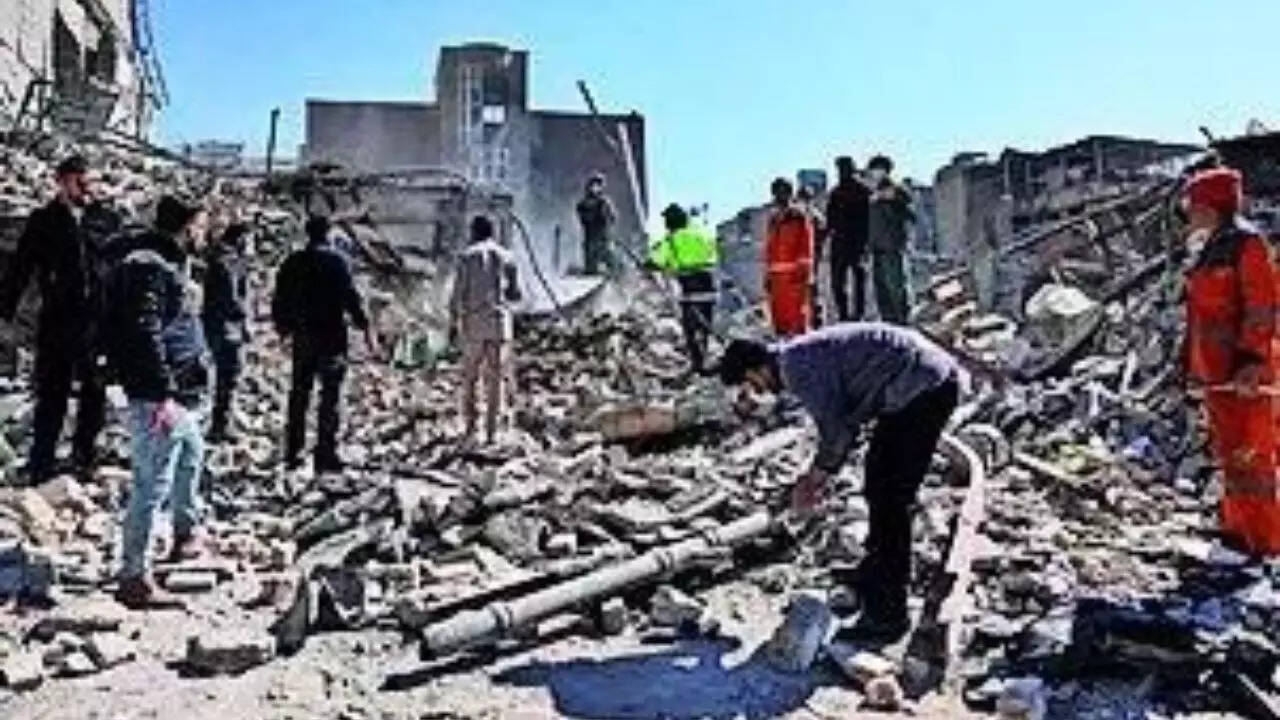
But look at the pavement. Look at the charred remains of the security checkpoint.
These physical scars tell a story of a moment where the world's complexity caught up with its ambition. We live in an era where we believe technology and surveillance can preempt tragedy. We have sensors for heat, cameras for faces, and algorithms for intent. Yet, a few gallons of accelerant or a determined individual can still bypass the billion-dollar shield. It is a humbling reminder of our fragility.
For the residents of Dubai, the smoke was a reminder that the world "out there"—the world of protests, geopolitical shifts, and ancient grudges—is never truly blocked out by a visa requirement or a luxury storefront. The consulate sits in a neighborhood that is a blend of the old and the new, a place where history and the future are supposed to shake hands. On this day, they merely stared at each other through the haze.
The Silence After the Sirens
By the time the sun began its descent toward the horizon, the flames were gone. What remained was the smell. That lingering, chemical ghost of a crisis.
The investigation will likely point toward specific actors or perhaps a tragic, mundane mechanical failure. There will be briefings in Washington and meetings in Abu Dhabi. Security protocols will be "reviewed," which is the diplomatic way of saying they will be tightened until the joints creak.
But for those who stood on the street and watched the black smoke rise, the world feels slightly different now. The glass of the consulate didn't just hold back a fire; it held back an idea. The idea that there are places where the chaos of the human condition cannot reach.
As the cleaners begin to scrub the soot from the white stone of the exterior, and the diplomats return to their desks to process the paperwork of a global empire, the city returns to its rhythm. The oud returns to the air. The malls fill up. The lights of the skyline flicker on, one by one, defiant and brilliant.
Yet, if you look closely at the sidewalk near the consulate gates, there is a discoloration that wasn't there yesterday. A shadow that doesn't move with the sun. It is the footprint of an event that reminded us, however briefly, that even in the heart of a dream built on sand and gold, the heat of the world is always just a spark away.