The traditional defense analyst looks at a map of the Middle East, sees a cluster of blue dots representing US military bases, and calls it "projection of power." I look at that same map and see a series of fixed, immobile targets waiting for a cheap drone to render a billion-dollar runway useless.
The "lazy consensus" suggests that Al Udeid in Qatar or the Fifth Fleet in Bahrain are the ultimate deterrents against Iranian aggression. In reality, these massive installations have become the geopolitical equivalent of the Maginot Line—impressive to look at, expensive to maintain, and fundamentally ill-suited for the era of asymmetric, "gray zone" warfare we entered in 2026.
The Al Udeid Myth: Size Doesn't Equal Safety
Every mainstream article mentions Al Udeid Air Base in Qatar as the crown jewel of US regional presence. It’s the forward headquarters for CENTCOM, hosting over 10,000 troops. But in the age of precision-guided munitions and swarm tactics, concentration is a death sentence.
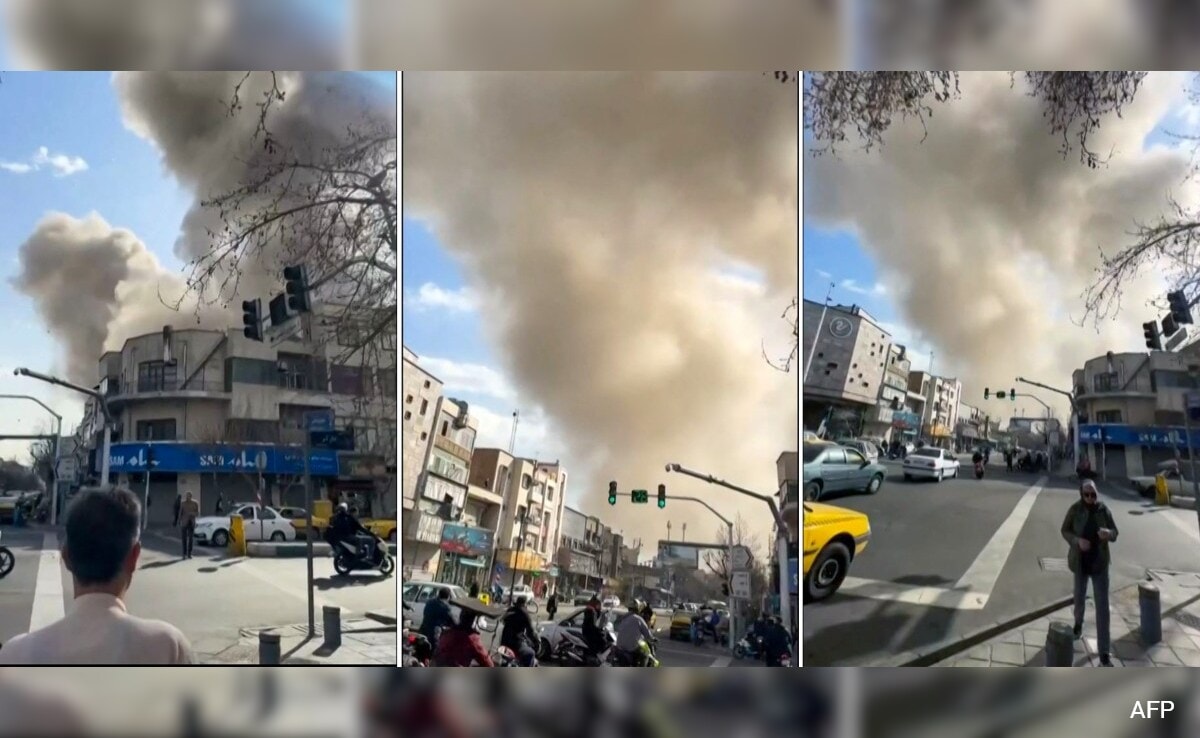
When Iran launched its retaliatory strikes during Operation Epic Fury on February 28, 2026, the vulnerability of "super-bases" was laid bare. Despite billions spent on Patriot batteries and the new Integrated Air and Missile Defense (IAMD) cell, saturation is a mathematical reality. If an adversary launches 100 drones that cost $20,000 each, and you defend with interceptors costing $2 million per shot, you aren't winning; you are being bled dry.
I’ve seen the Pentagon balance sheets. We are spending "legacy" money on "static" problems while the threat has gone mobile and cheap. Al Udeid isn't a fortress; it's a logistics hub that requires a perfect defensive record to survive, while an attacker only needs to get lucky once.
The Fifth Fleet’s Bahrain Trap
The Naval Support Activity Bahrain is the headquarters of the Fifth Fleet. It is positioned in a narrow, shallow gulf that is increasingly becoming a "denial zone."
The logic of keeping a fleet headquarters in Manama was based on 20th-century naval supremacy. Today, the Strait of Hormuz is a choke point where high-tech destroyers are forced to operate in "knife-fighting" range of Iranian fast-attack craft and coastal anti-ship missiles.
On February 26, 2026, satellite imagery showed the US fleet virtually emptying the port in Bahrain. Why? Because the headquarters has become a liability. When the sirens wail in Manama, the "command and control" isn't commanding; it's evacuating. The current strategy of maintaining a permanent, visible presence in the Persian Gulf is an invitation for hostage-taking—not of people, but of policy. Every time a missile splashes near the Fifth Fleet, Washington’s diplomatic options shrink.
The Iraq-Syria "Withdrawal" That Isn't
There is a loud, public debate about the US withdrawal from Iraq and Syria. The headlines say we are leaving. The reality is a shell game.
By September 2025, the US was supposed to vacate federal Iraq. Instead, we shifted personnel to Erbil in the Kurdistan Region and reinforced Ain al-Asad. This isn't a withdrawal; it's a retreat to the periphery.
The mistake is thinking these small "lily pad" bases provide a counter-terrorism benefit that outweighs their cost as lightning rods. In Syria, the recent decision to pull 1,000 troops and abandon the al-Tanf base was framed as a "conditions-based transition." In truth, it was an admission that 1,000 troops cannot hold territory against a resurgent state and its proxies without an endless supply of air support that is needed elsewhere—specifically the Pacific.
Djibouti: The Congested Garrison
If you want to see the future of military friction, look at Camp Lemonnier in Djibouti. It is the only permanent US base in Africa, yet it sits just miles away from a Chinese naval base.
The "status quo" experts call this a strategic masterpiece. It’s actually a powder keg of "deconfliction" nightmares. In 2026, Djibouti is a hyper-congested garrison where eight foreign powers are tripping over each other.
We pay $70 million a year in rent to a regime that also takes Chinese money. We are essentially renting a front-row seat to our own surveillance. The proximity of rival intelligence services means that every takeoff from Lemonnier is logged, analyzed, and countered before the wheels are even up.
The Counter-Intuitive Solution: Dispersal and Ghosting
The military establishment is obsessed with "presence." They think if they aren't standing on the ground, they don't own the space. This is 1945 thinking.
To actually protect American interests and deter Iran, we should:
- Abolish the "Super-Base": Break Al Udeid into twelve smaller, temporary, mobile sites. Make the enemy guess where the tankers and F-35s are parked tonight.
- Offshore Command: Move the Fifth Fleet headquarters to a mobile sea-base or a remote location like the Seychelles. Stop tying our naval command to a fixed coordinate that can be targeted by a bored teenager with a laptop and a long-range drone.
- End the "Partner" Dependency: Our presence in places like Kuwait and the UAE is increasingly dictated by the host nation's fear of retaliation. If we can't launch strikes from Al Dhafra because Abu Dhabi is afraid of an Iranian missile hitting a hotel, then the base is a paper tiger.
The US military presence in the Middle East is currently a series of expensive targets masquerading as a strategy. We are protecting the bases for the sake of the bases, not for the sake of the mission. Until we stop valuing "concrete" over "capability," we are just waiting for the next "True Promise" volley to prove us wrong.
Would you like me to analyze the specific missile defense vulnerabilities of Prince Sultan Air Base in Saudi Arabia?