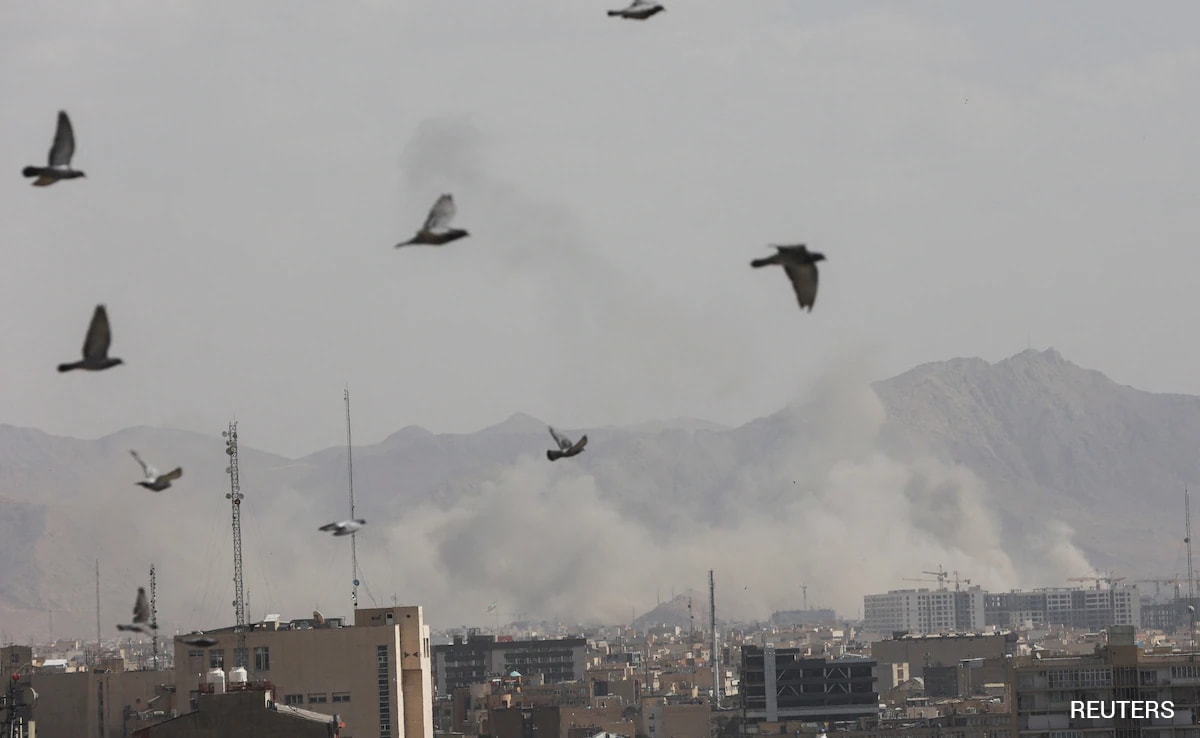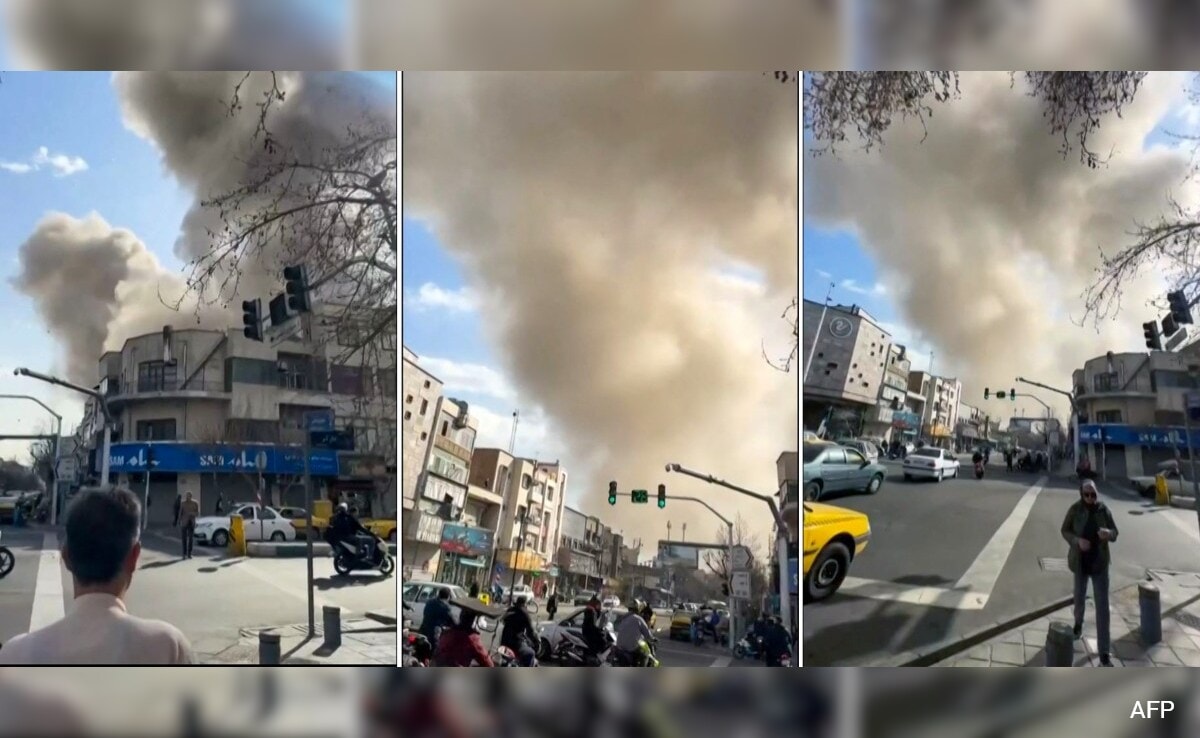
The kinetic strikes lighting up the skyline of Tehran are only half of the operation. While Israeli munitions find their way to Iranian ballistic missile facilities and air defense batteries, a parallel offensive is unfolding on the screens and in the pockets of the Iranian citizenry. This isn't just about neutralizing the Islamic Revolutionary Guard Corps (IRGC). It is a high-stakes experiment in cognitive warfare, attempting to drive a wedge between an embattled population and a regime that has spent decades preparing for this exact moment of external pressure.
Israel’s intelligence apparatus, specifically Mossad, has moved beyond the shadows of sabotage and assassination. They are now engaging in direct public diplomacy through digital channels, messaging the Iranian people that the "fire" falling from the sky is surgical, intended for their oppressors rather than the public. It is a bold, perhaps desperate, attempt to trigger internal collapse while the military architecture is being dismantled from above.
The Mechanics of Surgical Escalation
To understand why this is happening now, one must look at the technical shift in Middle Eastern engagement. We have moved past the era of carpet bombing. Modern warfare relies on the synergy of real-time signals intelligence and precision-guided munitions. When Israeli F-15I Ra'am and F-35I Adir jets strike, they aren't hitting city centers blindly. They are targeting specific nodes: the TEL (Transporter Erector Launcher) units, the solid-fuel mixing facilities, and the command-and-control bunkers.
The strategy is clear. By removing Iran’s ability to project power—specifically its "ring of fire" consisting of regional proxies and its own missile stockpile—Israel aims to leave the clerical leadership naked. But the military hardware is only part of the equation. If you destroy a missile factory but leave the ideological infrastructure intact, you have only bought time. The goal of the current campaign is to combine physical devastation with a psychological narrative of liberation.
The Mossad Digital Offensive
Mossad’s Persian-language social media presence has shifted from cryptic warnings to overt alignment with the Iranian protest movement. The message "We are with you" is a calculated piece of psychological operations (PSYOP). It leverages the deep-seated resentment many Iranians feel toward a government that prioritizes regional hegemony over domestic economic stability.
However, this approach carries immense risk. History shows that foreign intervention, even if well-intentioned or targeted at a hated regime, often triggers a "rally 'round the flag" effect. When bombs fall on a capital city, the nuance of who they are intended for often gets lost in the smoke. Mossad is betting that the Iranian public’s fatigue with the IRGC has reached a breaking point where they will welcome the degradation of their own national defense infrastructure.
The Internal Fracture
Inside Iran, the atmosphere is a mix of terror and quiet anticipation. The economy is in a tailspin, with the rial hitting record lows every time a fresh round of explosions is reported near Isfahan or Tehran. For the average resident, the geopolitical chess match is secondary to the immediate reality of hyperinflation and the threat of total war.
- Logistical Paralysis: Strikes on energy infrastructure, even if targeted at military refineries, have a cascading effect on the civilian grid.
- The Intelligence Gap: The sheer frequency of successful strikes suggests a massive breach within the Iranian security apparatus. Mossad isn't just flying planes; they likely have boots on the ground or high-level assets providing the coordinates.
Hardware vs Willpower
The technical superiority of the US-Israeli alliance is undeniable. The integrated air defense systems (IADS) that Iran purchased from Russia, such as the S-300, have proven insufficient against fifth-generation stealth technology and advanced electronic warfare suites.
$$P_d = 1 - (1 - P_k)^n$$
In the formula above, the probability of destruction ($P_d$) increases exponentially with the number of high-precision strikes ($n$) and the kill probability ($P_k$) of each munition. When the $P_k$ is near unity due to GPS and inertial guidance, even a robust defense system is mathematically certain to fail under a sustained volume of fire.
But military math doesn't account for the "will to endure." The IRGC has spent forty years hardening its assets. They have tunneled deep into the mountains, creating "missile cities" that are difficult to reach even with the heaviest bunker-busters in the American arsenal, such as the GBU-57 Massive Ordnance Penetrator (MOP).
The Proxy Dilemma
As Tehran burns, the "Axis of Resistance" looks on. Hezbollah in Lebanon, the Houthis in Yemen, and various militias in Iraq are the external layers of Iran’s defense. By raining fire on the center of the web, Israel is forcing these proxies to decide: do they sacrifice themselves to save their patron, or do they retreat to preserve their own local power?
The US role here is one of containment and replenishment. While the White House may speak of de-escalation in public, the logistical reality is the rapid movement of interceptors and fuel to the region. The US provides the shield—Patriot and THAAD batteries—that allows Israel to be the sword. It is a partnership that has moved from intelligence sharing to active theater management.
The Information Vacuum
In the absence of independent media within Iran, rumors become the primary currency of information. This is where the danger of the "We're With You" narrative lies. If the civilian casualties begin to mount, the Mossad's messaging will be viewed as cynical propaganda. The line between a "liberator" and an "invader" is thin, drawn in the blood of non-combatants.
The Iranian leadership knows this. They are actively trying to manufacture "martyrdom" scenarios, placing military assets near civilian centers to ensure that any strike results in collateral damage. It is a grisly game of optics where the target isn't just a radar installation, but the global perception of the conflict.
Cyber Warfare and the Grid
Beyond the kinetic strikes, a silent war is being waged on the Iranian industrial control systems (ICS). We saw the precursor to this with Stuxnet years ago. Now, the attacks are more frequent and less subtle. Port authorities, gas stations, and municipal water systems have all faced disruptions. This is designed to show the Iranian people that their government cannot provide even the most basic services in the face of modern cyber pressure.
The technical complexity of these attacks suggests a multi-state effort. It requires zero-day vulnerabilities and deep knowledge of the specific programmable logic controllers (PLCs) used in Iranian industry. It is a level of sophistication that few nations possess.
The Shadow of Nuclear Ambition
The ultimate prize, and the ultimate fear, remains the Iranian nuclear program. Facilities like Natanz and Fordow are the true targets of this prolonged campaign. By hitting the conventional missile infrastructure, Israel is clearing the path for a potential strike on the centrifuges.
If the conventional deterrent is stripped away, the Iranian leadership faces a binary choice: surrender their nuclear ambitions or rush toward a weapon as a final insurance policy. This is the most dangerous phase of the conflict. A cornered regime with nothing left to lose is a regime that may decide that the "nuclear option" is the only way to ensure survival.
The rhetoric of Mossad is meant to offer a third way—an internal uprising that removes the need for a total regional war. But revolutions are messy, unpredictable, and rarely coincide with the timelines of foreign military planners. The Iranian people are caught between a repressive theocracy and a rain of foreign fire, and while the "We're With You" message sounds comforting in a briefing room in Tel Aviv, it carries a much heavier weight on the streets of Tehran.
The strikes will continue until the objectives are met or the costs become too high. The success of this campaign will not be measured in the number of missiles destroyed, but in whether the Iranian people actually believe that the hand dropping the bombs is the same one offering them a future. If that gamble fails, the fire falling on Tehran will only serve to harden the very resolve it was intended to break.
The window for a "clean" victory is closing. Every night the sirens wail in Tehran, the geopolitical reality of the Middle East is being rewritten. Whether the new script leads to a regional rebirth or a scorched-earth stalemate depends entirely on what happens when the smoke clears and the Iranian public decides who they fear more: the enemies abroad or the masters at home.
The IRGC is betting on fear. Israel is betting on exhaustion. The world is simply waiting to see which one breaks first.