The dust in Culiacán doesn't just settle. It waits.
When a kingpin falls, the atmosphere in Sinaloa changes before the first news alert hits a smartphone. It is a physical shift, a drop in barometric pressure that the locals feel in their bone marrow. The markets quiet. The brassy, upbeat notes of banda music usually blaring from tinted SUV windows vanish, replaced by a low, mechanical hum.
Then come the boots. Thousands of them.
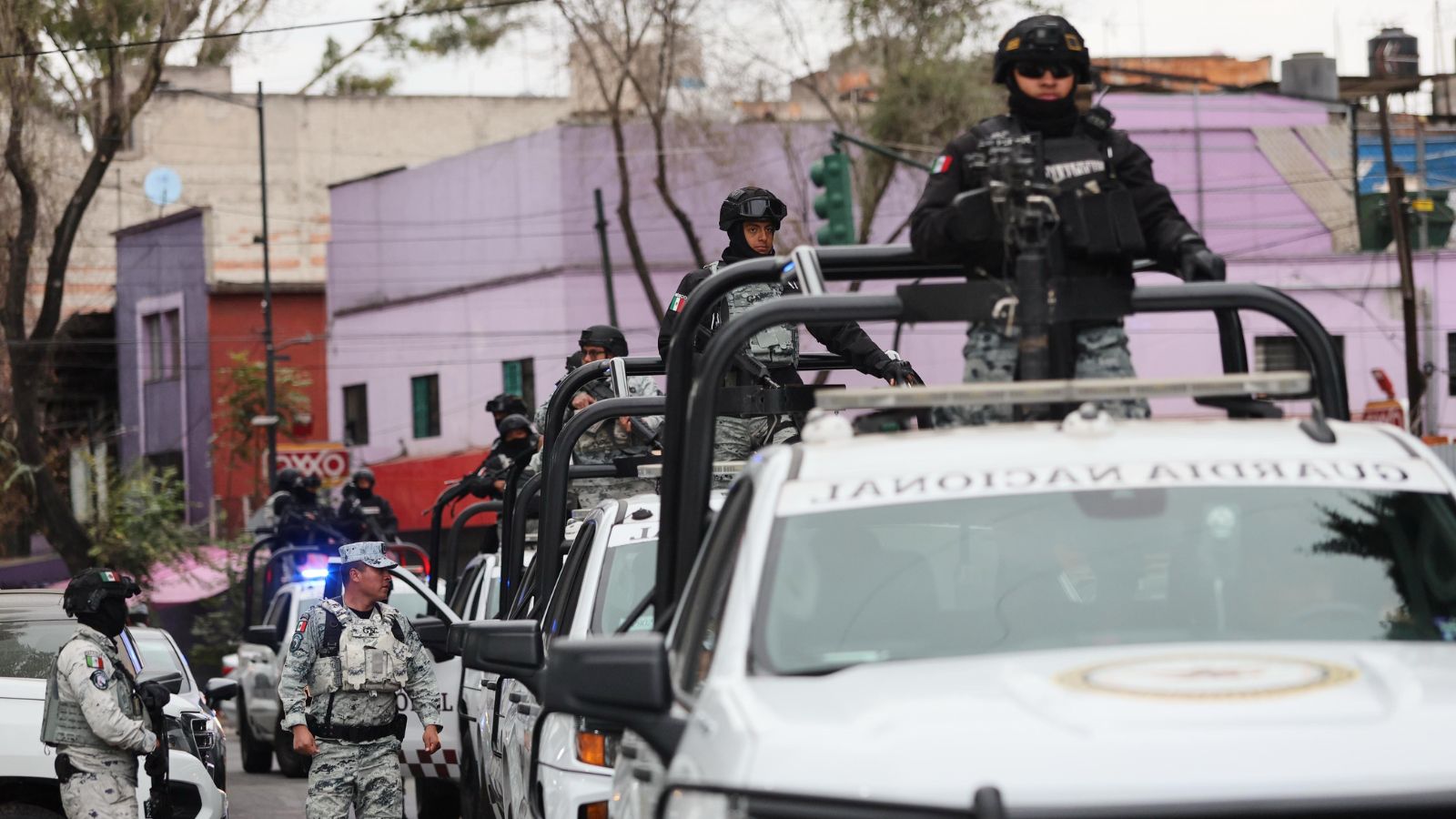
Following the death of a major cartel leader—a vacuum-creating event that usually triggers a jagged scramble for succession—the Mexican government moved with a speed born of desperation. They dispatched over 2,500 soldiers, elite paratroopers, and National Guard members into the heart of the territory. On paper, it is a "security reinforcement." In reality, it is an attempt to put a lid on a boiling pot that has already lost its handle.
The Architecture of the Vacuum
Power in this region isn't a ladder; it’s a web. When you cut the center out of a web, the edges don’t just hang there. They whip around, seeking a new anchor.
Consider a shopkeeper we will call Elena. She sells birria from a small stall she’s owned for twenty years. To a strategist in Mexico City, the death of a cartel chief is a data point, a victory for the rule of law, or a headline for the morning cycle. To Elena, it is a terrifying uncertainty. For years, she knew exactly who "owned" her street. She knew who to pay, who to avoid, and which shadows belonged to which faction. It was a brutal, extralegal stability, but it was predictable.
Now, that predictability is gone.
The arrival of the green trucks and the men in digital camo is supposed to offer her peace of mind. Instead, it signals that the transition of power will be written in lead. The government isn't just fighting a ghost; they are trying to occupy a space where the social fabric has been replaced by iron for generations. The soldiers stand on street corners with their rifles slung low, their eyes hidden behind tactical sunglasses. They are young men from Oaxaca, Veracruz, and Guerrero, standing in a land that views them as an invading force rather than a liberating one.
The Mathematics of Conflict
The numbers tell a story that the press releases try to soften. Over the last decade, the deployment of the military to civilian streets has become the default setting for Mexican domestic policy.
- 2,500+: The number of fresh troops sent to Sinaloa in the immediate wake of the latest power vacuum.
- 100,000+: The approximate number of active military personnel currently engaged in public security tasks across the country.
- The Multiplier: For every high-ranking "objective" removed from the board, history shows a temporary spike in homicides as mid-level lieutenants fight for the crown.
This isn't just a Mexican problem. It’s a supply-and-demand equation that spans the globe. The iron flowing south from the United States meets the white powder flowing north, and the collision point is the dinner tables of families who just want to get through the week without hearing a rifle crack.
A Ghost in the Garden
Walking through these neighborhoods when the military arrives is like walking through a house where the inhabitants are holding their breath. The "Kingpin Strategy"—the policy of decapitating cartel leadership—has been the primary weapon for years. Yet, like the mythical Hydra, for every head lopped off, two more tend to sprout.
The soldiers are there to prevent the "burn." This is the term locals use for the chaotic period of arson and blockades that often follows a high-profile arrest or death. Cartels use narcobloqueos—setting buses and delivery trucks on fire to block highways—as a way to paralyze the city and prevent the movement of troops.
The presence of the paratroopers is a deterrent against this specific brand of chaos. They are a heavy, expensive, and blunt instrument. They can hold a plaza. They can search a car. They can look intimidating in a convoy. But they cannot fix the reason the cartel exists in the first place.
The cartel is more than a criminal enterprise; in these regions, it is the primary employer, the bank, and the judge. When the government sends soldiers instead of teachers, or rifles instead of infrastructure, the message to the people is clear: We are here to control the violence, not to solve the poverty that fuels it.
The Invisible Stakes
We often talk about these events as if they are isolated incidents of crime and punishment. We forget the psychological toll of living in a state of permanent "reinforcement."
Imagine a teenager in Culiacán. Every time he goes to the store, he passes a gauntlet of men with machine guns. Some wear the uniform of the state. Others wear the civilian clothes of the "business." To him, the distinction is increasingly academic. Both represent a world where the only path to safety is through strength, and the only path to wealth is through the shadow economy.
The soldiers are tired. Many have been deployed for months, far from their own families, living in makeshift barracks. They are caught in a cycle of "whack-a-mole" where they are sent to a flashpoint, stay until the headlines die down, and then are shuffled to the next burning city.
The real casualty isn't just the person in the casket; it is the concept of a "normal" life. In the wake of a leader’s death, the curfew isn't written in any law book, but everyone knows it starts at dusk. The restaurants close early. The parks empty. The city belongs to the patrols and the predators.
The Weight of the Green Uniform
The Mexican military is one of the most respected institutions in the country, but that trust is being ground down by the friction of a twenty-year war. By using the army for police work, the government risks blurring the line between combat and community. A soldier is trained to eliminate an enemy; a policeman is trained to protect a citizen. When those roles merge, the nuances of civil rights often vanish in the heat of a confrontation.
As the 2,500 soldiers settle into their positions, they are looking for "irregular movements." They are looking for the armored "monsters"—homemade tanks built by the cartels. They are looking for the lookouts, the halcones, who sit on motorbikes at every major intersection, reporting the convoy’s every move into a radio.
It is a game of chess played with human lives, and the board is someone’s backyard.
The soldiers will likely stay for a few weeks. The violence might dip, or it might simply move three towns over where there are no soldiers. This is the "cockroach effect": you turn on the light in one room, and the pests scurry into the walls.
Beyond the Convoy
There is a specific sound that defines this era in Mexico. It is the sound of heavy tires on pavement—the rhythmic, low-frequency rumble of a military truck moving at twenty miles per hour. It is a sound that brings a momentary sigh of relief followed by a long, lingering exhale of anxiety.
The relief comes from the temporary absence of gunfights. The anxiety comes from knowing that the soldiers cannot stay forever.
Eventually, the orders will come to move to Michoacán, or Tamaulipas, or Zacatecas. The trucks will roar to life, the dust will kick up, and the convoy will disappear over the horizon. When the last green truck is gone, the shopkeepers like Elena will look at each other across the street. They will look at the shadows. They will wait to see who comes out of them to claim the vacuum.
Power doesn't like to be absent. It abhors a hole. And in the mountains of the Sierra Madre, there is always someone waiting in the wings, watching the soldiers, counting the days until the silence returns.
The cycle doesn't end with a funeral or a deployment. It only pauses. The real story isn't the 2,500 men who arrived today; it is what happens on the day they leave, and the quiet, terrible anticipation of who will be holding the gun when the dust finally settles.
A mother hangs laundry in the shadow of a humvee, her eyes fixed on the ground, refusing to look at the weapon or the man holding it. She is the true face of the conflict. She is the one who survives the kings, the soldiers, and the silence.