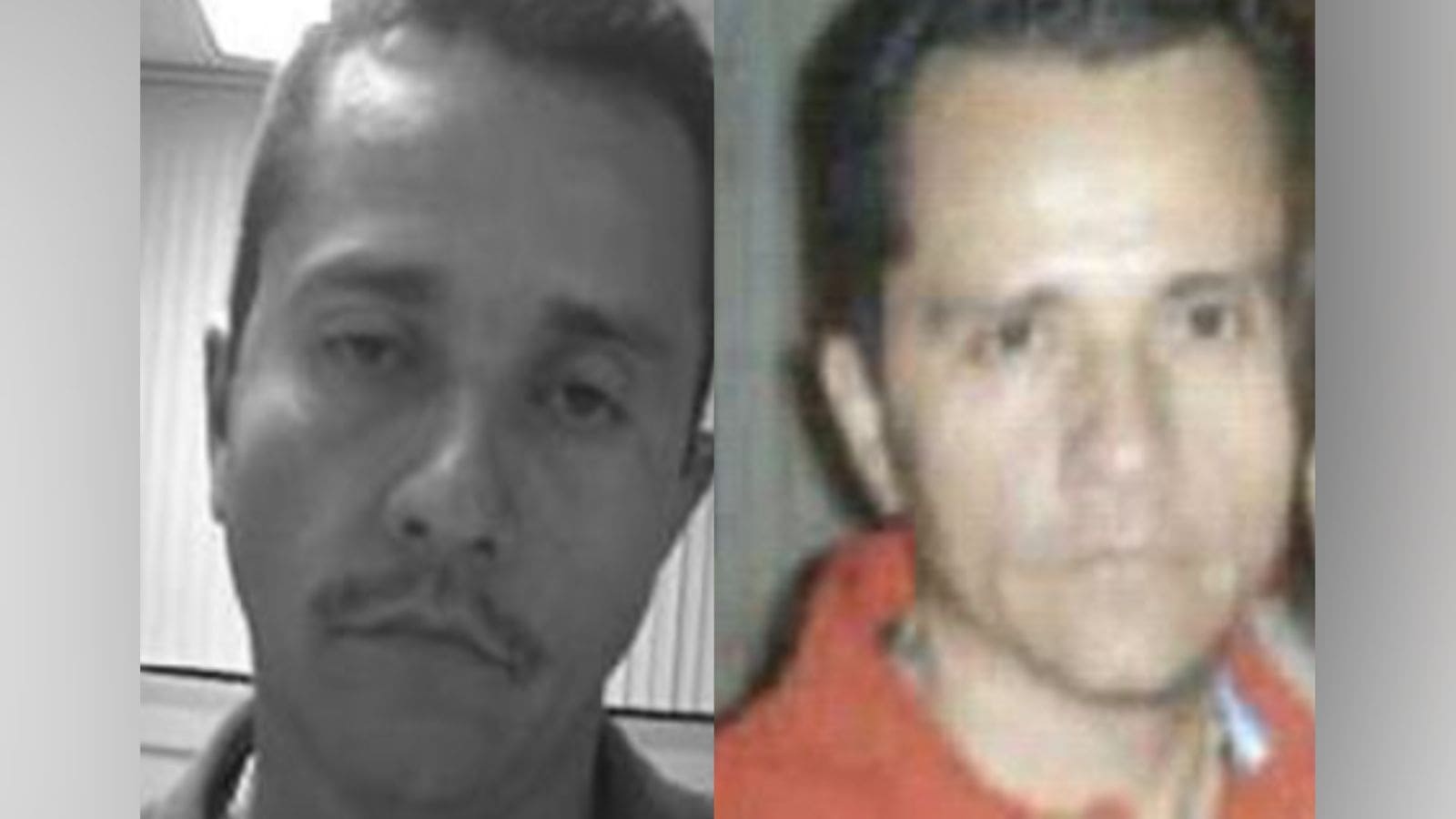
The mainstream media loves a "femme fatale" narrative because it’s easy to sell. It turns a complex geopolitical assassination into a Shakespearean tragedy. According to the latest headlines, Nemesio "El Mencho" Oseguera Cervantes—the ghost who outmaneuvered the DEA and the Mexican government for decades—was finally brought down because he followed a trail of breadcrumbs left by a romantic partner.
It’s a neat story. It’s also an insult to your intelligence. If you liked this article, you might want to look at: this related article.
If you believe that a man who built the Cartel Jalisco Nueva Generación (CJNG) into a multi-billion dollar paramilitary organization was undone by a simple "love connection," you don't understand how power works. This wasn't a failure of the heart; it was a failure of the business model. The romantic lead is a distraction, a convenient scapegoat used by security agencies to hide the much uglier reality of high-level betrayal and the inevitable decay of decentralized criminal franchises.
The Intelligence Agency Fairytale
Whenever a high-profile target is "neutralized," the official report usually highlights a single, human error. A cell phone call. A birthday party. A mistress. This serves two purposes. First, it makes the intelligence agencies look like surgical geniuses who were just waiting for that one slip-up. Second, it protects the real sources: the high-level informants within the CJNG who traded El Mencho's head for their own immunity. For another look on this story, see the latest update from BBC News.
I have watched how these narratives are constructed. When you’re dealing with an organization that has an annual revenue estimated at over $20 billion, you aren't tracking "romantic trails." You are tracking money laundering nodes, chemical precursor shipments from China, and GPS pings from encrypted devices that costs thousands of dollars a month to maintain.
To suggest El Mencho fell because of a "romantic partner" is to ignore the structural rot that occurs when a cartel grows too large to manage.
The Friction of Scale
The CJNG didn’t win through drug smuggling alone. They won through vertical integration. They controlled everything from the ports in Colima to the street corners in Seattle. But there is a mathematical limit to how much territory one man can oversee without delegating power to regional lieutenants who eventually decide they’d rather be the CEO than a middle manager.
In any high-stakes organization, the founder’s greatest threat isn't the police; it’s the Succession Paradox.
- If the leader is too strong, he creates a vacuum when he leaves.
- If he is too weak, his subordinates eat him alive.
- If he stays too long, he becomes a liability to the very people who protect him.
El Mencho didn't die because of a woman. He died because he became more expensive to keep alive than to sacrifice.
Dismantling the Kingpin Strategy
The "Kingpin Strategy"—the idea that cutting off the head of the snake kills the body—is the most persistent lie in modern law enforcement. It hasn't worked with El Chapo, and it won't work with the CJNG.
When you remove a guy like El Mencho, you don’t create peace. You create a "market opening." We have seen this play out with the fragmentation of the Beltrán-Leyva Organization and the Zetas. Removing the top layer triggers a violent, democratic scramble for the throne.
The media focuses on the "capture" or the "kill" because it provides a sense of closure. But in the world of illicit commodities, there is no closure. There is only a shift in the balance sheet.
Why Romantic Trails are a Tactical Myth
Think about the logistics of "following a partner."
- Counter-Surveillance: The CJNG spends more on security than some small nations. Their inner circle doesn't use WhatsApp. They use localized mesh networks and human couriers.
- The Buffer Zone: High-level drug lords rarely share a physical space with their partners for more than a few hours.
- Signal Noise: Intelligence agencies are flooded with thousands of "leads" regarding the locations of high-value targets.
The "romantic trail" is the story they tell the public to mask the fact that they likely used signals intelligence (SIGINT) and deep-cover human assets (HUMINT) to triangulate a location over months, if not years. The girlfriend isn't the lead; she’s the corroboration.
The Business of Brutality
The CJNG changed the game by treating violence not as a last resort, but as a marketing expense. They were the first to use high-quality video production to broadcast their military-grade hardware. This wasn't just posturing; it was a hostile takeover of the Mexican criminal landscape.
The mistake people make is viewing El Mencho as a "criminal." He was a disruptor. He took the traditional, semi-feudal model of the Sinaloa Cartel and replaced it with a franchise model based on extreme violence and rapid expansion.
The Downside of Disruption
The problem with the CJNG’s model—and the reason for El Mencho’s eventual vulnerability—is that it requires constant growth to remain stable.
- High Overhead: Maintaining a private army of thousands is prohibitively expensive.
- No Loyalty: When your brand is built on "pure violence," you attract people who are only loyal to the biggest paycheck or the scariest threat.
- Heat: Unlike the Sinaloa Cartel, which often tried to maintain a "low-profile" (relatively speaking) through bribery, the CJNG’s blatant attacks on government officials made it impossible for the state to look the other way.
El Mencho’s end was a foregone conclusion the moment he ordered the shoot-down of a military helicopter with an RPG. You can bribe the government, but you cannot humiliate it and expect to survive.
Stop Asking "How He Was Caught"
The question isn't how the trail was followed. The question is who authorized the hit? In Mexico, the line between the state and the cartels is not a wall; it’s a revolving door. The capture or killing of a major figure is almost always a negotiated settlement between rival factions and political actors.
Imagine a scenario where the CJNG had become too volatile for the Mexican government’s comfort. The "romantic partner" narrative is the perfect "clean" explanation that allows everyone to move on without looking at the bank accounts of the generals or the politicians who facilitated El Mencho’s rise in the first place.
The Real Intelligence Gap
We focus on the "romantic" angle because we are obsessed with the individual. We want to believe that these titans of industry have a human weakness. It’s a comforting thought. It suggests that they are relatable.
They aren't.
El Mencho was a logistical genius who managed a global supply chain under the threat of constant assassination. If he slipped up, it wasn't because he was "in love." It was because the system he built—a system of high-velocity turnover and brutal competition—finally produced a variable he couldn't control.
The Fallout of the Vacuum
What happens now isn't the end of the CJNG. It’s the Balkanization of Jalisco.
Without the centralizing force of El Mencho, the regional "plaza bosses" will now go to war. The violence will not decrease; it will become more erratic. When there is a clear kingpin, there are rules. When there is a power vacuum, there is only chaos.
If you’re looking for a silver lining, you won't find one here. The "romantic trail" story is a distraction from the reality that we are just entering a more disorganized, and therefore more dangerous, phase of the drug war.
The media will keep feeding you the soap opera version. They'll talk about the heartbreak and the betrayal. But if you want to understand the truth, look at the logistics. Look at the succession lines. Look at the money.
The king is dead. Long live the next iteration of the machine.
Don't look for the woman. Look for the ledger.