Donald Trump’s recent rhetoric regarding Iran has shifted from the targeted pressure of his first term toward a more visceral, scorched-earth vocabulary. By threatening to bomb the Iranian shoreline into oblivion, the former president is signaling a departure from the "Maximum Pressure" campaign of 2018. That era was defined by secondary sanctions and the pursuit of a better nuclear deal. This new stance suggests a transition to a kinetic, maritime-focused conflict that would prioritize the total destruction of infrastructure over diplomatic leverage.
The core of this strategy rests on the assumption that Iran’s economic and military backbone is its coastal access. By framing a potential conflict as a systematic leveling of the shoreline, Trump is targeting the Islamic Revolutionary Guard Corps (IRGC) Navy and the vital oil terminals that keep the regime’s checkbook balanced. It is a blunt instrument. It ignores the intricate web of proxy influence across the Levant and focuses instead on a high-definition display of American naval and air superiority. This approach appeals to a specific voter base that is weary of "forever wars" but still demands a show of overwhelming force if provoked. However, the reality of such an operation would ripple through global energy markets and maritime insurance rates in ways that are rarely discussed on the campaign trail. Recently making waves lately: The Kinetic Deficit Dynamics of Pakistan Afghanistan Cross Border Conflict.
The Geography of Eradication
Threatening a shoreline sounds simple in a stump speech. In practice, it involves a complex theater of operations across the Persian Gulf, the Gulf of Oman, and the Strait of Hormuz. Iran’s coastline is not just sand and fishing villages. It is a jagged, 1,500-mile stretch of hardened silos, fast-attack craft bases, and sophisticated anti-ship missile batteries.
If a U.S. administration were to execute a "bomb the hell out of the shoreline" order, the primary targets would be the energy hubs. Kharg Island handles roughly 90 percent of Iran’s crude exports. Assaluyeh serves as the gateway to the massive South Pars gas field. Taking these out would effectively decapitate the Iranian economy. But it wouldn't be a one-sided affair. Iran has spent decades preparing for exactly this scenario, turning its coast into a "honeycomb" of defensive positions designed to survive an initial aerial bombardment and strike back at the heartbeat of global commerce. Additional insights regarding the matter are covered by The Guardian.
The Choke Point Calculus
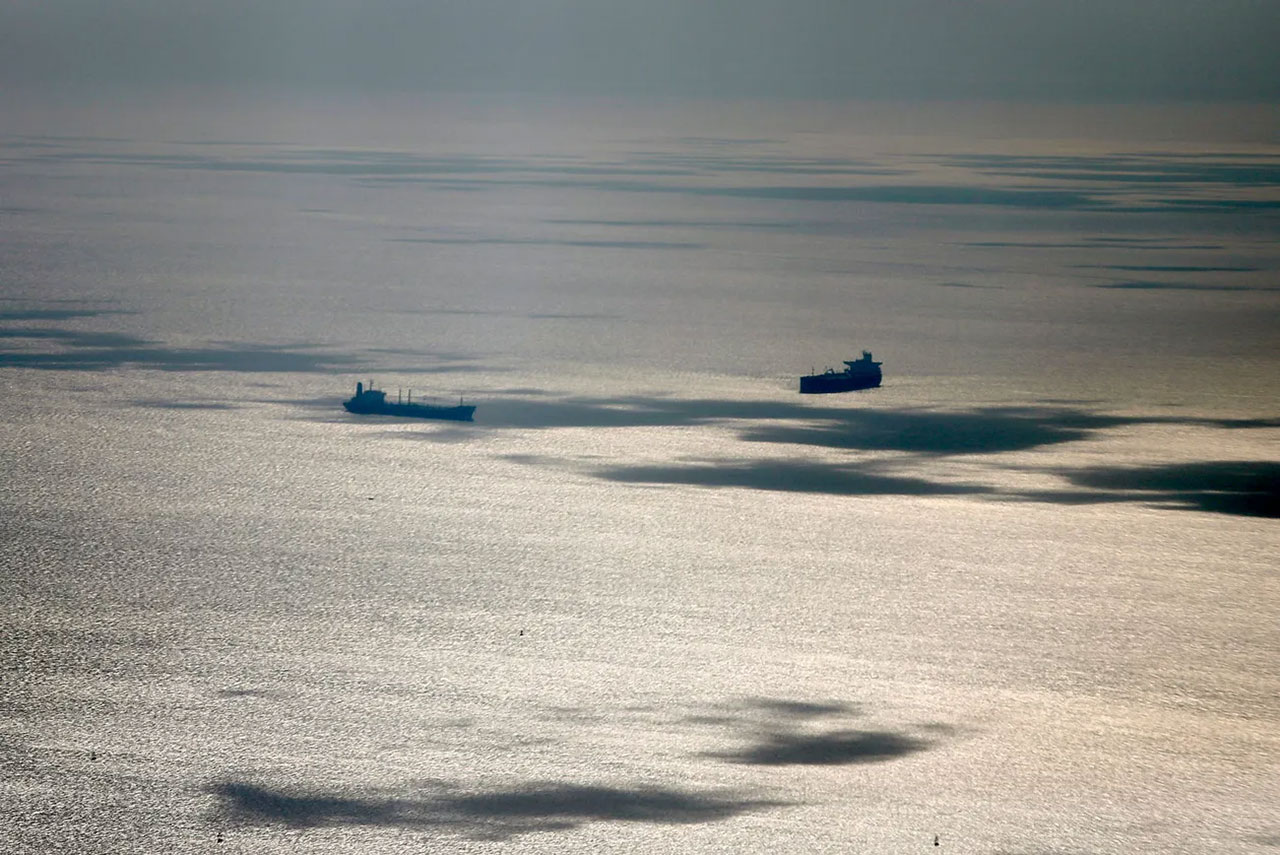
The Strait of Hormuz is the world's most sensitive carotid artery. Approximately one-fifth of the world’s daily oil consumption passes through this narrow waterway. When an American leader talks about a total coastal strike, they are implicitly accepting a total closure of the Strait.
Insurance giants like Lloyd’s of London do not wait for the first bomb to fall. They react to the credible threat of one. A shift toward a shoreline-leveling policy would send "war risk" premiums into the stratosphere before a single F-35 left a carrier deck. For the average consumer, this means the price at the pump is determined not just by the supply of oil, but by the perceived safety of the ships carrying it. Trump’s bravado assumes that the U.S. can absorb the shock of a $150-a-barrel world while Iran bears the brunt of the physical destruction. It is a high-stakes gamble on American economic resilience.
Logistics of an Aerial Campaign
Modern warfare is a game of munitions and endurance. To "bomb the hell" out of a coast requires a sustained sortie rate that would dwarf the opening days of the 2003 Iraq invasion. We are talking about thousands of precision-guided munitions.
A campaign of this magnitude would rely heavily on the U.S. Navy’s Fifth Fleet and the Air Force’s Global Strike Command. B-2 Spirit and B-21 Raider stealth bombers would be tasked with neutralizing Iran’s Russian-made S-300 and domestically produced Bavar-373 air defense systems. Once the "eyes" of the Iranian military are poked out, the focus would shift to the "muscles"—the IRGC shipyards and missile factories tucked into the cliffs of the southern coast.
But there is a technical hurdle that politicians rarely mention. Iran’s most critical assets are buried deep underground or carved into the Zagros Mountains near the coast. Traditional "dumb" bombs or even standard JDAMs cannot reach these facilities. To truly neutralize the shoreline's military capacity, the U.S. would have to deploy Massive Ordnance Penetrators (MOPs). These are 30,000-pound bunker busters that only a few aircraft in the world can carry. This isn't a weekend operation; it is a months-long grind that requires a massive logistics tail stretching back to the continental United States.
The Proxy Counter-Strike
The most significant flaw in the shoreline-centric strategy is the belief that Iran’s power is confined to its geography. If the Iranian coast is being leveled, Tehran will not simply watch from the balcony. They will activate the "Ring of Fire."
From Hezbollah in Lebanon to the Houthis in Yemen and various militias in Iraq and Syria, the response would be decentralized and devastating. We have already seen what a few Houthi drones can do to Red Sea shipping. Now, imagine that escalated by a factor of ten. While the U.S. is focused on the Iranian shoreline, American bases in the region and allied infrastructure in Saudi Arabia and the UAE would become targets for thousands of loitering munitions.
The Digital Shoreline
We must also consider the non-kinetic front. Iran’s cyber capabilities have grown exponentially since the Stuxnet era. A physical attack on their shoreline would likely trigger a digital attack on the American financial system or power grid. This is the gray zone of modern conflict where the boundaries of the "shoreline" disappear. An attack in the Persian Gulf could lead to a blackout in Cincinnati.
Economic Fallout and the China Factor
A total war on the Iranian coast would force China’s hand. Beijing is the primary buyer of Iranian "teaspoon" oil—crude sold through clandestine transfers to circumvent U.S. sanctions. If the U.S. destroys the terminals that supply China's independent refineries, it isn't just an attack on Iran; it is a direct blow to Chinese energy security.
China has spent years building a strategic partnership with Tehran. While they are unlikely to join a hot war on Iran’s behalf, they would certainly provide the intelligence and electronic warfare support necessary to make an American campaign as painful as possible. The geopolitical cost of leveling the shoreline might be the final push that solidifies a Moscow-Tehran-Beijing axis, fundamentally changing the balance of power in Eurasia for a generation.
The Humanitarian and Environmental Disaster
Beyond the missiles and the oil prices lies a grim reality. The Iranian coastline is home to millions of people. Bander Abbas is a major civilian port. A scorched-earth policy would create a refugee crisis that would dwarf the Syrian civil war, pushing millions of people toward a Turkey and Europe that are already at a breaking point.
Furthermore, the environmental impact of destroying oil refineries and chemical plants along a closed body of water like the Persian Gulf would be catastrophic. The Gulf is shallow and has a slow flush rate. Massive oil spills would destroy the desalination plants that provide drinking water for the entire Arabian Peninsula. You could "bomb the hell" out of Iran’s coast and accidentally dehydrate your own allies in Riyadh and Dubai.
Sovereignty and the New International Order
The threat of total destruction as a primary diplomatic tool marks the end of the post-WWII international order. If the U.S. moves from targeted strikes against military assets to the wholesale destruction of a nation's shoreline, it signals to every middle-power nation that the only true security lies in nuclear proliferation.
Why would a country negotiate if the alternative is the total erasure of its coastal infrastructure? This rhetoric creates a "use it or lose it" mentality in Tehran. If they believe the shoreline is going to be destroyed regardless of their actions, the incentive to rush toward a nuclear breakout becomes overwhelming. It turns a cold war into a race toward a thermal one.
Trump’s comments aren't just about military tactics. They are about a philosophy of power that prioritizes the shock and awe of destruction over the messy, slow work of containment. It is a vision of a world where the U.S. no longer manages crises but attempts to end them through sheer physical force. Whether that force can actually achieve a lasting political objective remains the most uncomfortable question in Washington.
The American military is undoubtedly capable of destroying the Iranian shoreline. The question is whether the United States is prepared to live in the world that remains after the smoke clears. War is easy to start when you focus on the targets. It is much harder to manage when the targets start hitting back.
Reach out to your local representatives and ask for a clear briefing on the economic impact of a Persian Gulf conflict on domestic energy prices.