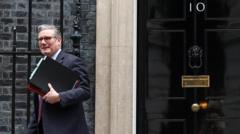
If you thought the 2024 landslide bought Keir Starmer a decade of peace, the last 48 hours have been a brutal reality check. The Gorton and Denton by-election wasn't just a loss; it was a total collapse. Watching the Greens leapfrog Labour in a seat they held with over 50% of the vote just two years ago isn't just a "mid-term blues" moment. It's a structural failure.
Starmer's project is currently stuck in a pincer movement between an insurgent right and a deserting left. His approval ratings have bottomed out at $-57$, trailing even Rishi Sunak’s worst days. Honestly, the mood in Westminster feels less like a government in its prime and more like a late-stage administration gasping for air. People are angry, and the "change" they were promised feels like a rebranding of the same old stagnation.
There are three specific anchors dragging him down right now, and frankly, only one narrow path to staying in Number 10.
The Mandelson fallout and the trust deficit
The appointment of Peter Mandelson as the UK Ambassador to the US was supposed to be a masterstroke of "adults in the room" diplomacy. Instead, it’s become a millstone. The timing could not have been worse. With the reopening of the Epstein files and Mandelson’s subsequent arrest, the "government of service" slogan looks like a sick joke.
You can't pitch yourself as the man who cleaned up the Post Office and the NHS while your hand-picked envoy is caught in a scandal involving a convicted sex offender. It’s not just about the legalities; it’s about the vibe. Voters hate feeling like the elite are back to their old tricks. Recent polling shows 56% of the public think Starmer's judgment was fundamentally flawed here.
When you lose the moral high ground, you lose the ability to ask for sacrifices. And with the Spring Statement looming, those sacrifices are exactly what Rachel Reeves is about to demand.
The Gorton and Denton disaster
The Greens winning in northern England is a seismic shift. For years, the Labour strategy under Morgan McSweeney was to ignore the left. The theory was simple: where else are they going to go? They assumed progressive voters would hold their noses and vote Labour to keep Reform out.
They were wrong.
The by-election results from February 27, 2026, show that progressives are no longer scared of the Reform "bogeyman" enough to tolerate a Labour party that looks like Tory-lite. By shifting right on immigration and being seen as overly accommodating to Donald Trump's new administration, Starmer has left the back door wide open. The Greens didn't just win; they humiliated the government.
It turns out that if you treat your core base like a nuisance, they’ll eventually find a new home. In Gorton, that home was Hannah Spencer and the Green Party. This isn't a one-off. It’s a blueprint for the local elections in May. If Starmer doesn't pivot, he's looking at a massacre in London and the northern councils.
The Trump dilemma and global weakness
Starmer has spent a huge amount of political capital trying to play the "bridge" between Europe and the US. But with Trump 2.0 in full swing and the US launching "major combat operations" in Iran, that bridge is on fire.
The British public is deeply skeptical of following the US into another Middle Eastern conflict. Starmer’s "pragmatic" approach to Trump—which basically looks like flattery from a distance—is tanking his numbers at home. People want a leader who stands up for British interests, not one who looks like a junior partner waiting for instructions.
One-third of Western Europeans now want their leaders to be more confrontational with the US. By trying to please everyone, Starmer is pleasing nobody. He’s seen as weak on the global stage and out of touch at home.
What could actually save him
It sounds dire because it is. But Starmer isn't finished yet. There’s a slim chance of a rebound, but it requires him to stop playing defense.
First, the economy has to start feeling real for people. GDP growth of 0.1% isn't enough to pay the bills. If the upcoming rate cuts actually happen in March, and mortgage holders start seeing a few extra pounds in their pockets, the anger might cool. Money talks louder than scandals.
Second, he needs a "sacrificial lamb." Morgan McSweeney’s departure was a start, but it might need to go higher. A radical cabinet reshuffle that brings in popular figures like Andy Burnham—who was suspiciously blocked from the Gorton race—could signal a genuine change in direction.
Third, he has to stop being afraid of his own shadow. The public respects conviction, even if they disagree with the policy. If he continues to triangulate every decision based on what a focus group in a swing seat thinks, he’ll continue to look like a man without a soul.
The next few weeks are the most critical of his premiership. If the May local elections go as badly as the polls suggest, the letters of no confidence won't just be a trickle; they'll be a flood.
Keep an eye on the Spring Statement on March 15. That’s the moment we’ll see if the government has any original ideas left or if they're just managing the decline.