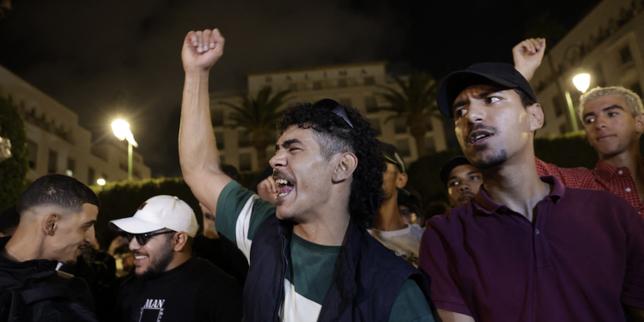
The arrest of Moroccan rappers associated with Generation Z activism represents more than an isolated judicial event; it is a systemic collision between the decentralized distribution of digital culture and the centralized maintenance of institutional prestige. In Morocco, rap has transitioned from a niche musical genre into a primary socio-political dashboard. When the state intervenes via the penal code—specifically targeting "insulting public officials" or "breach of public morality"—it is not merely reacting to lyrics. It is attempting to recalibrate a power asymmetry created by the viral reach of dissenting narratives. Understanding this friction requires a breakdown of the three structural pillars: the legislative framework of "Red Lines," the socio-economic profile of the Gen Z listener, and the digital bypass of traditional media gatekeeping.
The Legislative Friction Point: Article 263 and Beyond
The Moroccan penal system operates on a framework of "sacred constants" (Les Constantes). These include the Monarchy, Islam, and Territorial Integrity. While the 2011 Constitution nominally guarantees freedom of expression, the operational reality for artists is governed by specific articles in the Penal Code that remain broadly defined.
- The Ambiguity of Intent: Article 263 and 264 of the Moroccan Penal Code penalize "contempt of authority" and "insulting organized bodies." The legal bottleneck occurs because "contempt" is subjective. For a rapper, a metaphor about police presence in a slum is artistic realism; for a prosecutor, it is a criminal provocation.
- Digital Surveillance and the Press Code: While journalists are theoretically protected from prison sentences under the 2016 Press Code, rappers are often prosecuted under the Penal Code or the Digital Crimes laws. This creates a dual-track legal reality where creative expression via YouTube or Spotify is treated with higher legal severity than formal editorial content.
- Precedent as a Deterrent: The sentencing of figures like Gnawi or El Haqed in previous years established a "cost function" for political speech. Recent arrests suggest the state has updated this cost function to include the digital ecosystem of Gen Z, where even "liking" or sharing content can lead to judicial scrutiny.
The Demographic Catalyst: Why Gen Z Altered the Risk Profile
The Moroccan demographic pyramid is heavily weighted toward the under-30 category. This cohort—Generation Z—possesses a distinct psychological and economic profile that differentiates it from previous "rebellious" generations like the 20th-century Marxists or the 2011 February 20th Movement.
The Disconnect of the "Hrig" Mentality
For a significant portion of this demographic, the "Moroccan Dream" has been replaced by the "Hrig" (clandestine migration) ambition. When rappers speak to this, they are tapping into a profound sense of "Hogra"—a term used to describe feelings of disenfranchisement and perceived injustice. The state views this resonance as a national security risk because it delegitimizes the official narrative of developmental success (the "New Development Model").
The Peer-to-Peer Authority Model
Traditional authority figures—parents, teachers, and state media—have lost their monopoly on truth. Moroccan Gen Z consumers validate information through a peer-to-peer network. Rap is the "white paper" of this network. A single track by an underground artist can garner ten million views in a week, dwarfing the reach of every state-aligned television channel combined. This reach transforms a song from "entertainment" into "mobilization," which triggers the state's security apparatus.
The Digital Bypass: Disintermediation of Content
Historically, the state could control dissent by controlling the printing presses and the airwaves. The current wave of arrests highlights a failure of this traditional censorship model.
- Platform Neutrality: Platforms like Spotify, YouTube, and Instagram are agnostic to Moroccan local laws until a formal takedown request is issued, which often brings more international "Streisand Effect" attention than the original content.
- The Monetization of Dissent: Unlike previous generations of protest singers who relied on physical gatherings, modern Moroccan rappers monetize their dissent via global ad revenue. This financial independence from local patronage networks makes them harder to co-opt.
- Decentralized Fanbases: When a rapper is arrested, the "brand" does not die. The digital footprint remains, and the arrest often serves as a catalyst for increased streaming numbers, creating a paradoxical incentive structure where judicial "martyrdom" increases market value.
The Mechanism of "Moral Policing" as a Strategy
The recent arrests often use "public morality" or "drug incitement" as the formal justification rather than "political dissent." This is a tactical choice by the prosecution for several reasons. First, it avoids creating "political prisoners," which would draw the ire of international human rights organizations like Amnesty International. Second, it attempts to alienate the rappers from the more conservative segments of the Moroccan middle class.
By framing an arrest around a "breach of modesty" or "drug promotion," the state shifts the debate from "freedom of speech" to "protection of the youth." However, this strategy is losing its efficacy. The Gen Z audience views these charges as a transparent pretext. The result is a widening "trust deficit" between the state's judicial narrative and the street's perception of reality.
The Economic Cost of Cultural Suppression
There is an unquantified economic dimension to this crackdown. Morocco is positioning itself as a hub for the "Creative Economy" and tourism. The arrest of cultural icons—even controversial ones—creates a perception of instability and lack of "soft power" maturity.
The "Orange Economy" (creative industries) relies on a degree of irreverence to thrive. By tightening the parameters of what is acceptable in rap, the state inadvertently stifles the very creative energy it seeks to export via festivals like Mawazine. This creates a paradox: the state wants the economic benefits of a vibrant music scene without the social friction that such a scene naturally produces.
Strategic Forecast: The Evolution of the Friction
The current trajectory indicates that judicial pressure will not silence the genre but will instead force it into more sophisticated forms of expression.
- Increased Use of Allegory: Expect rappers to move away from direct "clash" lyrics toward more complex, metaphorical storytelling that is harder to prosecute under "contempt" laws.
- International Offshoring: High-profile artists may begin to record and publish from European hubs (Paris, Brussels, Barcelona) to circumvent local jurisdiction while maintaining their domestic Moroccan audience via the internet.
- The Rise of the "Ghost Artist": We may see a rise in anonymous or AI-generated rap personas where the legal entity responsible for the content is impossible to locate or arrest.
The Moroccan state faces a choice between the "Security Model" of total containment and the "Integration Model." The security model—arresting influencers and rappers—offers short-term silence but builds long-term resentment in a demographic that will comprise the majority of the workforce by 2030. The integration model would require a radical update to the Penal Code, shifting the burden of proof from "perceived insult" to "direct incitement to violence."
The immediate tactical move for stakeholders—including international observers and local civil society—is to advocate for the decoupling of "artistic hyperbole" from "criminal intent." Without this legal distinction, the Moroccan creative landscape will remain a theater of cyclical arrests, where the only winner is the algorithm that thrives on the very controversy the state seeks to suppress.
Stop viewing rap as a musical trend and start analyzing it as a decentralized political party. The arrests are not a sign of state strength, but an admission that the traditional tools of social management are failing to engage the digital native. The next phase of this conflict will likely be fought in the technical realm of platform moderation and VPN usage, as the physical arrest of the body fails to stop the digital transmission of the message.