A cold wind rattles the shutters of a small home in the suburbs of Tehran, while halfway across the world, a commodity trader in a glass-walled office in Chicago watches a flickering green line on a monitor. They do not know each other. They will never meet. Yet, both are holding their breath, tethered to the same unpredictable rhythm of a voice emanating from Mar-a-Lago.
The geopolitical stage is often described as a chessboard, but that metaphor is too orderly, too logical. It implies that every move is calculated three steps ahead. What we are witnessing regarding the United States, Donald Trump, and the specter of conflict with Iran is less like chess and more like a high-stakes poker game played in a room where the lights keep flickering. One moment, the rhetoric is a roar of "maximum pressure." The next, it is a whispered invitation to a historic deal.
This is the reality of the mixed signals currently defining the American approach to Iran. It is a strategy built on the power of the pivot.
The Weight of the Silence
Consider a hypothetical young diplomat named Elias. He sits in a windowless room at the State Department, surrounded by transcripts of speeches and social media posts. His job is to find the "red line"—the point of no return. But every time he thinks he has found it, the line moves.
This uncertainty is not a mistake. It is the core of the doctrine. When the signals are mixed, the opponent is paralyzed. They cannot prepare for a war that might not happen, and they cannot commit to a peace that feels like a trap.
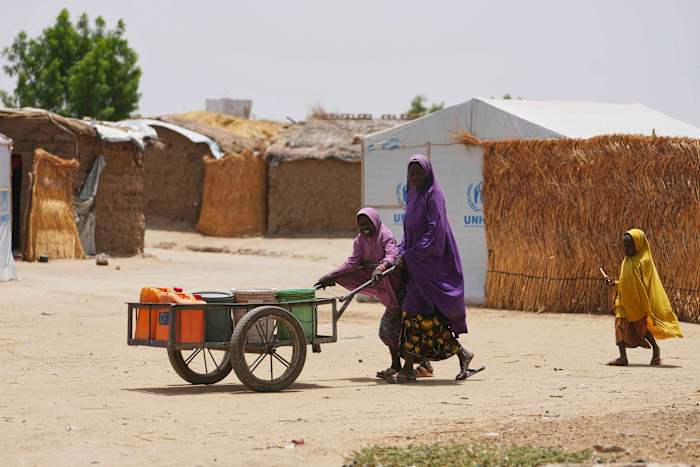
The stakes are not just in the high-walled offices of the Pentagon. They are in the price of a gallon of gasoline at a station in rural Ohio. They are in the eyes of a mother in a village near the Iranian border, wondering if her son will be drafted into a war that is both promised and postponed.
The facts are clear: the United States has the military capability to devastate any adversary's infrastructure within days. Yet, the current administration—under the shadow of a return to the White House—has often shown a deep, visceral reluctance to engage in "forever wars." It is a contradiction that leaves both allies and enemies in a state of constant, low-grade anxiety.
The Architect of the Unknown
History is littered with leaders who spoke loudly and carried big sticks. But Donald Trump’s approach to Iran is more like a hall of mirrors. In 2018, the United States withdrew from the Joint Comprehensive Plan of Action (JCPOA), a move that sent shockwaves through the global community. The goal was to strangle the Iranian economy into submission.
But the pressure was always punctuated by an open door.
"I want them to be a great country," he has said, more than once. This is the pivot. The same man who orders the strike on a high-ranking general is the man who talks about the "incredible potential" of the Iranian people. It is a whiplash that defies traditional diplomacy.
Consider the Iranian side of this equation. In the corridors of power in Tehran, the debate is not just about American power, but American personality. Is the threat a bluff? Is the offer of a "better deal" a genuine olive branch or a Trojan horse?
When the signals are mixed, the risk of a miscalculation grows. A single misunderstood move in the Strait of Hormuz could ignite a fire that neither side actually wants to fight. This is the invisible cost of the strategy—the constant threat of an accidental war.
The Human Element of the Ledger
Let’s talk about a small business owner in Esfahan. We'll call him Hamid. He sells hand-woven rugs, a craft that has survived for centuries. But Hamid’s business is dying. Not because people don't want his rugs, but because the banking systems are frozen.
Hamid watches the news. He sees the headlines about "mixed signals." To him, these aren't just headlines. They are the difference between being able to afford his daughter’s university tuition and having to tell her she needs to find work in a factory.
The human element is the most ignored part of the geopolitical puzzle. We talk about "maximum pressure" as if it is a dial on a machine, but it is a weight on a human chest. When the signals from Washington shift, the price of bread in Tehran fluctuates. The hope of a generation is tied to a 280-character post or a soundbite from a rally.
The United States, meanwhile, is caught in its own internal struggle. On one hand, there is the desire to curb regional aggression and prevent nuclear proliferation. On the other, there is a profound exhaustion with the role of the world's policeman.
This exhaustion is real. It’s the fatigue of a nation that has spent trillions of dollars and thousands of lives in the sands of the Middle East. The "mixed signals" are, in many ways, a reflection of a country that is deeply conflicted about its own power.
The Strategy of the Surprise
In the world of standard diplomacy, predictability is the ultimate currency. You want your enemy to know exactly what will happen if they cross a certain line. But the "art of the deal" thrives on the opposite.
By keeping the signals mixed, the administration retains the most valuable asset in any negotiation: the element of surprise.
If Iran believes a war is imminent, they might strike first. If they believe a deal is certain, they might wait. By keeping them in a state of constant "maybe," the United States forces Tehran to react to American initiative, rather than the other way around.
But there is a thin line between being unpredictable and being incoherent.
When the signals are too mixed, the message is lost. Alliances begin to fray. Allies who were once willing to follow the lead of the United States start to look for their own paths, fearing that they might be caught in a crossfire that wasn't supposed to happen.
The European nations, for instance, have long tried to bridge the gap. They are caught between their commitment to the original nuclear deal and their need to maintain a strong relationship with Washington. For them, the mixed signals aren't a strategy; they are a migraine.
The Sound of the Pendulum
Imagine the silence of a command center late at night. The hum of the servers is the only sound. On the screens, satellites track movements in the desert. In another room, analysts listen to the radio traffic of a foreign navy.
The pendulum swings.
One day, the talk is of "annihilation." The next, it’s about a "bright future."
This is not a story about a single plan or a single war. It is a story about the tension that defines our era—the tension between the desire for dominance and the fear of its consequences.
The mixed signals are the sound of a superpower trying to find its footing in a world that no longer follows the old rules. It is the sound of a leader who believes that the only way to win is to make sure no one else knows the score.
And while the world waits for the next signal, the people on the ground continue their lives. Hamid in Esfahan waits for the banks to open. The commodity trader in Chicago waits for the market to move. The young diplomat in D.C. waits for a red line that stays still.
The pendulum doesn't stop. It just changes its arc.
The danger isn't that the signals are mixed. The danger is that, eventually, everyone stops listening. And when the signals lose their meaning, the only thing left is the noise of the conflict itself.
The shadows on the wall are long. The sun is setting over the Persian Gulf. In the fading light, the gray hulls of warships are barely visible against the dark water, silent, waiting for a command that might change everything—or mean nothing at all.