Moscow is gasping for air.
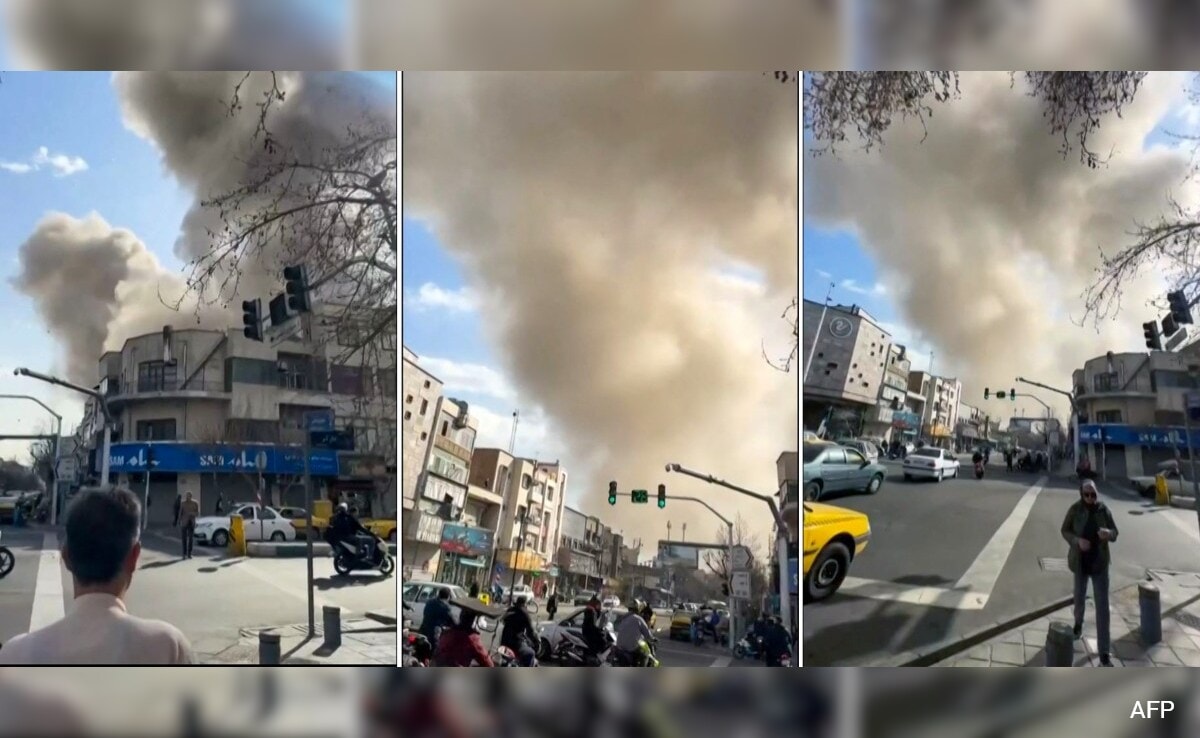
Whenever you see the Kremlin "blasting" a joint military operation between the United States and Israel, don't mistake it for moral high ground or a genuine concern for regional stability. It is a calculated distraction. The recent strikes on Iranian infrastructure aren't just a display of kinetic power; they are a funeral for the idea that Russian hardware can protect its proxies.
The media loves a "True Colours" headline. It’s easy. It’s lazy. It suggests that the US and Israel are finally being honest about their aggression. The real story isn't about honesty. It’s about the total failure of Russian electronic warfare (EW) and surface-to-air missile (SAM) systems to stop the inevitable.
Russia is currently a paper tiger with a megaphone. While they issue press releases about "violated sovereignty," their best-selling export—the S-400 Triumf—is being systematically dismantled by the very technology it was designed to counter.
The Myth of the Neutral Arbiter
For years, Vladimir Putin played a delicate game. He was the only man who could talk to Netanyahu, Khamenei, and Assad in the same afternoon. The industry consensus was that Russia held the keys to the Middle East because it was the "rational actor" compared to a "blundering" Washington.
That consensus is dead.
Russia isn't a neutral arbiter; it’s a sidelined spectator. When the US and Israel conduct integrated strikes, they aren't just hitting targets in Iran. They are beta-testing the next decade of warfare. They are proving that the much-vaunted Russian "A2/AD" (Anti-Access/Area Denial) bubbles are more like soap bubbles.
If Russia were actually the powerhouse the pundits claim, they wouldn't be complaining to the UN. They would be locking on. They don't lock on because they know that if they reveal their radar signatures, they lose their last shred of perceived invincibility.
The Hardware Gap is Now a Canyon
I have watched defense contractors burn through billions trying to close the gap between Western stealth and Eastern detection. For a while, it looked like a stalemate. Then came the integration of AI-driven signal processing and low-observable platforms.
The "jointness" of these strikes is the detail everyone misses. It’s not just two countries flying planes at the same time. It’s a unified data link environment where an Israeli F-35 can pass targeting data to a US Navy Tomahawk in real-time.
Russia’s indignation is a mask for their technological obsolescence. They are terrified because they realized that their EW suites—the ones they’ve been selling to Tehran and Damascus—are effectively bricks when faced with a coordinated Western strike.
Why Iran’s Defense is a Sunk Cost
If you’re Iran, you’ve spent the last decade buying Russian promises. You bought the S-300s. You bought the Tor-M1s. You thought you were buying a shield.
Imagine a scenario where you buy the world's most expensive home security system, only to watch a burglar walk through the front door because he has a master key you didn't know existed. That is Iran’s current reality.
Russia's public outcry isn't about defending Iran. It’s about protecting the brand. They need the global south to keep buying Russian weapons. If the world realizes that US-Israeli tech renders these systems useless, the Russian defense industry—a pillar of their economy—collapses.
The "Sovereignty" Hypocrisy
The Kremlin’s rhetoric about "violated sovereignty" is a masterclass in gaslighting. This is coming from the same regime that treats the borders of its neighbors like suggestions.
The "lazy consensus" in international reporting often equates the two sides: "The US strikes, Russia condemns." This false equivalence ignores the intent.
Western strikes are surgical operations aimed at preventing a nuclear-capable theocracy from destabilizing the entire Mediterranean. Russian "defense" of that theocracy is a desperate attempt to maintain a footprint in a region that is rapidly outgrowing them.
Stop Asking if These Strikes "Escalate"
The most common question in newsrooms today is: "Will this lead to a wider war?"
It’s the wrong question.
The wider war has been happening for twenty years. It’s fought in the shadows, on servers, and through proxies. These strikes are an attenuation of that war. By removing the teeth of the Iranian military apparatus, the US and Israel are actually raising the cost of escalation for Tehran.
When you break an adversary's tools, they don't fight more; they fight less.
The industry insiders who cry "escalation" are usually the ones who profit from the status quo—the endless "no war, no peace" cycle that keeps the defense budgets flowing without ever reaching a resolution.
The Intelligence Failure Nobody Talks About
Russia’s biggest embarrassment isn't that the strikes happened. It’s that they didn't see them coming.
The level of penetration required to pull off high-precision strikes in heavily defended airspace suggests a catastrophic failure of Russian-made early warning systems. We are talking about a total blackout of the "eyes and ears" that Moscow promised would stay open.
I’ve seen this before. In 2007, during Operation Orchard, Israeli jets flew through Syrian airspace (protected by Russian tech) as if they were invisible. Nearly twenty years later, the story hasn't changed. The tech has moved on, but the Russian sales pitch is still stuck in 1985.
The Economic Reality
Let’s talk about the money. Russia is currently burning its future to fund a war of attrition in Ukraine. Every missile they fire in the Donbas is a missile they can't sell to a foreign buyer.
By condemning the US-Israel strikes, Russia is trying to maintain a "value-added" perception for their remaining inventory. "Don't look at how easily they were hit," they say. "Look at how aggressive the West is."
It’s a pivot from a tech company to a PR firm.
If you are an investor or a policy-maker, you need to look past the "True Colours" headlines. The true colors being shown aren't the US's or Israel's. They are the colors of a fading superpower realizing it can no longer compete on the battlefield of the 21st century.
The Actionable Truth
If you want to understand the Middle East, stop reading official government statements. Start looking at the flight paths and the kill chains.
The US and Israel are demonstrating a level of interoperability that was science fiction a decade ago. Russia is demonstrating a level of saltiness that is purely performative.
The status quo isn't being disrupted; it’s being deleted. The era of Russia as a meaningful military counterweight in the Levant is over. They are now just the loudest guy in the room with the emptiest pockets.
Russia’s condemnation isn't a sign of strength or moral clarity. It’s the sound of a salesman realizing his product doesn't work. The next time you see a "Russia warns..." headline, remember: a warning from a man without a weapon is just a noise.
Stop listening to the noise. Watch the sky.