The Panic is the Product
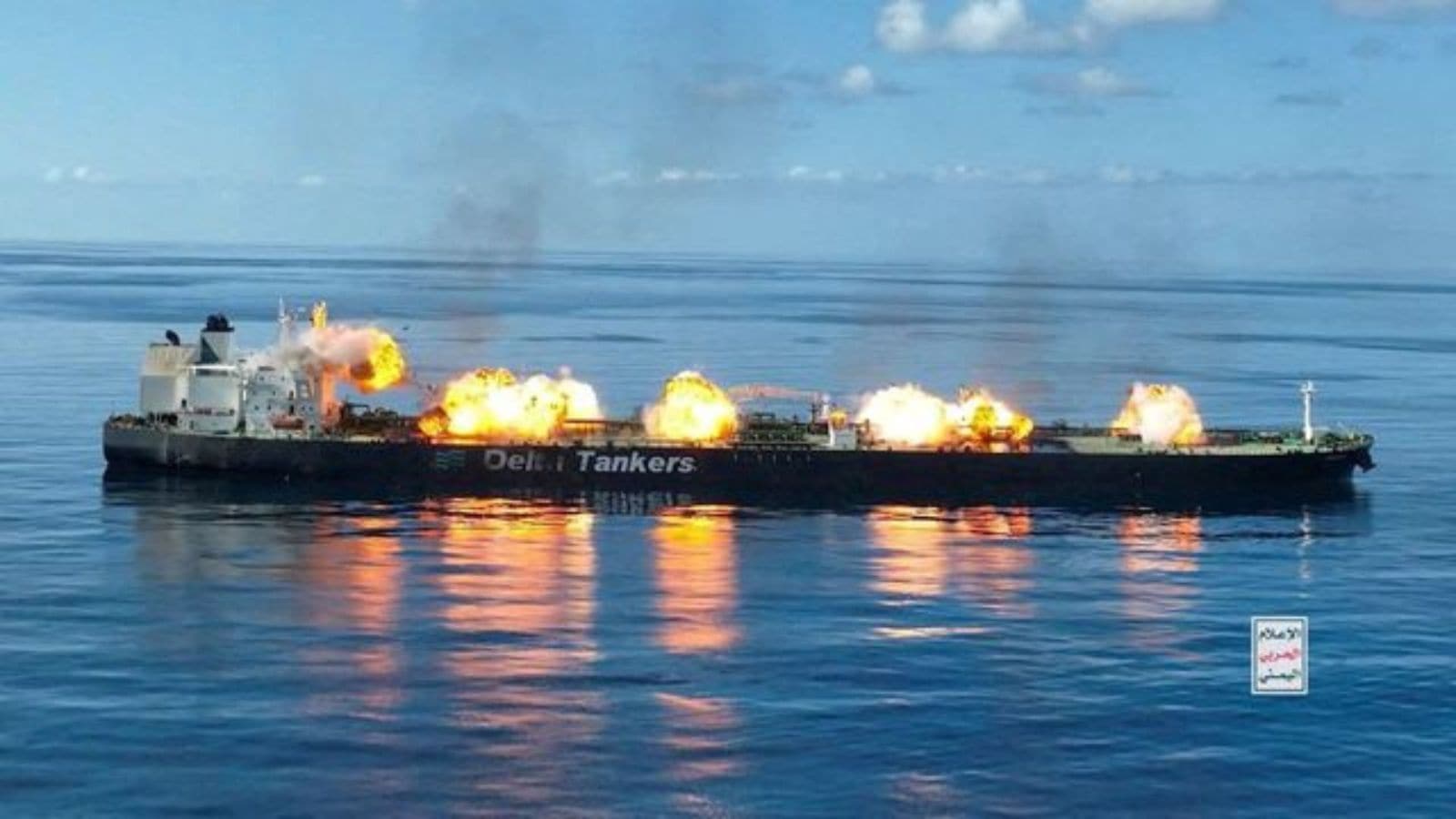
Mainstream media outlets are currently vibrating with the same exhausted narrative: an oil tanker with a crew of fifteen Indians gets hit off the coast of Oman, and suddenly the global economy is one drone strike away from a Dark Age. They point to "Middle East tensions" as if they’ve discovered a brand-new element on the periodic table. They track the hull damage, interview the families of the crew, and speculate on the price of Brent Crude with the frantic energy of a day trader on his fourth espresso.
They are missing the point entirely.
The hit on a tanker isn’t a breakdown of global trade; it is the new overhead cost of doing business in a multipolar world. If you’re shocked by a kinetic strike in the Gulf of Oman, you haven't been paying attention to the last decade of maritime logistics. We are witnessing the end of the "Safe Seas" era—a historical anomaly maintained by a singular naval hegemon—and the transition into a "Calculated Risk" era.
The ship was hit. The crew is shaken. The cargo is delayed. But the world didn't stop. That is the real story.
The Myth of the Bottleneck
Every time a projectile touches a deck near a strait, the "choke point" rhetoric comes out of the drawer. Analysts love to talk about the Strait of Hormuz or the Bab al-Mandab as if they are fragile glass pipes. They aren't. They are wide, deep-water transit zones that are nearly impossible to actually "close" in any meaningful, long-term sense.
I’ve spent years watching shipping conglomerates navigate these waters. Here is the reality they won't tell you in a thirty-second news clip: these "tensions" are a boon for the big players.
- War Risk Surcharges: Insurance premiums spike, which justifies immediate price hikes across the entire supply chain.
- Scarcity Theater: The perception of risk allows for inventory markups that far exceed the actual cost of rerouting a vessel around the Cape of Good Hope.
- Asset Utilization: Longer routes mean ships stay on the water longer, soaking up excess capacity in the market and keeping charter rates high.
When a competitor’s article wrings its hands over the "threat to global energy security," it is buying into a PR stunt. The actors firing these drones aren't trying to sink the global economy—they can't. They are performing "A2/AD" (Anti-Access/Area Denial) on a budget. It’s a marketing campaign for regional influence, and the global markets are the captive audience.
Your Supply Chain is Too Soft
If your business model collapses because one Suezmax tanker takes a hit off Oman, you don’t have a "geopolitical problem." You have a math problem.
For thirty years, "Just-in-Time" manufacturing turned the global ocean into a giant, floating conveyor belt. It was efficient. It was cheap. It was also incredibly stupid. It assumed that the geopolitical climate would remain a static 72 degrees Fahrenheit forever.
The industry insiders I talk to—the ones actually moving the valves—aren't crying about Oman. They are laughing at the companies that still haven't built "Just-in-Case" redundancies.
Imagine a scenario where 20% of the world's tanker fleet is permanently diverted from these zones. In the short term, prices jump. In the medium term, we see the aggressive acceleration of localized refining and energy independence. This "crisis" is actually a violent, necessary nudge toward a more resilient, decentralized energy grid. We are decoupling from the obsession with single-point-of-failure transit zones.
The Indian Crew Narrative is a Distraction
Note how every headline prominently features the "15 Indian crew members." This is a calculated play for empathy and nationalistic engagement. While the safety of the sailors is a legitimate human concern, from a cold, industrial perspective, the crew’s nationality is irrelevant to the structural impact of the strike.
The maritime industry relies on a labor force largely drawn from the Philippines, India, and Ukraine. This is the "Flag of Convenience" model at work. By focusing on the nationality of the sailors, the media shifts the conversation from a failure of international maritime law to a sentimental human-interest story. It’s a neat trick that prevents us from asking why the billion-dollar companies owning these vessels are still sending "soft-skinned" commercial ships into active combat zones without private security details or state-sponsored escorts.
If these waters are as "tense" as the headlines claim, why are these ships sailing through them like it's a Sunday cruise? Because the cost of a hit is still lower than the cost of a detour.
The Ghost Fleet and the Shadow Market
Here is the "nuance" the mainstream press is too scared to touch: many of the ships operating in these high-tension zones are part of the "Shadow Fleet." These are aging tankers with opaque ownership structures, often used to bypass sanctions.
When one of these ships gets hit, nobody knows who to sue, who to blame, or even who technically owns the oil. This isn't a bug in the system; it’s a feature. The "Middle East tensions" provide a perfect smokescreen for a massive, unregulated gray market of energy transfer. The more "unstable" the region looks, the easier it is for ghost tankers to slip through the cracks while the world is distracted by a single drone hit on a legitimate vessel.
Stop Asking if the Route is Safe
People keep asking: "When will the Middle East be safe for shipping again?"
That is the wrong question. It’s a fundamentally flawed premise. The Middle East hasn't been "safe" for shipping since the Tanker War of the 1980s. The only thing that changed was our collective amnesia.
The right question is: "How much volatility can my bottom line absorb before I stop pretending the 1990s are coming back?"
The status quo isn't being disrupted; it's being erased. The drone strike off the coast of Oman isn't an "incident." It’s the new baseline. You don't "fix" this. You don't wait for "de-escalation." You build a business that thrives on the fact that the sea is now a contested space.
The era of the protected global commons is over. The US Navy is no longer the world’s 24/7 security guard, and the insurance markets know it even if the journalists don't. Every hit on a hull is just another data point in the new price of salt water.
Stop looking for a return to normalcy. This is the normalcy. Adapt or sink.