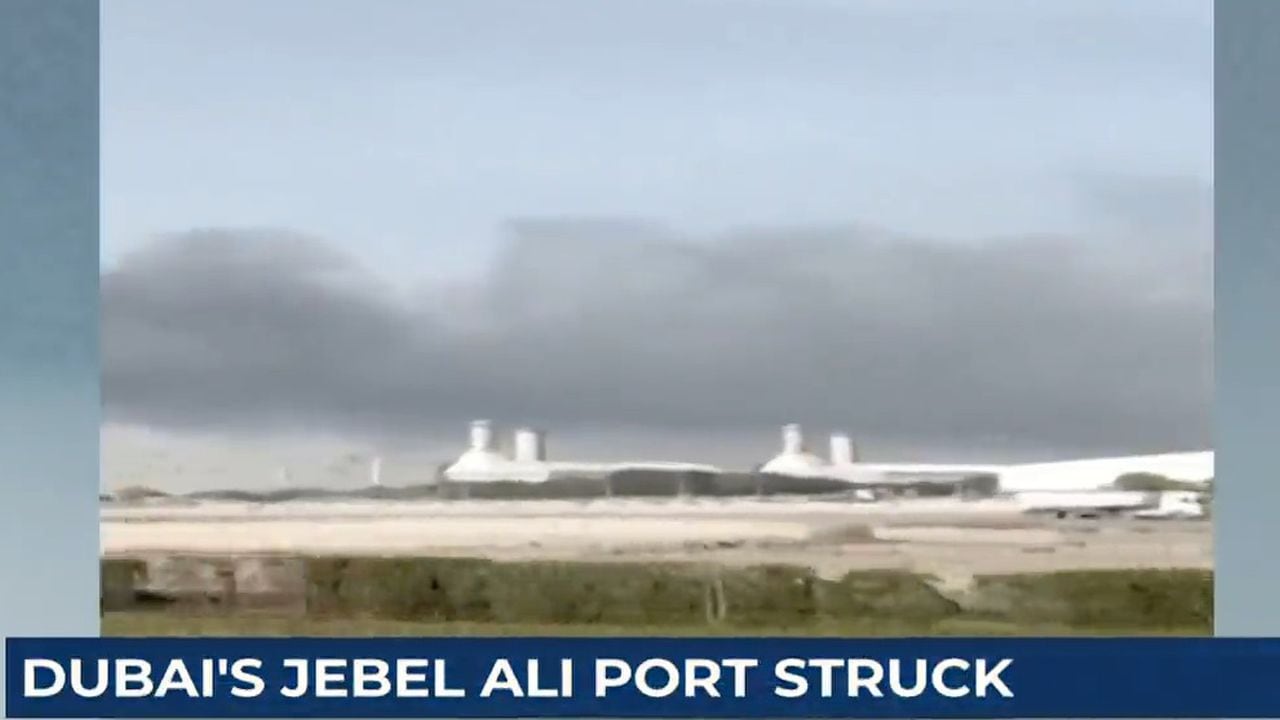
The global energy market is currently staring into a vacuum. Following a weekend of devastating U.S. and Israeli airstrikes on Iranian military and leadership targets, the Strait of Hormuz has transitioned from a tense transit corridor to a "no-go" zone for the world’s most critical cargoes. While no formal blockade has been declared under international law, the waterway is practically shut. Commercial traffic has plummeted by over 50% in the last 48 hours. By Sunday evening, Lloyd’s List Intelligence recorded only 19 transits—a fraction of the historical daily average of 138.
The mechanism of this closure is not a physical wall of warships, but a psychological and financial pincer movement. Iran is leveraging its northern shoreline to broadcast "unofficial" warnings over VHF Channel 16, telling captains that "no ship is allowed to pass." These messages lack legal standing, yet they have achieved what a kinetic blockade might not: they have terrified the insurance markets into total paralysis.
The Invisible Blockade
For a veteran of the shipping industry, the current chaos feels like the 1980s Tanker War on fast-forward. The difference today is the speed of the financial retreat. On Monday morning, major war-risk underwriters began submitting mass cancellation notices for vessels operating in the Gulf. This isn't just about higher prices; it is about the total withdrawal of capacity.
Marine war-risk premiums, which typically sit at a negligible 0.025% of a vessel's value, have spiked to 0.5% and beyond. For a $100 million VLCC (Very Large Crude Carrier), a single voyage now carries a $500,000 insurance surcharge. When you factor in the physical risk of being targeted—evidenced by the attack on the Palau-flagged tanker Skylight north of Khasab—the math for most shipowners simply no longer works.
The "shadow fleet" is the only group still moving. These are the aging, under-insured vessels that have long specialized in bypassing sanctions. On Sunday, three such vessels were among the few to risk the transit. For the rest of the world, the "practically shut" status of the Strait means that 20% of the world's oil and 25% of its liquefied natural gas (LNG) are effectively trapped in the Persian Gulf.
The Strategy of Disinformation
Iran’s state media is currently winning the narrative war by doing very little. By reporting that the Strait is closed, Tehran forces the West into a reactive posture. If the U.S. Navy moves to escort tankers, it risks a direct kinetic escalation in a narrow 21-mile-wide bottleneck. If it does nothing, the global economy absorbs a supply shock that could send Brent crude toward $120 a barrel within days.
This is maritime denial at its most efficient. You do not need to sink every ship if you can make the cost of sailing high enough to deter the first one.
Industry analysts at Wood Mackenzie suggest that even a one-week disruption will "cement" a geopolitical risk premium into the market that won't dissipate for months. The ripple effects are already hitting the Indian subcontinent, which relies on Hormuz for over half of its energy imports. In Mumbai, the government has called emergency meetings with exporters to discuss the "weaponization of trade" that is now threatening to stall the national economy.
Logistics of the Long Way Round
There is a hard truth that many analysts are avoiding: there is no meaningful way to bypass Hormuz. While some pipelines exist across Saudi Arabia and the UAE to the Red Sea or the Gulf of Oman, they can only handle a fraction of the total volume.
The "bypass capacity" is largely a myth in the face of a total shutdown. Even if oil moves via pipeline to the Red Sea, it then enters the crosshairs of Houthi rebels, who have already announced a resumption of attacks in solidarity with Tehran.
Shippers are now looking at the Cape of Good Hope as the only "safe" alternative for trade between Asia and Europe. This adds 15 to 20 days to a voyage. It inflates fuel costs, strains the global supply of available hulls, and ensures that every consumer, from a commuter in London to a factory owner in Shanghai, pays the "Hormuz Tax."
The Breakdown of International Law
The current crisis highlights the fragility of the United Nations Convention on the Law of the Sea (UNCLOS). The British UK Maritime Trade Operations (UKMTO) has been pleading with mariners to ignore the VHF broadcasts, correctly stating that "radio statements do not carry legal authority."
But a captain on the bridge of a 300,000-ton tanker does not care about legal authority when an Iranian fast-attack craft is shadowing them at 40 knots. The gap between the "legal" status of the Strait and the "operational" reality is widening.
The U.S. Fifth Fleet remains the only force capable of reopening the channel, but its presence is currently a double-edged sword. Every destroyer sent into the Strait becomes a potential target for the "heaviest offensive in history" promised by the IRGC. We are no longer in a period of "tensions." We are in a period of systemic maritime reconfiguration.
For the global economy, the realization is setting in: the era of cheap, predictable maritime transit is over. The Strait of Hormuz is not just a geographic chokepoint; it is the single most effective lever for global disruption, and it has just been pulled.
Stop looking at the maps and start looking at the insurance ledgers. That is where the real war is being won.