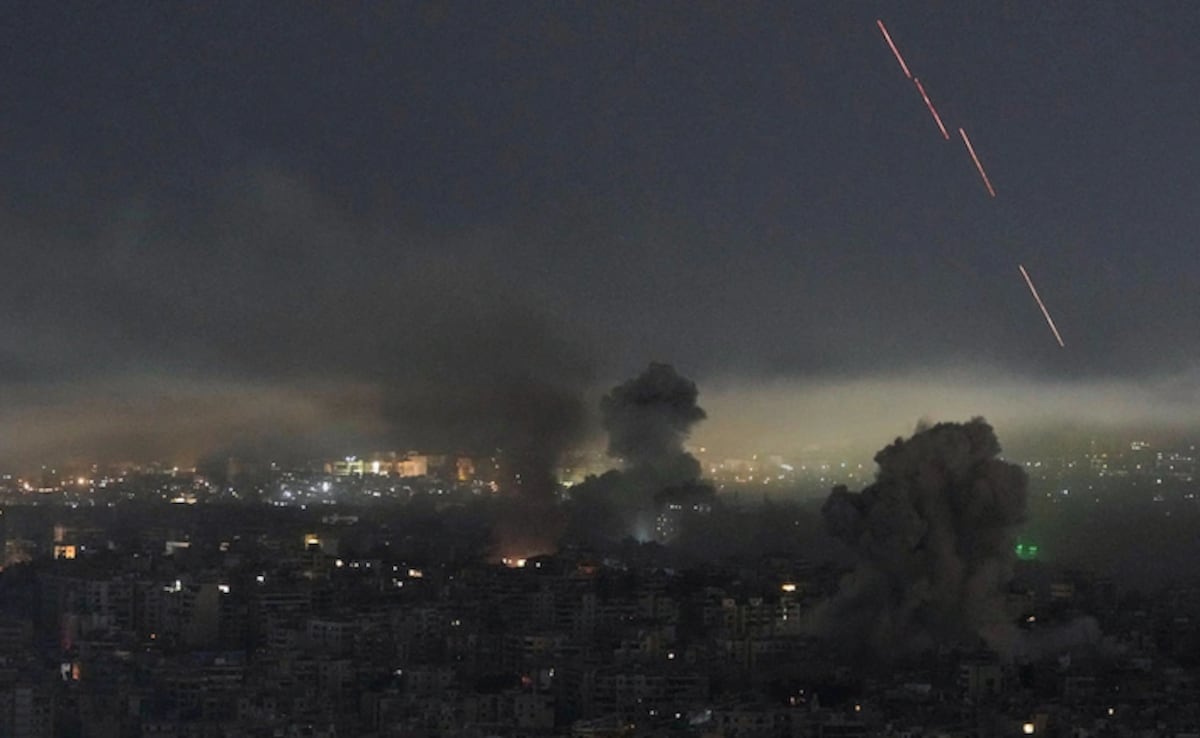
The ballistic missile launch from Yemen toward central Israel marks a fundamental shift in the geography of Middle Eastern warfare. While Western naval coalitions have spent months playing a defensive game of whack-a-mole in the Bab el-Mandeb strait, the conflict has moved beyond the regional bottleneck. This is no longer just about shipping lanes or insurance premiums in the Red Sea. It is about a non-state actor successfully bridging a 2,000-kilometer gap to challenge one of the most sophisticated integrated air defense systems on the planet.
The recent strike demonstrates that the strategy of containment is failing. For decades, the military assumption was that distance provided a natural buffer. That buffer has evaporated. The Houthis, officially known as Ansar Allah, are no longer a localized insurgent group fighting a civil war in the mountains of Yemen; they have morphed into a long-range expeditionary force capable of projecting power across the entire Levant.
The Engineering of a Long Distance Threat
To understand how a group from one of the world’s poorest nations can threaten Tel Aviv, you have to look at the hardware. These aren't improvised "garage" rockets. The technology used in these launches—specifically the liquid-fueled missiles often identified as variants of the Qiam or the Toufan—bears the unmistakable hallmarks of Iranian design, adapted for the specific needs of the Yemeni theater.
The physics of a 2,000-kilometer flight path requires more than just a big engine. It requires sophisticated guidance systems and stage separation capabilities. When a missile is launched from the northern highlands of Yemen, it must travel through various layers of the atmosphere, often exiting and re-entering to maintain speed and trajectory.
Israel’s defense architecture is built on a "tiered" approach. The Arrow 3 system is designed to intercept targets in space, while David’s Sling handles medium-range threats, and Iron Dome mops up the short-range artillery. By forcing Israel to activate its most expensive, high-altitude interceptors for a single Yemeni missile, the Houthis are engaging in a war of economic attrition. An interceptor missile can cost millions of dollars; the projectile it destroys often costs a fraction of that.
The Intelligence Blind Spot
There is a persistent narrative in Western intelligence circles that the Houthis are merely "proxies." This oversimplification is dangerous. It ignores the localized agency and the trial-by-fire experience the group gained during years of conflict with the Saudi-led coalition.
During the Saudi-Yemeni war, the Houthis learned how to hide launch platforms from constant aerial surveillance. They became masters of using rugged terrain, underground tunnels, and mobile launchers that can disappear within minutes of firing. This makes "pre-emptive" strikes by US or British forces incredibly difficult. You cannot bomb what you cannot find, and the Houthis have turned the Yemeni landscape into a giant shell game.
Furthermore, the data sharing between various groups in the "Axis of Resistance" has reached a level of maturity that Western analysts didn't predict five years ago. We are seeing a synchronized effort where pressure in the Red Sea is timed to coincide with escalations in Northern Israel and Gaza. It is a multi-front pressure cooker designed to overstretch Israeli and American military resources.
Economic Warfare Beyond the Suez Canal
The immediate impact of Yemeni missiles is often measured in physical damage, but the true target is the global supply chain. When a missile reaches central Israel, the ripples are felt in boardrooms in Singapore and London.
Insurance companies have already hiked "war risk" premiums to levels that make the Red Sea route prohibitive for many carriers. By proving they can strike the Israeli heartland, the Houthis are signaling to the world that no part of the region is a safe harbor. This forces global trade to take the long way around the Cape of Good Hope, adding ten to fourteen days to journeys and burning millions of gallons of extra fuel.
The Cost of Redirection
- Fuel Expenses: An additional $1 million per voyage for a large container ship.
- Capacity Crunch: Ships tied up for longer periods means fewer vessels available for new cargo.
- Carbon Footprint: Massive increases in CO2 emissions due to longer routes and higher speeds to make up time.
This isn't just a military problem; it is an inflationary one. Every extra dollar spent on shipping eventually shows up on a shelf in a supermarket. The Houthis know this. They are using the interconnectedness of the global economy as a weapon, betting that the West will eventually tire of the cost of defending Israel's periphery.
The Strategy of the Thousand Cuts
The missile launches aren't intended to win a decisive military victory. They are part of a broader strategy of "death by a thousand cuts." By maintaining a constant, albeit low-frequency, threat of long-range strikes, the Houthis keep the Israeli population in a state of perpetual high alert.
This has massive psychological and economic consequences. When sirens go off in Tel Aviv, the city grinds to a halt. Work stops. People head to shelters. International flights are canceled or diverted. Over time, this erodes the sense of normalcy required for a high-functioning economy to thrive. It is a form of psychological operations (PSYOP) conducted with ballistic hardware.
The Western response—Operation Prosperity Guardian—has been largely reactive. It focuses on shooting down drones and missiles after they are already in the air. This is an unsustainable strategy. For every $20,000 drone the Houthis launch, the US Navy might fire a $2 million interceptor. The math favors the insurgent.
Redefining Regional Sovereignty
The ability of a group in Yemen to intervene in a Levant-based war effectively rewires our understanding of Middle Eastern borders. Historically, Yemen was an isolated corner of the peninsula. Now, through the proliferation of missile technology, the Houthis have made themselves a permanent stakeholder in the Israeli-Palestinian conflict.
This changes the diplomatic calculus for every nation in the region. Saudi Arabia, which has been trying to negotiate a permanent exit from its own war with the Houthis, now finds itself in an impossible position. If they allow their airspace to be used for interceptions, they risk being seen as defending Israel. If they don't, they risk the conflict spilling back into their own territory.
Egypt, too, is suffering. The Suez Canal is a primary source of hard currency for Cairo. As traffic drops due to the threat from Yemen, the Egyptian economy—already on shaky ground—takes a massive hit. The Houthis are effectively holding the region's economic stability hostage to their political demands.
The Technological Leap
We must address the uncomfortable truth about missile precision. Early Houthi attempts were often unguided and fell harmlessly into the sea or desert. That is changing. The use of GPS guidance, coupled with inertial navigation systems and potentially even terminal seekers, means these missiles are getting closer to their intended targets.
The "lucky shot" is the nightmare scenario for defense planners. A single missile hitting a sensitive industrial site or a crowded urban center would change the political landscape overnight, likely triggering a massive Israeli retaliatory campaign against Yemen. Such an escalation is exactly what the Houthis—and their backers—seem to be courting. They want to draw their adversaries into a quagmire that is impossible to win through air power alone.
The Failure of Deterrence
Deterrence only works if the cost of an action is higher than the perceived benefit. For the Houthi leadership, the benefits of these strikes are immense. They gain massive popularity in the Arab world for being the only force "actually fighting" for Gaza. They cement their status as a regional power. They prove to their domestic base that they can stand up to "the Great Satan" and "the Zionist entity."
Against these ideological and political gains, the threat of more Western airstrikes on empty warehouses or remote launch sites carries little weight. The group has survived years of intense bombing by some of the most advanced air forces in the world. They are fundamentally "un-deterrable" through traditional kinetic means.
The West is currently fighting a 21st-century technological war against a 7th-century religious mindset, and the gap is being bridged by high-end ballistic technology. This creates a disconnect where military "wins" on the battlefield don't translate into strategic shifts on the ground. You can destroy a launcher, but you can't destroy the intent or the supply chain that replaces it.
Future Projections and the Drone Swarm
The next phase of this conflict likely won't involve single missiles, but rather coordinated "swarms." By launching a mix of slow-moving "suicide" drones, cruise missiles, and ballistic missiles simultaneously, the Houthis aim to saturate and overwhelm radar systems.
This tactic is designed to create "blind spots" in the defense. While the high-tier systems are busy tracking a ballistic missile coming in at Mach 5, a low-flying, carbon-fiber drone might slip through the gaps in the radar coverage. This hybrid approach is the most significant threat to regional security since the end of the Cold War.
The proliferation of these capabilities means that the "front line" of any future Middle Eastern conflict is now everywhere. There is no longer a "rear" area. If a group in Yemen can strike Tel Aviv, they can strike any port, refinery, or city in the region.
The focus must move away from the "event" of a single missile launch and toward the systemic reality of a transformed military landscape. The Red Sea is no longer a localized corridor; it is a laboratory for a new kind of long-range, asymmetric warfare that the current global order is ill-equipped to handle.
The immediate next step for maritime and regional security is a complete overhaul of "point defense" systems on commercial vessels. Relying on billion-dollar destroyers to protect every tanker is a logistical impossibility. We are likely to see the return of armed merchant cruisers or the deployment of containerized laser defense systems on private ships. The era of "safe" international waters is over, replaced by a world where trade must be defended with the same intensity as a sovereign border.