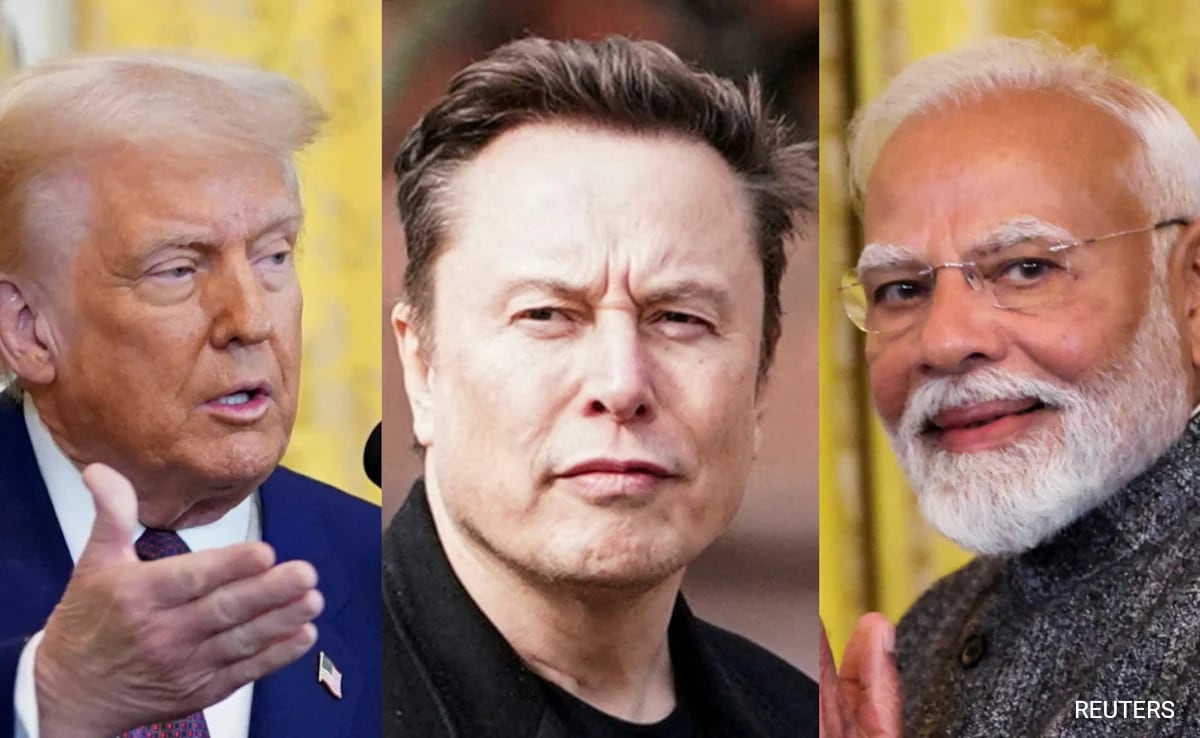
The official denial by the Indian Ministry of External Affairs (MEA) regarding Elon Musk’s participation in a high-stakes telephonic exchange between Prime Minister Narendra Modi and U.S. President-elect Donald Trump functions as a case study in Strategic Ambiguity Management. While media cycles fixate on the presence or absence of a specific individual, the structural significance lies in the underlying Trilateral Dependency Model. This model examines how non-state actors (tech conglomerates), established sovereign leaders, and emerging global powers intersect to redefine traditional statecraft.
The Denial as a Protocol Mechanism
Diplomatic communication operates on a binary of formal vs. informal channels. When the MEA issues a categorical denial regarding Musk’s presence on a call discussing the Iran-Israel escalation, it is not merely a statement of fact; it is a defense of Sovereign Exclusivity. Also making headlines recently: Finland Is Not Keeping Calm And The West Is Misreading The Silence.
Integrating a private tech CEO into a bilateral heads-of-state conversation disrupts the established Westphalian order. The denial serves three primary functions:
- Normalization of Channels: It reinforces that India engages with the United States through the executive branch, not through third-party intermediaries.
- Mitigation of Domestic Risk: In India’s complex political landscape, the perception of a foreign billionaire influencing national security policy is a liability.
- Signal to Tehran: By stripping the conversation of Musk’s "unconventional" presence, New Delhi projects a message of traditional, predictable diplomacy to Iran, a critical energy and strategic partner via the Chabahar Port.
The Elon Musk Variable: The Tech-State Hybrid
Elon Musk represents a new category of geopolitical actor: the Sovereign Individual with Kinetic Infrastructure. Unlike traditional lobbyists, Musk controls assets (Starlink, SpaceX, Tesla, X) that are directly relevant to national defense and economic growth. His reported involvement in Trump's transition team creates a "Shadow State Department" dynamic. More information regarding the matter are covered by Reuters.
The logic of Musk’s potential inclusion—whether or not it occurred in this specific instance—rests on the Infrastructure-as-Diplomacy framework. If the conversation touched upon regional stability or the protection of supply chains during an Iran-Israel conflict, Musk’s control over satellite communications (Starlink) becomes a tactical variable.
The Strategic Pillars of the India-US-Iran Nexus
The MEA’s rejection of the report highlights the high-stakes friction within the current geopolitical landscape. To understand the gravity of the call, one must analyze the three pillars governing the India-US relationship concerning West Asia:
The Energy Security Constant
India remains one of the world's largest consumers of crude oil. Any escalation in Iran directly threatens the stability of the Strait of Hormuz. New Delhi’s strategy is a balancing act between supporting U.S.-led sanctions regimes and maintaining its own energy lifelines. The entry of a business figure into this discussion complicates the Risk-Reward Calculus by introducing commercial interests into a delicate security dialogue.
The Technological Decoupling from China
The Trump administration's "America First" policy aligns with India’s "Atmanirbhar Bharat" (Self-Reliant India) initiative. Both nations seek to minimize dependence on Chinese manufacturing. Musk is the linchpin in this transition. Tesla’s potential entry into the Indian market and the use of SpaceX for Indian satellite launches are not just business deals; they are strategic maneuvers to create a non-Chinese tech corridor.
The Diaspora Influence Engine
The Indian-American community is a significant voter bloc and a source of high-tech talent in the U.S. This demographic bridge ensures that the India-US relationship remains a top priority for any administration. Trump’s personal rapport with Modi acts as a Political Catalyst, accelerating decision-making processes that would otherwise take years in a standard bureaucratic environment.
Quantifying the Cost of Ambiguity
Inaccurate reporting on high-level diplomatic calls carries a Credibility Tax. For the Indian government, the cost of allowing the "Musk on the call" narrative to persist includes:
- Intelligence Leakage Perceptions: If a private citizen can listen to sensitive security briefings, other nations may hesitate to share classified data with New Delhi.
- Policy Volatility: Markets react to the whims of tech moguls. Linking Musk to an official war discussion could trigger unwarranted fluctuations in regional defense stocks or energy futures.
The Structural Shift in Modern Statecraft
We are witnessing a transition from Bilateralism to Networked Diplomacy. In this new era, the power of a state is no longer measured solely by its military or GDP, but by its position within a network of global influencers.
The "Musk Factor" suggests that the boundaries between private enterprise and public policy are dissolving. Even if the MEA is technically correct and Musk was not on the call, the very fact that his presence was plausible indicates a shift in the global hierarchy. The tech CEO has become a Global Stakeholder whose interests are now part of the diplomatic calculus.
The Iran-Israel Conflict as a Stress Test
The specific subject of the call—the Iran war—is the most volatile variable in this equation. India’s stance is dictated by the Principle of Strategic Autonomy. India cannot afford to alienate Iran due to the North-South Transport Corridor (INSTC), nor can it afford to break with the U.S. and Israel on counter-terrorism and defense technology.
Introducing Musk into this specific context would be seen as a pivot toward "Disruptive Diplomacy." The Trump doctrine often favors breaking traditional molds to achieve rapid results. However, India’s foreign policy is built on Incrementalism and Continuity. The clash between Trump’s "Great Man" theory of history and the MEA’s institutionalist approach is where the real tension lies.
Operationalizing the Relationship
The focus on the phone call mask a larger movement in the India-US tech partnership. The Initiative on Critical and Emerging Technology (iCET) is the actual engine room of this relationship. It covers:
- AI and Space Exploration: Collaborative efforts that bypass traditional commercial barriers.
- Semiconductor Supply Chains: Diversifying away from East Asian hotspots.
- Defense Co-production: Moving beyond a buyer-seller relationship to joint development (e.g., jet engines).
Musk’s companies are the primary vehicles for these objectives. Therefore, even if he is absent from the call logs, his influence is embedded in the Operational Architecture of the partnership.
Strategic Recommendations for Navigating the New Triangle
The following actions are necessary for state and private actors to manage the intersection of tech and diplomacy:
1. Institutionalize the Tech-State Liaison
Governments must create formal roles for "Tech Ambassadors" who can engage with figures like Musk without bypassing traditional diplomatic protocols. This prevents the "Shadow State" perception and ensures that interactions are recorded and vetted.
2. Audit Private Sector Involvement in Conflict Zones
Companies like SpaceX must have clear, transparent protocols for their role in international conflicts. The "Starlink Precedent" in Ukraine showed that a private individual can single-handedly influence a war's trajectory. India and the U.S. need a shared framework for how these assets are deployed during a Middle East crisis.
3. Strengthen Sovereign Communication Nodes
To maintain the integrity of bilateral calls, both nations should invest in secure, high-latency-resistant communication systems that are independent of private commercial networks. This reinforces the Dignity of the Channel.
The MEA’s denial is a calculated move to preserve the sanctity of the state-to-state dialogue. While Musk remains a vital component of the economic and technological future of both nations, his integration into the sphere of "High Politics"—particularly regarding active war zones—remains a boundary that New Delhi is currently unwilling to cross. The strategic play for India is to leverage Musk's innovation while maintaining a firewall around its core national security decision-making processes.