The missile that cleared the distance from the Yemeni highlands to the Israeli center did more than trigger sirens in Tel Aviv. It shattered the long-held military assumption that non-state actors could be contained within their own regional borders. For the first time since the escalation of the regional conflict, the Houthi movement—formally known as Ansar Allah—successfully projected force over 2,000 kilometers, bypassing the most sophisticated air defense network on the planet. This was not a lucky shot. It was a calculated demonstration of a technical evolution that Western intelligence has consistently underestimated for a decade.
The strike signals a fundamental shift in the geometry of modern warfare. It proves that a group previously dismissed as a localized insurgent force now possesses the reach of a mid-sized nation-state. By bridging the gap between the Red Sea and the Mediterranean, the Houthis have turned a regional skirmish into a transcontinental threat.
The Engineering of the Long Range Threat
To understand how a militia in a war-torn country manages to bypass the Arrow-3 defense system, one must look at the hardware. We are no longer dealing with the unguided "Flying Telegraph" rockets of the 1990s. The Houthi arsenal has transitioned into the era of precision-guided munitions and hypersonic claims.
The mechanics of these weapons often rely on a modular design philosophy. Components are smuggled into the country in pieces, then assembled in underground facilities that are shielded from satellite surveillance. The specific missile used in this deep-strike mission likely utilized a liquid-fueled engine, a design that offers high thrust but requires significant technical expertise to handle safely. By modifying the payload—trading explosive weight for fuel capacity—engineers in Sana'a have extended the range of their projectiles far beyond their original specifications.
Navigational systems have also seen a massive upgrade. While GPS jamming is a standard defensive measure, these missiles increasingly use inertial guidance systems or optical scene-matching. This means they do not rely on a satellite signal that can be easily blocked. They "see" the terrain and compare it to pre-loaded maps. This level of sophistication used to be the exclusive domain of superpowers. Now, it is being deployed by groups operating on a fraction of the budget.
The Economic Blockade by Other Means
While the direct kinetic impact of a single missile strike is significant, the strategic objective is often economic. The Houthis understand the fragility of global supply chains better than most boardroom executives. By proving they can hit Israel directly, they are sending a message to every shipping conglomerate in the world: the entire corridor from the Bab el-Mandeb Strait to the Port of Eilat is a kill zone.
The Cost of Defense vs. The Cost of Attack
There is a brutal mathematical imbalance in this conflict. A Houthi drone or long-range missile might cost between $20,000 and $100,000 to manufacture. The interceptors used to bring them down—systems like the Patriot or the Arrow—cost millions of dollars per shot.
- Attacker's Cost: Minimal. Mass production of simple components.
- Defender's Cost: Astronomical. Advanced radar, high-speed kinetic interceptors, and a constant state of high-alert readiness.
This is a war of attrition where the defender is being bled dry by the sheer volume of low-cost threats. If a defender has a 95% success rate, the 5% that gets through is still enough to claim a strategic victory. The Houthis are betting that they can sustain their offensive longer than the West can afford to maintain its defensive umbrella.
The Breakdown of Western Deterrence
The persistent failure of "Operation Prosperity Guardian" to stop the launches highlights a broader issue in military doctrine. Traditional deterrence relies on the threat of overwhelming retaliation. However, when you are fighting an opponent that has already survived a decade of intense bombardment from regional neighbors, there are few targets left that hold significant value.
Western naval forces are playing a perpetual game of "Whac-A-Mole." They strike launch sites, but the launchers are mobile, often hidden in civilian infrastructure or deep mountain tunnels. By the time a Tomahawk missile hits a launch site, the Houthi crew is already miles away, prepping the next bird for flight. This mobility makes a "quick fix" through air power alone almost impossible.
The intelligence community has also struggled to map the internal command structures of Ansar Allah. Unlike traditional militaries with a rigid top-down hierarchy, the Houthi strike teams operate with a high degree of autonomy. This decentralized approach ensures that even if a major commander is neutralized, the operational tempo remains unchanged.
The Technology Transfer Problem
It is impossible to discuss the Houthi long-range capability without addressing the flow of technical knowledge into the region. The sophistication of the latest missile variants points to a sustained pipeline of engineering support. This isn't just about shipping crates of weapons; it's about the transfer of blueprints, specialized software, and the training required to maintain high-pressure liquid fuel systems.
Recent evidence suggests that the Houthis are now capable of domestic manufacturing for several key components. They have integrated 3D printing for specialized parts and are using off-the-shelf commercial electronics to build sophisticated guidance computers. This democratization of lethality means that the old methods of arms control—monitoring heavy machinery and chemical precursors—are becoming obsolete.
Logistics of the Deep Strike
The logistics of a 2,000-kilometer strike involve more than just a big rocket. It requires a sophisticated understanding of flight paths and atmospheric conditions.
- Launch Phase: The missile must clear the dense lower atmosphere quickly to conserve fuel.
- Midcourse Phase: The projectile travels in a high-altitude arc, where it is most vulnerable to radar detection. The Houthis have experimented with "loitering" or varying altitudes to confuse early-warning systems.
- Terminal Phase: The final descent. This is where the missile must defeat short-range defenses like the Iron Dome or David's Sling.
The successful strike on Tel Aviv suggests that the missile followed a trajectory that exploited gaps in the radar coverage of the coalition forces in the Red Sea. By flying through "blind spots" created by the curvature of the earth and rugged terrain, the projectile remained undetected until it was too late for a clean intercept.
Impact on Regional Alliances
The ability of the Houthis to strike Israel has fundamentally altered the diplomatic calculations in the Middle East. For years, regional powers viewed the Houthi threat as a localized Yemeni problem. That illusion is gone. Countries that previously considered normalizing relations with Israel are now forced to weigh the risk of becoming Houthi targets themselves if they allow Israeli or Western forces to use their airspace for defensive operations.
This creates a "neutrality trap." If a neighboring country intercepts a Houthi missile aimed at Israel, it risks being labeled a participant in the war. If it does nothing, it risks being seen as complicit in the attack. The Houthis are using their long-range capabilities to wedge apart these fragile diplomatic coalitions, forcing every nation in the region to choose a side in a conflict many had hoped to avoid.
The Psychological Front
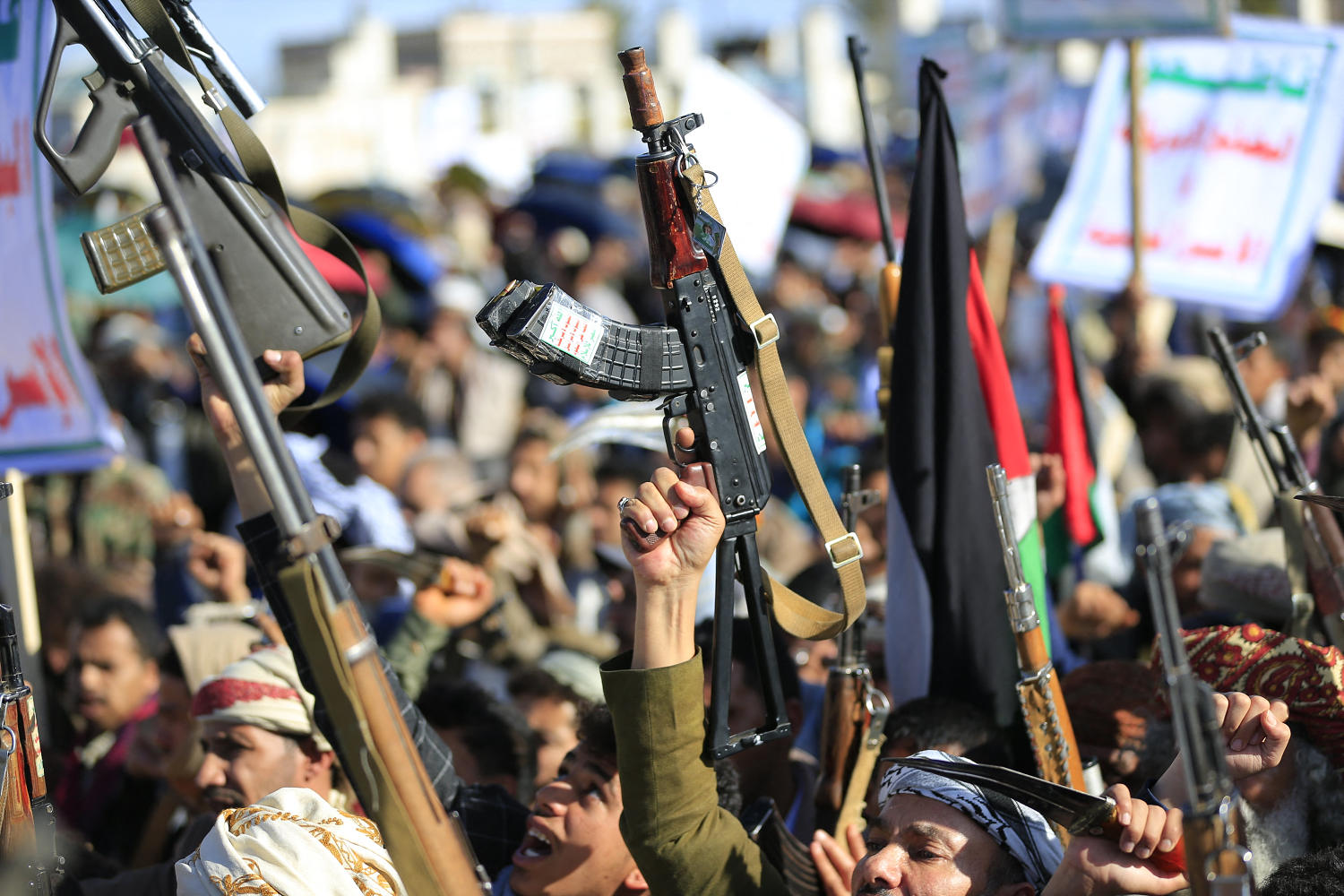
Beyond the physical damage, the strikes serve a massive propaganda purpose. In the streets of Sana'a and across the wider Arab world, the image of a Yemeni-made missile hitting the heart of the "Zionist entity" is a powerful recruitment tool. It positions the Houthis as the only force in the region taking direct, kinetic action. This narrative undermines the legitimacy of more moderate governments and fuels a cycle of radicalization that will likely outlast the current conflict.
The Myth of the Isolated Conflict
The West has long tried to treat the war in Yemen as a separate entity from the broader tensions in the Levant. The latest strike proves that these conflicts are inextricably linked. The hardware, the ideology, and the strategic goals are part of a unified front that views the Red Sea and the Mediterranean as a single theater of operations.
The assumption that naval superiority in the Suez Canal would be enough to protect global trade is being dismantled. Even the most advanced carrier strike groups find themselves on the defensive against an opponent that doesn't have a single commissioned warship. The naval battle of the 21st century is being fought from the shore, using land-based missiles to dictate the terms of engagement at sea.
Moving Beyond Interception
Continuing to rely solely on defensive interceptions is a failing strategy. The current policy is reactive, expensive, and ultimately unsustainable. To address the Houthi threat, the focus must shift from the end-point—the missile in flight—to the origin. This requires a much more aggressive approach to dismantling the procurement networks that allow high-tech components to reach Yemeni shores.
It also requires an honest assessment of the limitations of modern air defense. No system is perfect. The more the Houthis fire, the more they learn about the weaknesses of Western sensors. Every "failure" for them is a data-gathering mission that improves their next attempt. They are iterating in real-time, while Western procurement cycles take years to update their defensive software.
The strike on Israel was not an isolated incident or a one-off provocation. It was a proof of concept. It showed that the geographical barriers that once defined modern warfare have evaporated. The distance between the Gulf of Aden and the Mediterranean has been closed by a series of technological leaps that the world is only now beginning to grasp.
Security experts and policymakers need to stop waiting for a return to the status quo. The Red Sea is no longer just a shipping lane; it is the front line of a new kind of war where the traditional rules of engagement no longer apply. The missile that landed in central Israel was a signal that the reach of non-state actors has reached a terminal velocity, and the old maps of conflict are officially obsolete.
The reality on the ground is that the Houthis have successfully achieved a level of strategic depth that few thought possible. They have proved that they can reach out and touch their enemies from halfway across the continent, and they have done so while under the constant pressure of a blockade. This isn't just about Yemen anymore. It’s about a new era of global insecurity where any group with a few million dollars and the right connections can hold the world’s most powerful economies to ransom.
The immediate priority for the international community should be a radical overhaul of maritime security and a re-evaluation of how intelligence is gathered on non-state technical capabilities. Relying on the same old playbooks will only lead to more surprises. The Houthis have shown their hand, and it's a much stronger one than the world anticipated.
The next phase of this conflict won't be fought with grand fleet maneuvers or massive ground invasions. It will be a gritty, tech-driven battle of wits between those trying to maintain the old order and those using cheap, effective technology to tear it down. The sirens in Tel Aviv were just the beginning of a much louder wake-up call for the global security establishment.
The focus must now turn to the specific vulnerabilities in the global shipping routes and the urgent need for a more integrated regional defense architecture that doesn't just rely on expensive interceptors, but actually addresses the logistical root of the threat.