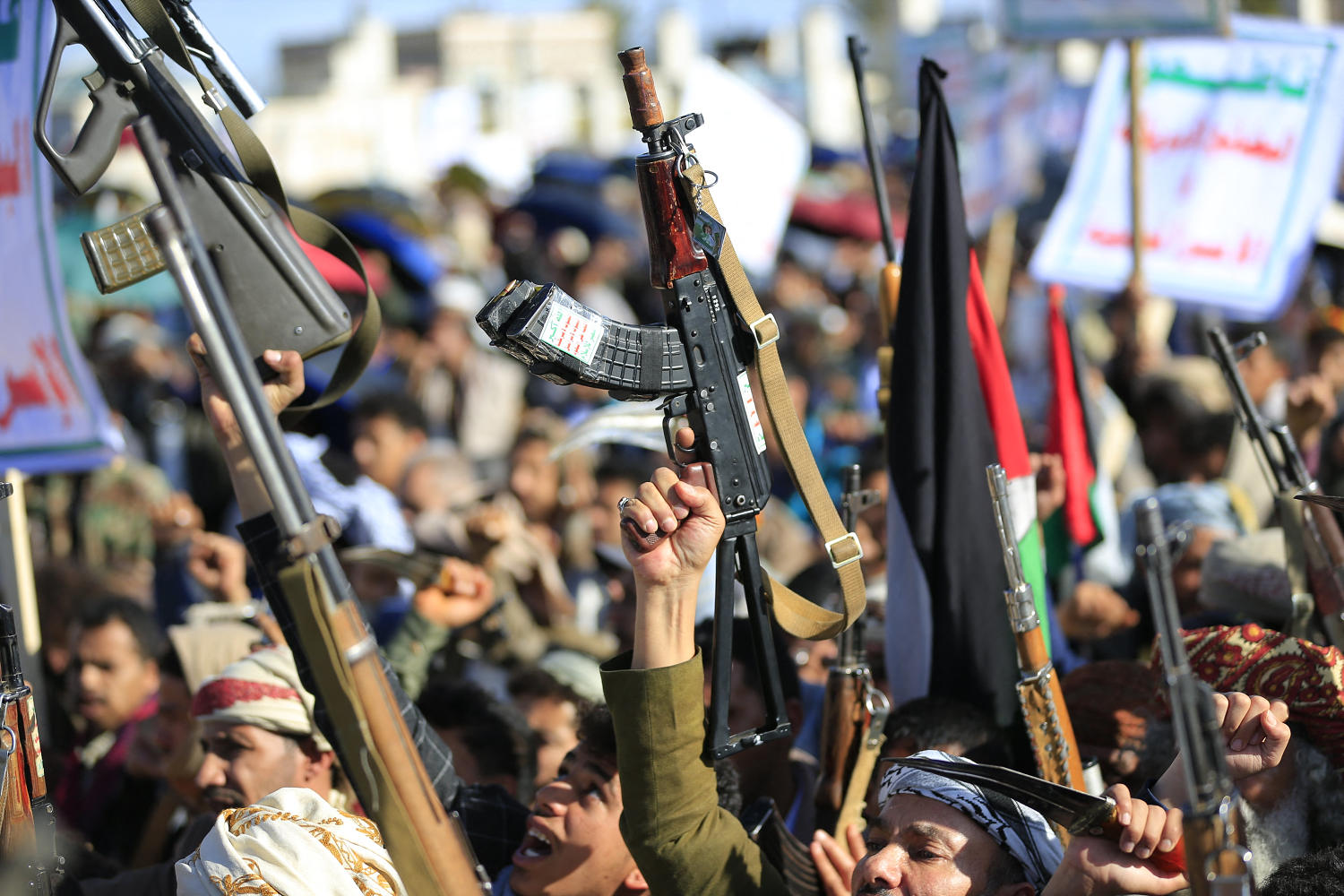
The sirens do not sound like a warning. They sound like a rupture. In the pre-dawn stillness of a Tel Aviv apartment or the crowded corridors of a coastal office, that rising, rhythmic wail is less an alarm and more a physical weight that settles into the marrow of your bones. It is the sound of geography dissolving. For decades, the distance between the jagged mountains of Yemen and the glass-fronted high-rises of central Israel felt like a vast, insurmountable void—two thousand kilometers of desert, sea, and silence.
That void has vanished.
When a ballistic missile streaks across the Red Sea, launched from the rugged highlands controlled by the Houthi movement, it isn't just a piece of military hardware in flight. It is a terrifying bridge made of steel and solid fuel. It represents a shift in the very nature of modern friction. We used to believe that borders, oceans, and distance provided a buffer. We were wrong.
The Physics of Fear
Imagine a technician in the northern mountains of Yemen. He isn't a soldier in the traditional sense; he is a custodian of a specialized, imported inheritance. The missile he readies—likely a variant of the Iranian-designed Qadr or the hypersonic-claimed Palestine-2—is a marvel of grim engineering. To cover two thousand kilometers, a projectile must exit the thickest layers of the atmosphere, arching into the cold, thin air of the exosphere before screaming back down at several times the speed of sound.
This is not the haphazard "flying telegraph poles" of past conflicts. This is calculated. Precise. It is the democratization of high-end devastation. For the people on the receiving end, the threat is an abstract dot on a radar screen that becomes a concrete reality in less than twelve minutes. Twelve minutes is not enough time to contemplate the geopolitical intricacies of the "Axis of Resistance" or the shipping lanes of the Bab al-Mandab. It is barely enough time to find a stairwell, grab a child’s hand, and wait for the thunder.
The sound of an interception is different. It is a sharp, metallic crack that echoes through the sky, the result of Israel’s Arrow defense system meeting the threat in the upper atmosphere. It is a collision of billions of dollars of technology occurring in a fraction of a second. But even a successful interception leaves a scar. Shrapnel—jagged, hot, and heavy—must fall somewhere. The "iron dome" of security is a psychological comfort, but the reality is a rain of debris that serves as a constant reminder: the front line is now everywhere.
The Invisible Architect
The Houthi rebels, formally known as Ansar Allah, did not develop this capacity in a vacuum. To understand the missile, you must understand the supply chain. This is where the story shifts from the sands of Yemen to the corridors of Tehran. The relationship is often described in dry, academic terms as "proxy warfare," but that phrase is too sterile. It fails to capture the intimacy of the arrangement.
Consider the technical expertise required to maintain a ballistic arsenal. It requires specialized telemetry, guidance systems, and the kind of chemical stability in fuel that isn't mastered overnight in a mountain cave. The "Iran-backed" label is often tossed around as a political buzzword, but in the world of ballistics, it is a statement of fact. This is an outsourced escalation. By providing the Houthis with the reach to strike Tel Aviv, Iran has effectively extended its arm without technically crossing a border itself.
It is a strategy of plausible deniability wrapped in fire.
The Houthis have their own motivations, of course. For a movement born in the Zaydi heartlands of Yemen, firing on Israel is a potent form of domestic and regional currency. It transforms them from a local insurgent group into a pan-Islamic vanguard. Every launch is a recruitment poster. Every siren in Israel is a victory for their narrative of defiance. They are playing a game of asymmetrical leverage, using relatively inexpensive drones and mid-range missiles to force a high-tech state into a perpetual, exhausting crouch.
The Cost of the Corridor
The stakes are not confined to the flight path of a single missile. Below the trajectory of these weapons lies one of the world's most vital economic arteries: the Red Sea.
When the Houthis began targeting commercial shipping in "solidarity" with Gaza, they didn't just disrupt a regional trade route. They choked a global nervous system. Imagine a container ship—the size of four football fields—carrying everything from car parts to baby formula. When that ship has to divert around the Cape of Good Hope because of the threat of Houthi drones, the ripples are felt in a logistics office in Rotterdam and a car dealership in New Jersey.
- Shipping costs spike as fuel consumption doubles for the longer route.
- Supply chains fracture as "just-in-time" delivery becomes "whenever-possible" delivery.
- Insurance premiums skyrocket, making the transit of the Suez Canal a luxury few can afford.
This is the hidden tax of the missile. You might never see the flash of an explosion, but you see it in the rising price of a gallon of gas or the delay in your electronics order. The Houthis have discovered that they don't need to win a war; they only need to make the status quo too expensive to maintain.
The Human Echo
Amidst the talk of "escalation ladders" and "strategic deterrents," there is a human exhaustion that rarely makes the headlines.
In Yemen, the civilian population remains trapped in one of the world's most dire humanitarian crises. The bravado of the missile launches stands in stark contrast to the hollowed-out infrastructure of a nation that has endured a decade of civil war and famine. The rockets leave the ground, but the bread stays out of reach. There is a tragic irony in a leadership that can afford the guidance systems of tomorrow but cannot provide the clean water of today.
In Israel, the psychological toll is a slow-motion grinding of the nerves. It is the mother who leaves the bathroom door slightly ajar while she showers, just in case. It is the constant, involuntary scanning of the sky. It is the realization that the old rules of engagement have been shredded. When a missile comes from two thousand kilometers away, the concept of "winning" a conflict becomes blurred. How do you deter an opponent who views your retaliation as a divine endorsement of their cause?
The technology of war has outpaced our emotional capacity to process it. We are wired for the immediate threat—the predator in the grass, the enemy at the gate. We are not designed for the threat that begins as a digital notification on a smartphone, triggered by a launch in a country most people couldn't find on a map.
The Broken Horizon
The real danger isn't just the next missile. It is the normalization of the impossible. We are entering an era where non-state actors possess the reach of superpowers. The barrier to entry for global chaos has never been lower.
The escalatory cycle is a self-fulfilling prophecy. Each Houthi launch demands an Israeli response, which in turn demands a Houthi "retaliation," all while the primary architect remains in the shadows, calibrated and careful. It is a choreographed dance on the edge of a volcano.
As the sun sets over the Mediterranean, the orange hue of the sky can look remarkably like the glow of a reentry vehicle. For those living under this new reality, the beauty of the horizon is now laced with a persistent, quiet dread. They look up, not for the stars, but for the streak of light that signifies the end of the silence.
The distance is gone. The world has shrunk to the length of a flight path. We are all living in the shadow of a mountain in Yemen now, waiting to see if the next siren is a false alarm or the sound of the world changing forever.
There is no shelter from a sky that has become a weapon.