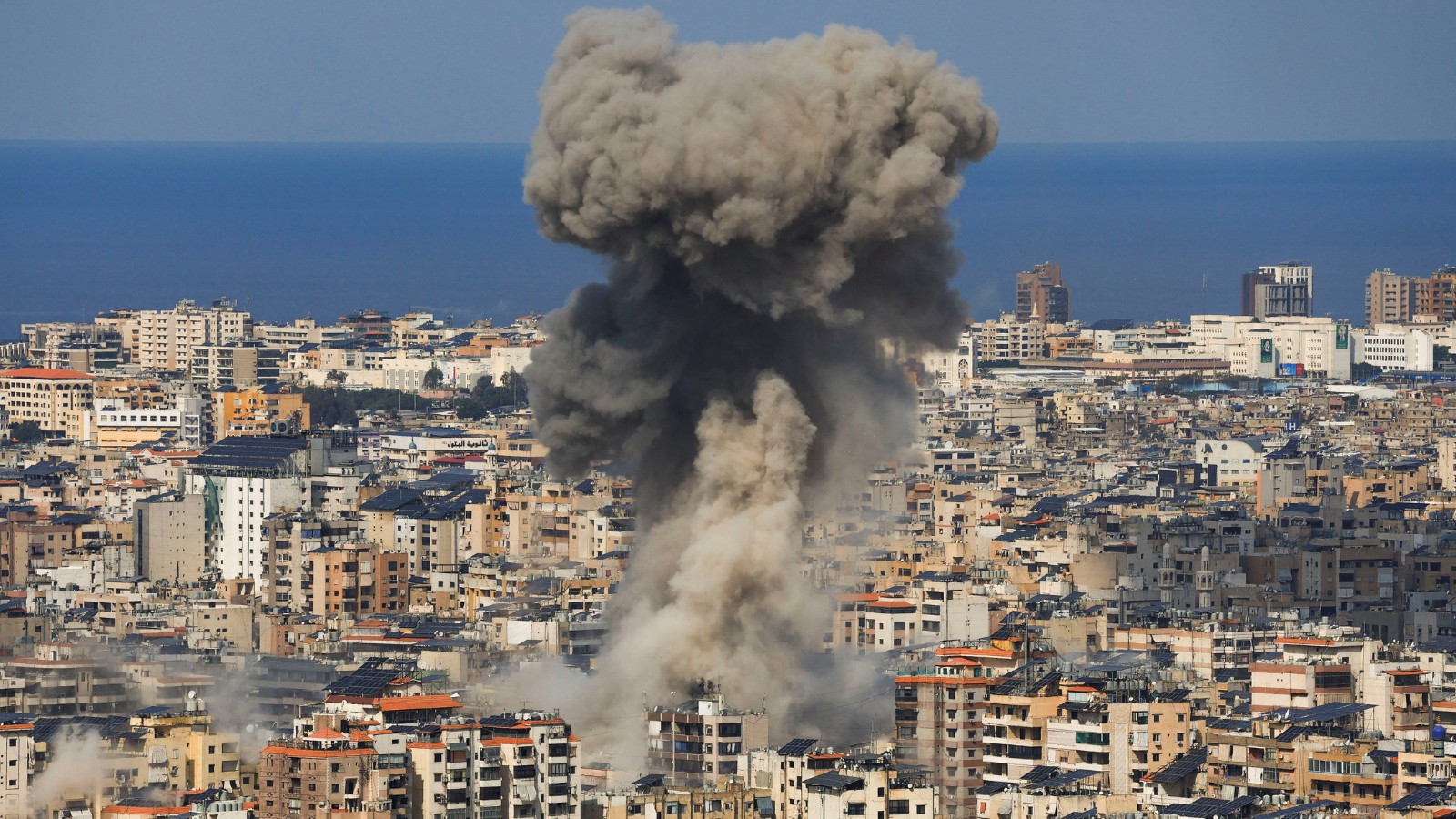
The water in the Strait of Hormuz does not look like a geopolitical flashpoint. To a sailor leaning over the railing of a Panamax tanker, it is merely a deep, churning turquoise, agitated by the meeting of the Persian Gulf and the Gulf of Oman. But beneath that surface lies the carotid artery of the global economy.
If you want to understand why your morning coffee costs more, or why a factory in Ohio just hit a production snag, you have to look at this twenty-one-mile-wide choke point. Recent intelligence and shifting maritime directives suggest that the gatekeepers of this passage, the Iranian authorities, are beginning to swing the gate shut for almost everyone except one specific guest: China.
Imagine a captain named Elias. He is a hypothetical composite of the thousands of merchant mariners who navigate these waters every month. Elias stands on his bridge, watching the radar pips. For decades, the rule of the sea was simple: if you had the right papers and followed the lane, you passed. Now, the radio chatter has changed. There is a new hierarchy on the water. It is no longer about the flag on your mast, but the destination of your cargo and the political weight of your buyer.
The reports filtering out of the region indicate a de facto "Green Lane" for Chinese-flagged vessels or ships carrying Chinese interests. While others face rigorous inspections, "technical" delays, or the looming shadow of IRGC speedboats, the Red Dragon’s fleet moves with a ghost-like ease.
The Mathematics of a Choke Point
The Strait of Hormuz is not just a geographic feature. It is a mathematical certainty. One-fifth of the world’s total oil consumption passes through this tiny gap. When you squeeze that gap, the pressure is felt in every boardroom from London to Tokyo.
Iran’s decision to prioritize Chinese transit is a calculated pivot. It is the physical manifestation of a "Look East" policy that has moved from rhetoric to reality. By ensuring that China—their largest oil customer and most significant diplomatic shield—enjoys unfettered access, Tehran creates a two-tier system of global trade.
One tier is for those who play ball with the new regional order. The other is for everyone else, left to navigate a sea of rising insurance premiums and unpredictable detentions.
Consider the ripple effect. When a Japanese tanker is delayed by even forty-eight hours for "security checks," the cost of that delay isn't just fuel and crew wages. It is the spike in the "risk premium." Maritime insurance is the invisible glue of global trade. When the Strait becomes a selective filter rather than a public highway, insurers panic. They raise rates. Those rates are passed to the refinery, then to the distributor, and finally to the person at the pump.
A Marriage of Necessity
Why China? The answer isn't found in friendship, but in the cold, hard logic of survival.
For Iran, the West represents a wall of sanctions that has throttled their economy for years. For China, the Middle East is a gas station that must never close. This alignment has birthed a symbiotic relationship where the Strait of Hormuz acts as a toll booth where the currency isn't money, but loyalty.
We are witnessing the end of the "Global Commons." For nearly a century, the idea that the high seas belonged to everyone was backed by the sheer power of the U.S. Navy. But power is rarely static. It ebbs and flows like the tide. As the American presence in the Gulf becomes more contested or distracted by other theaters, the vacuum is being filled by a local power with a specific preference for its largest patron.
It is a silent revolution. There were no grand declarations of war. No one fired a shot across a bow to announce this change. Instead, it happens in the quiet code of transponders being turned off, in the subtle redirection of patrols, and in the diplomatic cables that never see the light of day.
The Invisible Stakes
To the average person, "maritime security" sounds like a dry topic for a think-tank seminar. It feels distant.
It isn't.
Think about the smartphone in your pocket. It exists because of a complex, fragile chain of logistics that requires predictable energy costs. Think about the fertilizers used to grow the grain for your bread. If the Strait of Hormuz becomes a private canal for a single superpower, the very concept of "free trade" begins to dissolve.
Elias, our hypothetical captain, sees this every night. He sees the "dark fleet"—vessels with their AIS (Automatic Identification System) silenced—moving through the shadows. These ships are the ghosts of the sanctions-era, often carrying Iranian crude destined for Chinese refineries. By granting these vessels preferential treatment while tightening the noose on others, Iran is effectively weaponizing geography.
This isn't just about oil. It’s about the precedent. If a nation can successfully gatekeep a global maritime artery based on political favoritism, the map of the world changes. We move from a world of open oceans to a world of "spheres of influence," where your safety on the water depends on which embassy you can call for help.
The Friction of the New Reality
There is a visceral tension in being at sea when the rules are changing beneath your feet. Sailors talk about the "Hormuz Headache." It’s the constant scanning of the horizon for fast-attack craft. It’s the sudden, barked commands over the VHF radio demanding your manifest and your port of origin.
But for the Chinese vessels? The radio stays quiet. The path stays clear.
This preferential treatment creates a massive competitive advantage. If you are a shipping company, do you risk a billion-dollar vessel in a zone where it might be seized as a political pawn, or do you lease your space to a Chinese intermediary who has the "golden ticket"?
The market, always pragmatic and often cruel, is already beginning to price in this reality. We are seeing a shift in how cargo is booked and how routes are planned. The "Long Way" around the Cape of Good Hope is no longer a historical curiosity; for some, it is becoming a safer, albeit much more expensive, necessity.
The Silent Pivot
The shift in the Strait is the most visible symptom of a deeper, more permanent change in the global nervous system.
We spent decades believing that the world was becoming smaller and more connected. We believed that trade would eventually iron out the wrinkles of old animosities. We were wrong. Trade is being used as the iron itself, used to press new borders into the water.
The Strait of Hormuz is a mirror. It reflects the reality that the 21st century will not be governed by universal rules, but by regional enforcers. If you are on the right side of the gatekeeper, the sea is your friend. If you aren't, the ocean is a very large, very lonely place.
As the sun sets over the Musandam Peninsula, casting long, jagged shadows over the shipping lanes, the lights of the tankers begin to twinkle. To a casual observer, it looks like a parade of progress. But look closer at the flags. Watch which ships are stopped and which are waved through.
The water hasn't changed. The salt is still there. The currents still pull at the hulls. But the ownership of the horizon has moved. The gate is closing, and the key has been handed to the East.
Deep in the engine rooms of the world, the vibration has changed. It is the sound of a gear slipping, a system recalibrating, and a world realizing that the open sea was perhaps only a temporary luxury of a different age.
The tankers keep moving, but the wake they leave behind is no longer a straight line. It is a curve, bending toward a new center of gravity, leaving the rest of the world to watch from the shore, wondering when the gate will finally lock for good.