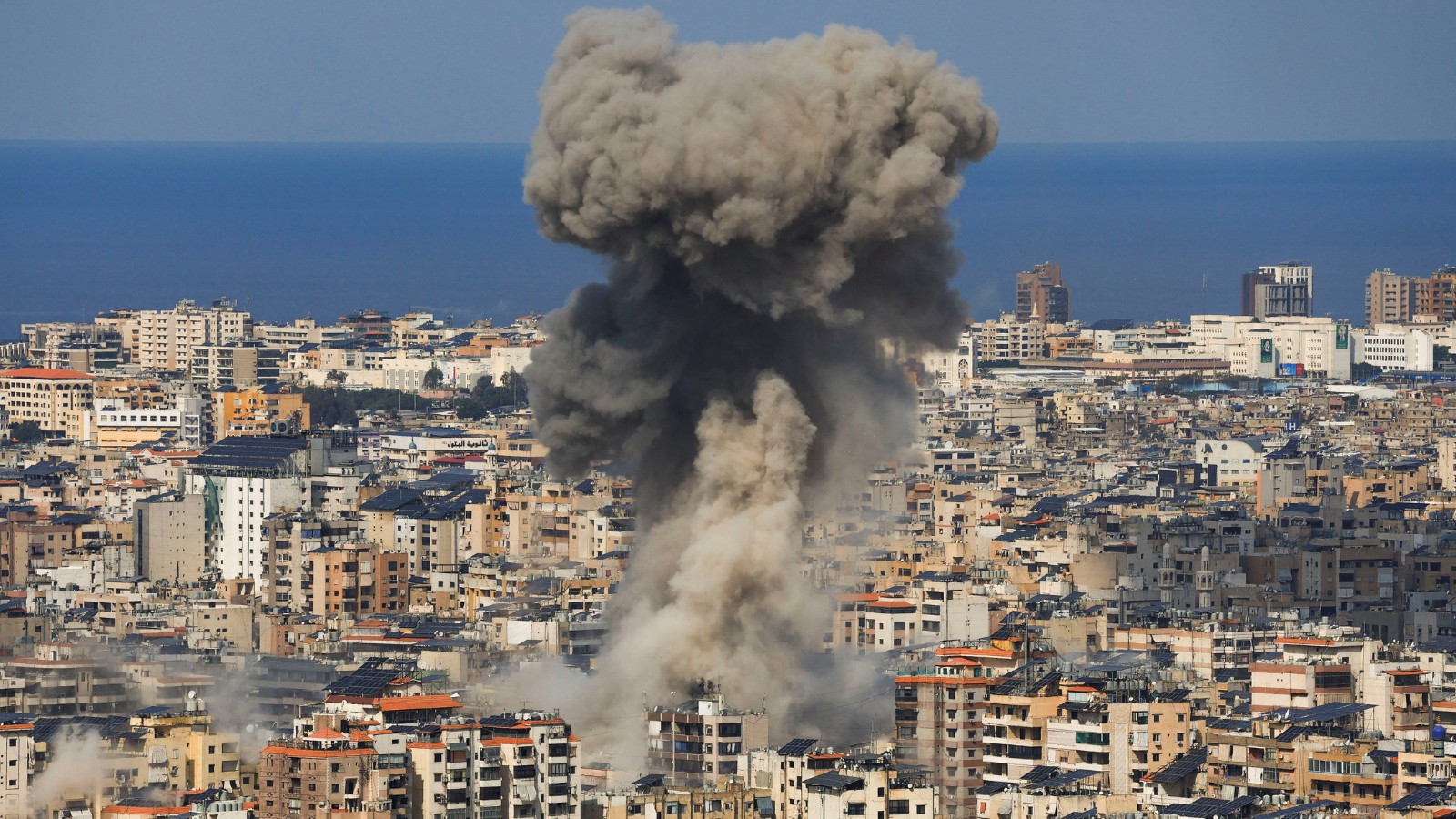
The idea that the United States can simply wait out a regional power like Iran isn't just a strategic gamble. It’s a core shift in how Washington views modern conflict. Secretary of War Pete Hegseth recently made it clear that the US isn't looking for a quick exit or a "mission accomplished" banner after a few weeks of sorties. He’s betting on the fact that the American economy and military infrastructure can stay functional longer than the Iranian regime’s ability to suppress its own people while fighting a high-intensity war.
He basically told the world that time is a weapon the US intends to use. This isn't about a repeat of the 20-year nation-building projects in Iraq or Afghanistan. It's about a cold, calculated belief that Iran cannot outlast the sheer scale of American resources.
The Strategy of Infinite Patience
When you look at the geography of the Middle East, a war with Iran looks like a nightmare. You’ve got the Strait of Hormuz, a literal choke point for global oil. You’ve got a network of proxies from Hezbollah in Lebanon to the Houthis in Yemen. Most military theorists worry about a "sprint"—a sudden, violent escalation that crashes the global economy before the US can react.
Hegseth’s stance flips that script. By stating the US will take all the time needed, he’s signaled that the Pentagon is prepared for a "marathon" instead. The goal isn't necessarily a ground invasion of Tehran. That would be a disaster. Instead, it's about sustained pressure. It’s about systemic degradation of their missile capabilities and their internal security apparatus.
The logic is simple. Iran’s economy is already brittle. Inflation is a constant shadow. Their infrastructure is aging. If the US commits to a long-term engagement, the strain on the Islamic Revolutionary Guard Corps (IRGC) becomes unsustainable. They have to choose between funding their proxies or keeping the lights on in Isfahan. Hegseth is betting they can't do both forever.
Why Logistics Matter More Than Bombs
We often focus on the flashy tech. We talk about F-35s and carrier strike groups. But in a war of attrition, the winner is usually the one with the best "tail"—the supply chain. The US military is a logistics organization that happens to carry guns.
Iran relies on "asymmetric" warfare. They use cheap drones and fast-attack boats. These are effective in short bursts. However, they struggle to replace high-end radar systems or advanced air defense components once they’re destroyed. Every time an S-300 battery goes dark, it stays dark. The US, meanwhile, has a global network of bases and a manufacturing base that, while stressed, remains the most capable on earth.
If this drags on, the technological gap doesn't just stay the same. It widens.
The Iranian leadership knows this. Their entire strategy since 1979 has been to make the "cost" of American involvement too high for the American public to stomach. They want body bags and high gas prices. Hegseth is trying to tell them that the political will in Washington has changed. He's saying the US is willing to pay that cost.
The Proxy Problem and Regional Stability
You can't talk about Iran without talking about the "Axis of Resistance." This is where Hegseth's "outlasting" theory gets tested. If the US hunkers down for a long war, Iran will likely activate every cell it has. We’re talking about rockets hitting Haifa and drones targeting shipping in the Red Sea.
- Hezbollah: They have over 150,000 rockets. They can overwhelm the Iron Dome.
- The Houthis: They've already shown they can disrupt 12% of global trade with $2,000 drones.
- Iraqi Militias: They provide the "land bridge" for Iranian supplies.
A long war means the US has to play goalie against all these threats simultaneously. It’s exhausting. It’s expensive. Honestly, it’s risky. But the counter-argument is that these proxies also have a shelf life. They require constant cash and "prestige" from Tehran. If the source of that power is under constant American fire, the proxies eventually start looking out for themselves.
The Domestic Pressure Cooker
Inside Iran, the situation is even more volatile. We’ve seen the "Woman, Life, Freedom" protests. We’ve seen the strikes in the bazaar. The regime stays in power through fear and a very specific type of nationalist pride.
A prolonged war might rally some people to the flag initially. But as the sanctions bite harder and the casualties mount, that pride turns to resentment. Hegseth’s "outlasting" strategy isn't just about military might; it’s about social engineering. He wants the Iranian people to see that their leaders are choosing a "forever war" over their own well-being.
The Risk of Miscalculation
Is Hegseth right? Maybe. But "taking all the time we need" is a dangerous phrase. It implies that the American public has an infinite appetite for conflict. History suggests otherwise. From Vietnam to the later years of the Iraq War, the American "clock" usually runs out before the military's capability does.
Iran plays a "civilizational" game. They measure time in decades and centuries, not election cycles. They believe they can wait for the next US administration to change course. They've seen it happen before. The JCPOA (the Iran nuclear deal) was signed, then scrapped, then debated again. Tehran counts on American inconsistency.
To truly outlast Iran, the US needs a bipartisan consensus that doesn't exist yet. If a new President takes office in four years and decides to pull back, Hegseth’s "infinite time" becomes a lie.
What This Means for Global Markets
If you’re watching the news for the sake of your portfolio, this rhetoric should give you pause. A war of attrition in the Persian Gulf means permanent volatility. We aren't talking about a temporary "spike" in oil prices. We're talking about a new baseline.
- Shipping Routes: Insurance premiums for tankers will skyrocket. Some companies will avoid the region entirely, adding weeks to delivery times.
- Energy Transition: This might actually accelerate the move away from oil. If the Middle East is a permanent war zone, the strategic value of "green" energy isn't just about the planet—it’s about national security.
- Defense Spending: Expect the "Big Five" defense contractors to see sustained growth. A war of attrition requires a constant flow of munitions, spare parts, and surveillance tech.
Moving Beyond Rhetoric
The reality is that "outlasting" an opponent requires more than just tough talk at a press conference. It requires a hard look at the US industrial base. Can we actually produce enough 155mm shells? Do we have enough chips for our precision-guided bombs?
If you want to understand the true state of this conflict, stop looking at the aircraft carriers. Start looking at the factory floors in Ohio and the diplomatic cables coming out of Riyadh and Abu Dhabi.
Watch the price of Brent Crude. If it stays stable despite the threats, the market believes the US can contain the mess. If it hits $120 and stays there, Hegseth’s "infinite time" might be shorter than he thinks. Check the status of the US Strategic Petroleum Reserve. That's the real timer on this "long war" strategy.