The air in Hanoi during an election cycle doesn't vibrate with the electric anxiety of a swing state or the cacophony of a televised debate. Instead, it carries the scent of phở broth, exhaust fumes, and a very particular kind of quiet.
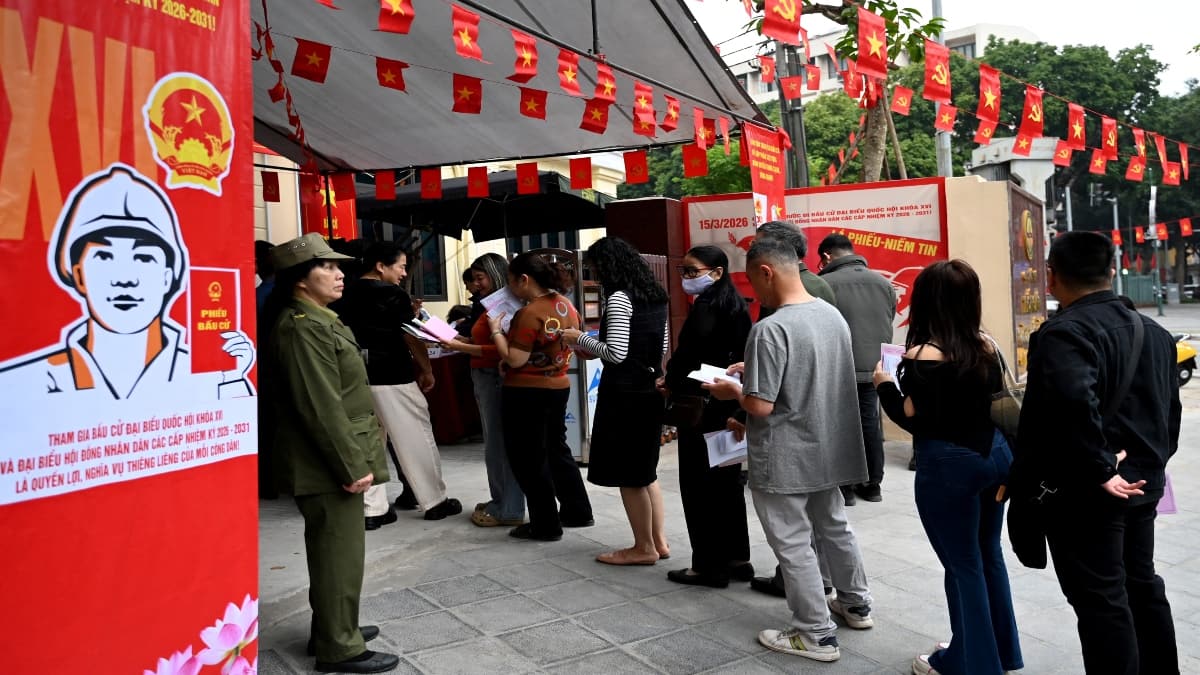
If you walk past the yellow-walled colonial buildings, you see them: the posters. They are vibrant, saturated in a socialist-realist aesthetic that feels like a postcard from a different century. Sturdy workers, smiling farmers, and intellectuals with thick glasses all gaze heroically toward a horizon only they can see. Below them, the date of the National Assembly election is printed in bold.
Everything is orderly. Everything is choreographed.
Meet "Thanh." He is a composite of the many young professionals I’ve shared tea with in the hidden cafes of the Old Quarter—men and women who navigate a world where the private life is a sprawling garden and the public life is a narrow, paved road. Thanh is thirty-two, wears high-end sneakers, and works for a tech startup. He loves his country with a fierce, quiet intensity. But when he talks about the vote, his voice drops an octave.
"It is a duty," he says, rolling a cigarette. "Like paying a bill. You do it because it keeps the lights on, not because you expect to change the voltage."
The Architecture of the Sure Thing
To understand the stakes of a Vietnamese election, you have to discard the Western notion that an election is a contest. In Vietnam, the election is a confirmation. It is the final scene of a play where the script was edited, vetted, and rehearsed months before the curtain rose.
The National Assembly is technically the highest organ of state power. It passes laws, oversees the government, and appoints the president and prime minister. On paper, it is a pillar of democracy. In practice, it is the legislative arm of the Communist Party of Vietnam (CPV).
The process begins long before the first ballot box is polished. Candidates are screened through a series of "consultative conferences" organized by the Vietnam Fatherland Front, an umbrella group closely tied to the Party. To run for office, you don't just need a platform; you need a blessing. While independent candidates are technically allowed to nominate themselves, the filter is incredibly fine. Most are disqualified for "failing to meet standards" or "lacking the confidence of the masses."
In the 2021 elections, nearly 500 members were elected. Over 90% of them were Party members. The few "non-party" members who made the cut were largely vetted and approved by the establishment.
Imagine a race where every runner is wearing the same jersey. Some might run a bit faster, some might have different strides, but they are all headed to the same finish line. The victory is guaranteed; the only question is the margin.
The Ritual of the Red Envelope
On election day, the atmosphere is festive but brittle. Loudspeakers on street corners—the "mouthpieces" of the neighborhood—broadcast patriotic songs and instructions at 6:00 AM.
Thanh puts on a clean shirt. He walks to the local community center, decorated with red banners and the iconic gold star. There is no line. There is no tension. He receives a ballot, steps into a booth shielded by a thin curtain, and looks at the names.
He knows most of them. Not because he has read their manifestos—manifestos don't really exist here in the way we know them—but because their biographies were posted on the neighborhood bulletin board. They all list the same achievements: loyalty to the Party, contributions to the local economy, and adherence to "Uncle Ho’s" teachings.
"The choice is often about who looks the most capable of getting a road paved," Thanh explains. "You aren't voting for a philosophy. You are voting for a manager who won't get in the way of your business."
But there is a ghost in that booth. It’s the feeling of being watched, even when you are alone. In Vietnam, the pressure to vote is immense. Neighborhood chiefs keep track of who has shown up. A "100% turnout" is the gold standard for a local official’s performance review. In some cases, a single family member might take the ID cards of everyone in the house and cast ballots for the whole group. It’s called "voting on behalf," and while it’s technically illegal, it’s often encouraged to ensure the numbers look perfect.
The statistics are staggering. Turnout regularly exceeds 99%. In a world where even the most stable democracies struggle to get 60% of people to the polls, 99% is not a reflection of enthusiasm. It is a reflection of a machine that does not allow for friction.
The Cost of the Margin
Why bother? If the outcome is predetermined, why go through the elaborate theater of printing millions of ballots and setting up thousands of polling stations?
The answer lies in legitimacy.
The CPV understands that power is most effective when it is dressed in the clothes of consent. By holding elections, the state can claim a mandate from the people. It tells the international community—and more importantly, its own citizens—that the system is functioning, stable, and unified.
But stability has a shadow.
Over the last few years, the "Blazing Furnace" anti-corruption campaign led by the late General Secretary Nguyen Phu Trong has gutted the ranks of the elite. High-ranking officials, including presidents and deputy prime ministers, have been ousted or imprisoned. The message is clear: the Party will purge itself to survive.
However, this purge happens behind closed doors. The public only sees the results. The election is the moment where the "cleansed" Party presents its new face to the people and asks for a nod of approval.
For someone like Thanh, the "Blazing Furnace" is a double-edged sword. He likes that corrupt officials are being punished. He hates that the system that produced them remains unquestioned.
"We are like passengers on a very fast train," he says. "We can choose the color of the seat covers, maybe. But we don't know who the driver is, and we certainly can't tell him to change direction."
The Quiet Resistance of the Digital Age
The narrative of a "repressive one-party nation" often paints the citizens as silent victims or brainwashed followers. That is a lazy interpretation. The reality is far more complex.
Vietnam is one of the most internet-savvy nations in Southeast Asia. Young people are connected to the global discourse. They see how the rest of the world lives. They use VPNs to bypass the "Bamboo Firewall" and discuss politics in coded language on Facebook and Zalo.
They aren't looking for a revolution; they’ve seen enough of those in their history books. They are looking for a voice.
In recent years, the crackdown on dissent has intensified. Decree 53 and other cybersecurity laws allow the government to force tech giants to hand over user data and remove "toxic" content. Bloggers and activists who question the election process or point out the flaws in the candidate list frequently find themselves facing years in prison for "abusing democratic freedoms."
This creates a culture of the "Internal Exile." People retreat into their private lives. They focus on wealth, family, and travel. They become masters of the unspoken.
Consider the silence. In a truly democratic election, the air is thick with disagreement. In Vietnam, the silence is the policy. When you don't see protests, it isn't always because everyone is happy. Sometimes, it’s because the cost of speaking is higher than the benefit of being heard.
The Invisible Stakes
What happens if the theater stops?
The stakes of these parliamentary elections aren't about which party wins. The stakes are about the social contract. The Party promises economic growth and national pride. In exchange, the people provide their silence and their votes.
As long as the economy hums—as long as the tech startups flourish and the exports flow—the trade-off holds. But the National Assembly is increasingly becoming a place where the pressures of a changing society meet the rigidity of an old system.
Even within the Party-vetted ranks, there are flickers of debate. Members sometimes grill ministers over land rights, environmental disasters, or the quality of the education system. These are the "safe" topics—the ones that don't challenge the Party’s right to rule but do demand better governance.
These small cracks are where the future lives.
Thanh finishes his cigarette and looks out at the street. A fleet of electric scooters whirs by, driven by kids who weren't alive when the last of the old-guard revolutionaries were in their prime. They are the target of the posters, the ones the loudspeakers are trying to reach.
"The Party thinks the election is about the past—about celebrating the struggle," he says, standing up. "But for us, every time we walk into that booth, we are wondering about the future. We are looking for a door that isn't there yet."
The Weight of the Paper
There is a specific sound a ballot makes when it hits the bottom of a wooden box. A soft, paper thud.
In Hanoi, that sound happens millions of times in a single day. Each one is a data point in a 99% success rate. Each one is a "red ballot" cast in a system that prizes harmony over choice.
The tragedy isn't that the people don't have a vote. The tragedy is that the vote doesn't have the people.
When the sun sets on election day, the banners will stay up for a few more days, glowing under the streetlights. The results will be announced with great fanfare, and the new National Assembly will convene in a massive, modern hall to applaud the leaders they were always meant to elect.
Thanh will go back to his startup. He will build apps, he will earn money, and he will wait. He isn't angry. Anger is exhausting. He is simply observant.
He knows that a system that cannot bend will eventually break, and no amount of 99% turnouts can change the physics of that reality. For now, the theater continues. The script is followed. The actors play their parts.
And the rest of us are left to wonder: what happens when the audience stops clapping?
The red ballots are counted. The winners are the same as the starters. The gold star on the flag remains still, unmoving in the humid evening air, while underneath it, a nation of ninety-seven million people breathes, works, and waits for a choice that finally belongs to them.
Would you like me to analyze the recent shifts in Vietnam's "Blazing Furnace" anti-corruption campaign and how it has reshaped the current leadership?