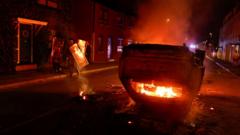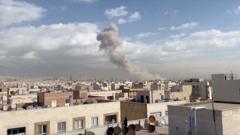
The sound of windows rattling in the middle of the night isn't something you forget. For millions in Tehran, that became the reality as a series of massive explosions lit up the skyline, followed quickly by the sight of thick smoke rising over the city's outskirts. If you've been following the tension between Israel and Iran, you knew this was coming. It wasn't a matter of if, but when. This wasn't just another small-scale sabotage or a localized fire. These strikes targeted the heart of the Iranian military infrastructure, and the ripples are going to be felt for years.
Most news outlets are busy reporting the "what" and the "where." They'll tell you about the Imam Khomeini International Airport area or the Parchin military complex. But they’re missing the "so what." Why does this specific round of strikes matter more than the shadow war we’ve seen for the last decade? It’s because the red lines have officially been erased. We’re in a new era where direct, overt hits on sovereign capital cities are the new baseline for diplomacy by other means. Don't forget to check out our earlier article on this related article.
The Reality Behind the Smoke Over Tehran
Official Iranian state media initially tried to downplay the events. They claimed the sounds were just air defense systems doing their job. That's a classic move. You don't want to admit your airspace was poked full of holes while the population is sleeping. However, social media tells a different story. Verified footage from residents showed multiple impact points. We saw secondary explosions, which almost always mean a hit on a munitions dump or a fuel storage facility.
When you see that kind of sustained fire, it's not a stray drone. It’s a coordinated effort to dismantle specific capabilities. Intelligence sources and satellite imagery later confirmed that the targets weren't random. They were surgical. We're talking about drone manufacturing plants and missile research facilities. By hitting these spots, the attackers aren't just "sending a message." They’re physically removing the tools Iran uses to project power across the region. It’s a move designed to reset the balance of power by force. To read more about the history of this, NPR provides an excellent summary.
What the Media Misses About Iranian Air Defenses
There’s a lot of talk about how sophisticated Iran’s air defense systems are. They've got the S-300s they bought from Russia and their own homegrown versions like the Bavar-373. On paper, these should make the sky over Tehran a no-go zone. But the recent explosions prove there’s a massive gap between brochure specs and combat reality.
Electronic warfare is the silent player here. You don't just fly planes or drones into a defended area; you blind the guys watching the screens first. The fact that smoke was rising from multiple sites across the country—not just the capital—suggests a total temporary collapse of the defensive grid. It’s a humiliating realization for the Iranian military leadership. If they can’t protect the sites right outside the Revolutionary Guard headquarters, what can they protect?
This creates a massive psychological weight. When the public sees the sky glowing and the government says "everything is fine," the trust gap widens. That's often as damaging as the physical bombs themselves. It forces the leadership into a corner where they have to choose between a risky retaliation or looking weak in front of their own people.
Tracking the Shift from Shadow War to Direct Conflict
For years, this was a game played in the dark. A cyberattack here, a mysterious ship fire there, maybe a scientist gets targeted on a lonely road. It was "plausible deniability" at its finest. That’s over.
- Direct strikes on military bases near major civilian hubs.
- Open acknowledgement of the targets by the attacking parties.
- A total lack of concern for the "unwritten rules" of engagement.
This shift matters because it removes the safety valves. In the past, both sides could pretend nothing happened to avoid a full-scale war. Now, the damage is too visible to ignore. You can't hide smoke rising over a city of 9 million people.
The Energy Market and the Price of Instability
You’d think the global oil markets would lose their mind every time a bomb goes off in the Middle East. Sometimes they do. But we’ve seen a weirdly muted reaction recently. Why? Because the market has already "priced in" the chaos. Traders expect the tension.
However, don't let the current stability fool you. If these strikes move from military targets to energy infrastructure—like the Kharg Island terminal—you’ll see gas prices at your local station jump overnight. So far, the attackers have been careful to avoid hitting oil fields. They want to hurt the military, not wreck the global economy. It’s a delicate dance. If Iran feels its back is against the wall, they might decide that if they can't export oil, nobody should. That’s the nightmare scenario for 2026.
Why Intelligence Failures Led to This Moment
It’s easy to blame the weapons, but the real failure is usually human. For these explosions to happen, there had to be a massive intelligence breakdown within the Iranian security apparatus. Someone knew the coordinates. Someone knew the timing. Someone knew exactly when the air defenses would be most vulnerable.
History shows us that these operations usually involve years of "pre-operational' work. You don't just wake up and decide to hit Tehran. You spend months mapping out the fiber-optic cables, the radar frequencies, and the shift changes of the guards. The fact that the strikes were so successful suggests that the attackers have deep access inside the country. It’s a "leaky sieve" situation that the IRGC is likely scrambling to fix right now with a wave of internal purges.
Impact on Regional Proxies
Iran doesn't just fight for itself. It uses a network of groups across Lebanon, Iraq, and Yemen. When the "head of the snake" gets hit in Tehran, the "arms" feel it too. If the manufacturing plants for the Shahed drones are smoldering ruins, the supply chain for these groups dries up.
We’re likely to see a temporary lull in proxy activity while they wait for new orders and new gear. Or, conversely, they might lash out in a disorganized way to show they’re still relevant. Watch the borders in Northern Israel and the shipping lanes in the Red Sea very closely over the next 72 hours. That’s where the "receipt" for the Tehran explosions will likely be delivered.
The Strategy of Proportionality is Dead
We used to talk a lot about "proportional response." If you hit a boat, I hit a boat. If you hack a power grid, I hack a power grid. That concept is basically dead. The goal now is "overwhelming deterrence." The idea is to hit so hard and so unexpectedly that the other side is too stunned or too broken to hit back effectively.
It’s a high-stakes gamble. If it works, you get a period of forced peace because the opponent is scared. If it fails, you trigger the very regional war you were trying to avoid. From what we saw in the sky over Tehran, the attackers are betting everything on the former. They're gambling that the Iranian government cares more about its own survival than it does about its pride.
What You Should Watch for Next
The next few days are the "danger zone." Watch the state-run news agencies for the specific language they use. If they use words like "harsh revenge," expect a missile barrage. If they focus on "technical failures" or "minor damage," they’re looking for an off-ramp.
Keep an eye on flight tracking data too. If you see high-level government planes moving toward the eastern part of the country, away from the capital, it’s a sign they expect more incoming. Also, watch the domestic Iranian currency. When people get scared, they dump the Rial for Dollars or Gold. The black-market exchange rate is often a better indicator of the national mood than any official statement.
Verify everything you see on social media. In the wake of these explosions, the "fog of war" is thick. Old videos from different conflicts get reposted as "live footage." If a video looks too perfect or too cinematic, wait for a second or third source to confirm it.
The smoke over Tehran might clear in a few days, but the geopolitical landscape has been permanently altered. The old rules are gone. We’re watching a live-fire rewrite of Middle Eastern history, and the ink is still wet.