The legal machinery in Belfast has ground past a significant roadblock. A judge recently dismissed an application to drop charges against several men accused in connection with the 2019 killing of journalist Lyra McKee. This decision ensures that the prosecution's case—built on a complex web of forensic data, covert surveillance, and the volatile history of Derry’s Creggan estate—will proceed to its full conclusion. The ruling is a blow to the defense’s strategy of attacking the sufficiency of the evidence before the trial could even reach its stride.
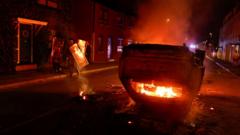
Lyra McKee was not a combatant. She was a thirty-year-old observer standing near a police Land Rover when a gunman, allegedly linked to the New IRA, opened fire during a riot. The bullet intended for the police struck her instead. Since that night, the case has become a litmus test for the Northern Irish justice system’s ability to prosecute paramilitary activity in an era where "omertà," the code of silence, still dictates the atmosphere of certain neighborhoods.
The Mechanics of the Defense Failure
The defense team attempted a "no case to answer" submission, a standard but high-stakes legal maneuver. Their argument centered on the idea that the prosecution had failed to provide a direct, unbreakable link between the defendants and the specific actions that led to McKee’s death. In complex paramilitary trials, the prosecution often relies on a "joint enterprise" theory. This means they don't necessarily have to prove who pulled the trigger, but rather that the individuals involved were part of a coordinated effort that made the killing a foreseeable outcome.
By refusing to dismiss the charges, the judge signaled that the threshold for a "prima facie" case has been met. This is a technical win for the Public Prosecution Service, but it does not guarantee a conviction. It simply means the evidence is heavy enough to require a full defense. The evidence in question involves a grueling reconstruction of the night's events, utilizing CCTV footage that is often grainy and obstructed by the very masks the rioters wore to evade detection.
The Forensic Gap and the Weight of Circumstance
One of the primary challenges in the McKee case is the lack of a "smoking gun" in the literal sense. While the weapon used—a Hammerli X-Esse pistol—was recovered in a subsequent search, linking it to a specific hand at a specific second remains the central friction point of the trial. Prosecutors are instead stitching together a narrative through:
- Clothing Analysis: Matching fibers and unique wear patterns from seized items to the figures seen on camera.
- Cell Site Data: Mapping the movement of individuals in the lead-up to and aftermath of the shooting.
- Witness Testimony: Navigating the treacherous waters of local accounts in an area where "touting" (informing) can carry a death sentence.
The defense argued these elements were circumstantial and speculative. The court disagreed. In Northern Ireland’s Diplock-style courts (where a judge sits without a jury for terrorism-related cases), the judge acts as both the arbiter of law and the finder of fact. This puts an immense burden on the judiciary to remain detached from the high-profile emotional weight of McKee’s status as a respected member of the press.
The New IRA and the Evolution of Urban Warfare
To understand why this trial is so protracted, one must look at the evolution of the New IRA. This is not the Provisional IRA of the 1970s. It is a fragmented, yet lethal, amalgamation of hardliners who rejected the Good Friday Agreement. Their tactics in the Creggan that night were designed to provoke a police response that would, in turn, radicalize the local youth.
McKee’s death was a tactical disaster for the organization. It stripped away the thin veneer of "community defense" they claimed to represent. The subsequent investigation has been one of the most intensive in the history of the Police Service of Northern Ireland (PSNI). However, the investigative process has been slowed by the sophisticated counter-surveillance measures adopted by modern paramilitaries. They know where the cameras are. They know how to burn "scout" cars. They know how to use the tight, terraced geography of Derry to vanish in seconds.
The Role of Covert Intelligence
Behind the scenes of the public courtroom drama lies the shadow of MI5 and the PSNI's Intelligence Branch. Much of the pushback from defense lawyers involves the disclosure of sensitive intelligence materials. There is a constant tug-of-war over what the defense is allowed to see versus what the state claims would "endanger national security" if revealed.
This tension often leads to delays. When a judge refuses to dismiss charges, they are essentially saying that even without the "secret" sauce of classified intelligence, the public evidence is enough to move forward. This is crucial for public trust. If the conviction relied solely on closed-door evidence, it would be dismissed by a segment of the population as a "show trial." By keeping the focus on forensic links and visible actions, the court attempts to maintain a standard of transparency that is often missing in security-heavy proceedings.
The Cultural Standoff in the Creggan
The trial is not just happening in a courtroom; it is happening in the streets of Derry. The Creggan estate remains a place of deep-seated tension. For the prosecution, getting witnesses to stand up and speak is the ultimate hurdle. The "Justice for Lyra" campaign has been vocal, but the quiet pressure from paramilitary elements acts as a powerful counter-force.
The refusal to dismiss charges sends a message to the community that the legal system will not be intimidated by the length of the process or the complexity of the environment. It reinforces the idea that the death of a journalist—someone whose job was to shine a light on these very shadows—cannot be brushed aside as "collateral damage" in a riot.
A Test of Joint Enterprise
The McKee case will likely redefine how joint enterprise is applied to civil unrest in Northern Ireland. If the men standing trial are convicted without being identified as the gunman, it sets a potent precedent. It suggests that participating in a coordinated paramilitary display where firearms are present makes every participant legally liable for the lethal consequences.
This is a high bar for the state to clear. They must prove intent or, at the very least, a level of cooperation that goes beyond mere presence at a riot. The defense will continue to hammer at the gaps in the timeline, looking for any reasonable doubt that their clients were part of the "inner circle" that planned the shooting.
The Global Implications for Press Freedom
Journalists around the world are watching this case because it touches on the safety of reporters in "low-intensity" conflict zones. Lyra McKee was documenting the rise of a new generation of dissidents. Her death was a direct attack on the ability of the press to operate in areas where the state's grip is firm but contested.
The refusal to dismiss the case prevents a narrative of impunity from taking root. Had the charges been dropped at this stage, it would have been interpreted as a failure of the state to protect its most vital observers. Instead, the trial moves into a phase of grueling cross-examination where the technical details of ballistic reports and digital forensics will be laid bare.
The prosecution now faces the task of proving that the chaos of that night was a directed, purposeful act of violence. They are fighting against a defense that thrives on the ambiguity of a riot. Every shadow on a CCTV frame will be debated. Every cell tower ping will be scrutinized. The legal battle is no longer about whether a crime happened—that is undisputed—but about whether the state can definitively pin the blame on the men in the dock.
The proceedings will continue in Belfast, and the focus now shifts to the specific movements of the accused in the minutes surrounding the fatal shot. The court has cleared the way for a full accounting of the facts, leaving no room for the defense to bypass the evidence through procedural dismissal. The weight of the case now rests on the strength of the forensic trail.
Identify the specific discrepancies in the digital forensics provided by the prosecution and prepare a cross-comparison with the witness timelines.