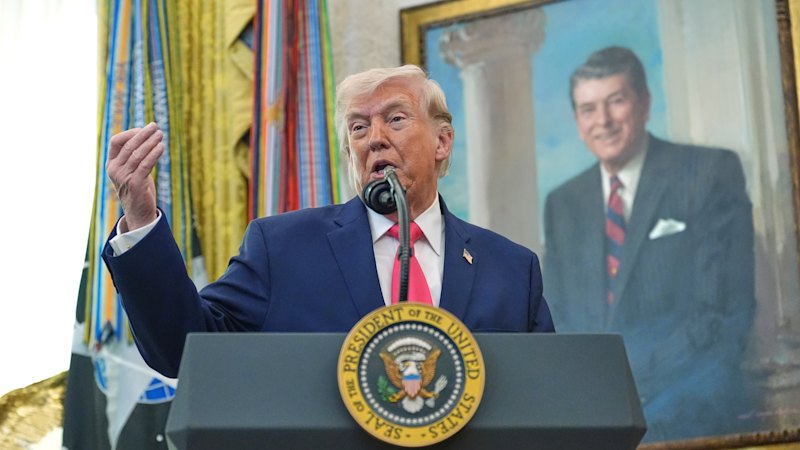
Donald Trump didn't pick a Saturday night for his 48-hour ultimatum by accident. If you've watched his career for more than five minutes, you know he treats the presidency and his post-presidency like a primetime television schedule. Most people saw the ticking clock and immediately thought of Tehran or the latest geopolitical flare-up in the Middle East. They're looking at the wrong map. This wasn't a tactical military window. It was a tactical media window designed to swallow the Sunday morning news cycle whole.
Timing is everything in politics, but in the world of Trump, timing is a weapon. By dropping a high-stakes deadline on a Saturday, he ensured that every single talking head on the Sunday morning talk shows—from Meet the Press to Face the Nation—had no choice but to lead with his name. He effectively hijacked the national conversation before most of the country had even finished their first cup of coffee.
The Art of the Weekend News Vacuum
Saturday is traditionally where political stories go to die. It’s the "Friday night news dump" extended into the weekend. Campaigns use it to hide bad news. Trump does the opposite. He uses the quiet of the weekend to create a vacuum and then fills it with himself.
When a president or a major political figure sets a deadline that expires on a Monday morning, they control the narrative for 48 hours of pure speculation. Think about the mechanics of a newsroom. On weekends, staffing is thin. Reporters are looking for an easy, high-impact lead. By providing a countdown, Trump gave them a pre-packaged drama. He didn't just give them a story; he gave them a protagonist, a clock, and a looming sense of crisis.
This isn't about Iran's internal politics or their nuclear capabilities. Those are the set pieces. The real play is the dominance of the American psyche. If you're talking about his deadline, you're not talking about his court cases, his cabinet picks, or the latest legislative hurdle in D.C. You're playing on his field, by his rules.
Why Sunday Morning Shows Still Matter
You might think the Sunday shows are relics of a bygone era. You’d be wrong. While the ratings aren't what they were in the nineties, these programs still set the "assignment list" for the rest of the elite media for the coming week.
- The Narrative Setup: Producers spend all week booking guests. A Saturday night bombshell forces them to scrap their plans.
- The Soundbite Loop: Whatever a surrogate says on Sunday morning will be clipped, tweeted, and replayed on CNN and MSNBC all day Monday.
- The Perception of Strength: A deadline creates an aura of command. It suggests that the person setting the clock is the one in charge of the global pace.
Trump knows that the media can't resist a countdown. It's built into the DNA of cable news. They’ll put a literal digital clock on the screen if you give them a reason. That clock is free advertising. It’s a 48-hour campaign commercial that masquerades as a national security emergency.
Crushing the Competition Through Exhaustion
There’s a psychological element here that many analysts overlook. By constantly forcing the media and his political opponents to react to weekend "emergencies," Trump induces a state of fatigue. When you're always on your heels, you can't go on the offense.
Opponents spent their Saturday night drafting statements. They spent their Sunday morning defending their positions. By the time Monday rolled around, they were exhausted, and Trump was already moving on to the next thing. It’s a blitzkrieg strategy applied to communication. He moves faster than the institutional response can keep up with.
This specific deadline regarding Iran followed the same pattern. It wasn't about a shift in intelligence or a sudden change in the wind in the Persian Gulf. It was about ensuring that when the work week started, the only topic on anyone’s lips was his perceived decisiveness.
The Mirage of Geopolitical Necessity
Speculation often runs wild about why a specific hour was chosen. Was it to coincide with a specific prayer time in Tehran? Was it based on satellite windows? Honestly, it's rarely that deep. If the goal was purely military or diplomatic, these things happen behind closed doors through backchannels and Swiss intermediaries.
Public deadlines are for public consumption.
When you see a 48-hour window opened on a Saturday, look at the domestic calendar first. Check if there’s a major rally coming up. Check if a rival is about to give a big speech. Usually, you’ll find that the "emergency" is perfectly timed to step on someone else's toes. In this case, the Iran deadline served as a massive curtain that fell over every other political development of the week.
Breaking the Cycle of Reaction
If you want to understand the modern political landscape, you have to stop looking at the "what" and start looking at the "when." The content of the demand is often secondary to the timing of the delivery. Trump has mastered the art of the 24-hour news cycle by simply refusing to let it have a day off.
For those trying to track the actual policy shifts, the noise is the hardest part to filter out. But the noise is the point. By making the process so loud and so erratic, the actual details of the deal—or the lack thereof—get lost in the shuffle. We spend so much time debating the deadline that we forget to ask if the deadline was even necessary in the first place.
Pay attention to the next time a major announcement happens outside of business hours. It's a signal. It tells you that the person speaking cares more about the audience at home than the diplomats abroad. Saturday night isn't for war; it's for television.
To stay ahead of these narratives, start looking at the schedule of major political events a week in advance. When you see a gap in the news cycle, expect it to be filled. Don't just read the headline—look at the timestamp. Usually, the "why" is hidden right there in the clock.