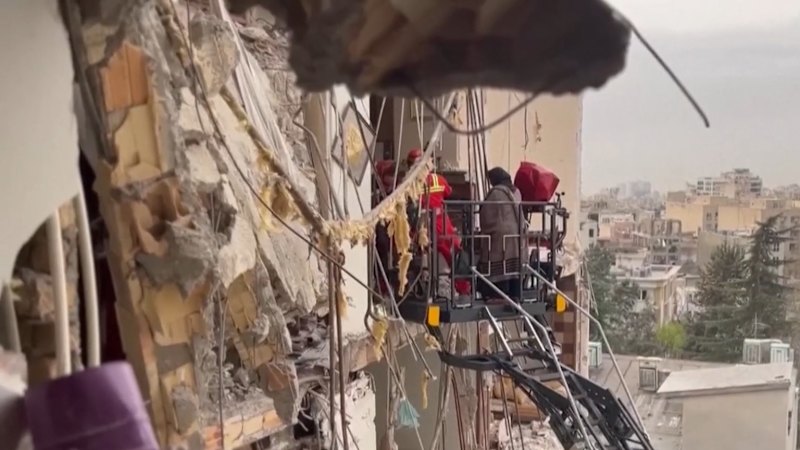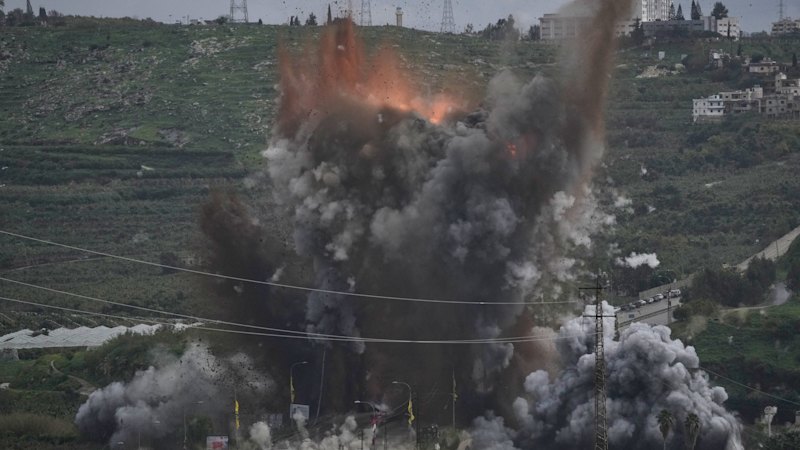
Israel is moving toward a permanent military presence in southern Lebanon and we need to talk about what that actually means for the region. This isn't just a temporary border skirmish or a quick "in and out" operation like we've seen in previous decades. The Israel Defense Forces (IDF) are actively clearing land, establishing outposts, and preparing for a long-term stay in a "security zone" that mirrors the occupation that lasted from 1985 to 2000.
If you're following the headlines, you've probably heard about the tactical wins. But the strategic reality is much messier. By pushing several kilometers into Lebanese territory, Israel aims to create a physical buffer that prevents Hezbollah from ever launching another October 7-style ground raid or using short-range anti-tank missiles against northern Israeli towns. It sounds logical on paper. In practice, it’s a recipe for a multi-generational war of attrition. You might also find this related article useful: The $2 Billion Pause and the High Stakes of Silence.
Why a Buffer Zone Rarely Stays Just a Buffer
The logic of a security zone is simple. If you move the enemy's "launching pad" further away, your citizens are safer. Since late 2023, over 60,000 Israelis have been displaced from their homes in the north. The government is under massive internal pressure to get those people back. To do that, they don't just need a ceasefire; they need a physical guarantee that Hezbollah's Radwan Force won't be peering through their kitchen windows.
But here is the catch. Occupying land in Lebanon has historically been a quagmire for the IDF. When you hold territory, you provide fixed targets. Hezbollah isn't a conventional army that stands and fights for every inch of dirt. They're a guerrilla force. They thrive when an occupying power sits in static positions. They’ll use IEDs, drones, and sniper fire to bleed the occupying force. We saw this play out for fifteen years until Israel's withdrawal in 2000. The current plan assumes that modern technology—AI-driven sensors, advanced drone surveillance, and better intelligence—will make this time different. It’s a risky bet. As reported in latest reports by BBC News, the implications are widespread.
The Engineering of Displacement and Demolition
Reports from the ground and satellite imagery show a grim reality. This isn't just about troop movements. It's about engineering. The IDF has been systematically destroying structures in Lebanese border villages like Mhaibib and Ramia. They're not just clearing houses; they're clearing the "infrastructure of terror" that Hezbollah built over twenty years.
This includes:
- Vast tunnel networks that run directly under civilian homes.
- Weapons caches hidden in mosques and schools.
- Fortified firing positions with direct lines of sight to Israeli kibbutzim.
By leveling these areas, Israel is essentially creating a "no-man's land." The goal is to make it impossible for Hezbollah to return to the border under the guise of being "local villagers." It’s a scorched-earth tactic designed to ensure that even if the military eventually leaves, the enemy has nothing to return to. Honestly, it’s a brutal strategy that guarantees the displacement of tens of thousands of Lebanese civilians will be permanent.
Lessons the Military High Command Is Ignoring
I've looked at the historical data from the 1990s. Back then, the "Security Zone" was supposed to be the solution. Instead, it became the primary recruitment tool for Hezbollah. It gave them a "cause" that resonated across the Lebanese political spectrum: national liberation.
When you occupy a neighbor's land, you're not just fighting a militia; you're fighting an idea. Even Lebanese citizens who hate Hezbollah’s ties to Iran tend to side with them when Israeli tanks are parked in Lebanese olive groves. Israel’s current leadership seems to think that pure military force can bypass this political reality. They're focusing on the "how" of the occupation—tunnels, drones, outposts—while ignoring the "why" of the resistance it creates.
The international community, including the United States, has been vocal about avoiding a long-term occupation. Yet, the reality on the ground often dictates policy more than diplomatic cables do. If the IDF pulls back, and one single rocket hits Kiryat Shmona, the Israeli public will scream for the military to go back in. This creates a "trap of presence" where leaving becomes politically impossible for any Israeli Prime Minister.
The Role of UNIFIL and International Law
Let’s be real about UNIFIL. The United Nations Interim Force in Lebanon has been a failure in its primary mission. Under Resolution 1701, they were supposed to ensure that no armed groups other than the Lebanese army were south of the Litani River. Instead, Hezbollah built a massive fortress right under their noses.
Israel’s move to establish its own zone is a direct middle finger to the UN's effectiveness. They're saying, "If you won't do it, we will." This puts UN peacekeepers in an impossible spot. They're literally stuck in the middle of a high-intensity conflict zone. We've already seen incidents where UN posts were caught in the crossfire. This friction point is where a local conflict could easily spiral into a broader international crisis.
What This Means for Your Security Perspective
If you’re trying to understand where this goes next, stop looking for a "peace treaty." That’s not on the table. Instead, look for the construction of permanent infrastructure. When the IDF starts paving roads and building reinforced concrete bunkers in southern Lebanon, you’ll know they’re staying for years, not months.
The immediate result will be a decrease in short-range attacks on Israel. That’s the "win." The long-term result will be a shift in Hezbollah’s tactics toward more sophisticated, long-range ballistic missiles and explosive drones that can fly over any buffer zone. You don't solve a drone problem with a land buffer. It’s an old-school solution to a new-school war.
The next few months will be about "shaping" the zone. Israel will likely try to hand over some control to a local Lebanese militia, similar to the old South Lebanon Army (SLA). But finding locals willing to collaborate with Israel is much harder today than it was in 1982. Most people remember what happened to the SLA when Israel pulled out overnight in 2000—they were left to fend for themselves.
Watch the Litani River. That’s the real goal. If Israel can push Hezbollah north of that line, they feel they’ve won. But lines on a map don't stop rockets. The only way forward is to recognize that a military buffer is a temporary bandage on a deep, infected wound. You can’t kill your way out of a border dispute when the other side views the struggle as existential. Keep an eye on the IDF's engineering corps. They’re the ones currently writing the future of the Middle East with bulldozers and concrete.