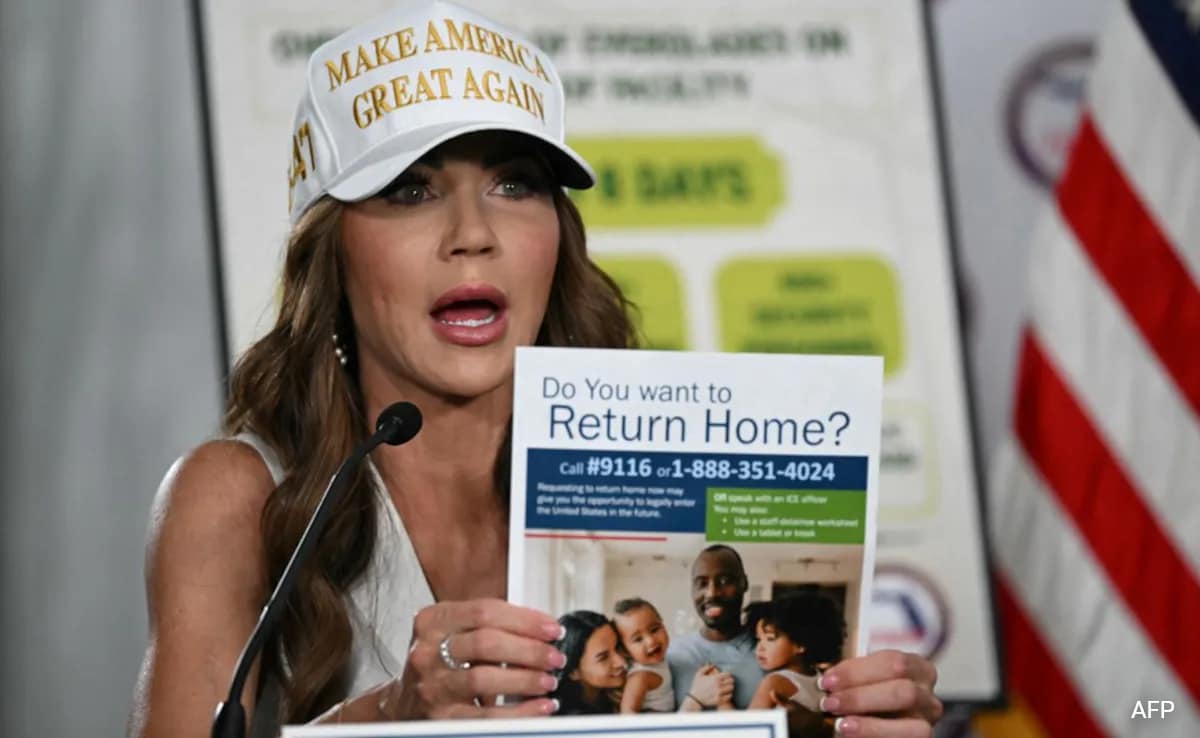
Kristi Noem is no longer the Secretary of Homeland Security. On March 5, 2026, President Donald Trump abruptly reassigned the former South Dakota governor to a newly minted role: Special Envoy for the Shield of the Americas. While the official narrative frames this as a promotion to lead a historic regional security initiative, the timing suggests a calculated extraction. Noem had spent the previous 48 hours being dismantled in congressional hearings, facing fire from both sides of the aisle over $200 million in equestrian-themed ad campaigns and a perceived sluggishness in disaster response.
The move is a classic political sidestep. By shifting Noem to this new envoy post, the administration preserves her loyalty while installing Senator Markwayne Mullin—a man with deep ties to the House and Senate—to steady the ship at DHS. But the real story isn't just about personnel. It is about the "Shield of the Americas," a pivot in U.S. foreign policy that marks the end of broad multilateralism and the birth of a "counter-cartel coalition" designed to lock China out of the Western Hemisphere for good. Meanwhile, you can read similar stories here: The Cold Truth About Russias Crumbling Power Grid.
The Doral Pivot and the Death of the Monroe Doctrine
For decades, the United States operated under the assumption that it had to engage with every nation in the Americas, regardless of ideological drift. That era ended this weekend at the Trump National Doral resort in Miami. The Shield of the Americas is not a diplomatic forum for all; it is an exclusive club for the "reliable."
Notably absent from the Doral summit were the leaders of Brazil and Mexico, the region's two largest economies. Their absence confirms that Washington has stopped trying to build a consensus with neighbors who flirt with Beijing or push back on aggressive U.S. border policies. Instead, Noem is now tasked with managing a lean, 12-nation alliance including Argentina, El Salvador, and Panama. This is the "Donroe Doctrine" in action—a sphere of influence built not on shared values, but on hard security requirements and "rip and replace" technology mandates. To explore the full picture, we recommend the excellent analysis by NBC News.
The Mission of the Special Envoy
Noem's new mandate is stripped of the domestic headaches of FEMA and the TSA. Her focus is now laser-pointed at three specific threats:
- Transnational Cartels: Moving beyond interdiction to what Trump calls a "coalition to eradicate Isis-style" cartels.
- Chinese Infrastructure: Aggressively pressuring Latin American allies to remove Huawei and ZTE hardware from their 5G networks.
- Mass Migration: Creating a "buffer zone" of nations that will intercept migrants long before they reach the U.S. southern border.
Why Noem? Why Now?
The transition was messy. Only days ago, Noem was defending a DHS budget that critics claimed prioritized optics over operations. The "Angel’s Honor" operation and the mass deportation of over 3 million people in a single year were touted as successes, yet her leadership was buckling under the weight of internal morale issues and legal challenges to the Laken Riley Act.
By placing her in the Shield of the Americas role, the White House is utilizing her "border-first" brand without the baggage of managing a 260,000-person department. Noem has proven she can deliver the rhetoric of a closed border; now she has to convince 12 other sovereigns to close theirs too. She will work directly under Secretary of State Marco Rubio and Secretary of War Pete Hegseth, forming a triumvirate focused on hemispheric dominance.
The Economic Shield
This is not just about soldiers and sensors. The Shield of the Americas includes a heavy economic component that Noem must sell to cash-strapped nations. The strategy involves:
- Debt Swaps: Offering to refinance "Belt and Road" debts held by China in exchange for exclusive U.S. security access.
- Secure Port Certification: Granting tariff reductions only to regional ports that audit their security and remove Chinese-made Nuctech scanners.
- Supply Chain Nearshoring: Redirecting pharmaceutical and semiconductor assembly from Asia to "Shield" partners.
The High-Stakes Gamble of Selective Partnership
The risk of this strategy is glaring. By ignoring Mexico and Brazil, the U.S. may inadvertently drive the region’s giants deeper into the arms of the BRICS bloc. Noem’s challenge is to prove that the benefits of being inside the "Shield" outweigh the lucrative trade deals offered by Beijing.
There is no room for error here. If the Shield fails to stop the flow of fentanyl or the movement of people, Noem will find herself without a third act. The "Shield" is either a visionary fortress or a high-priced consolation prize for a displaced cabinet official.
I can analyze the specific trade implications of the Secure Port Certification for you next.