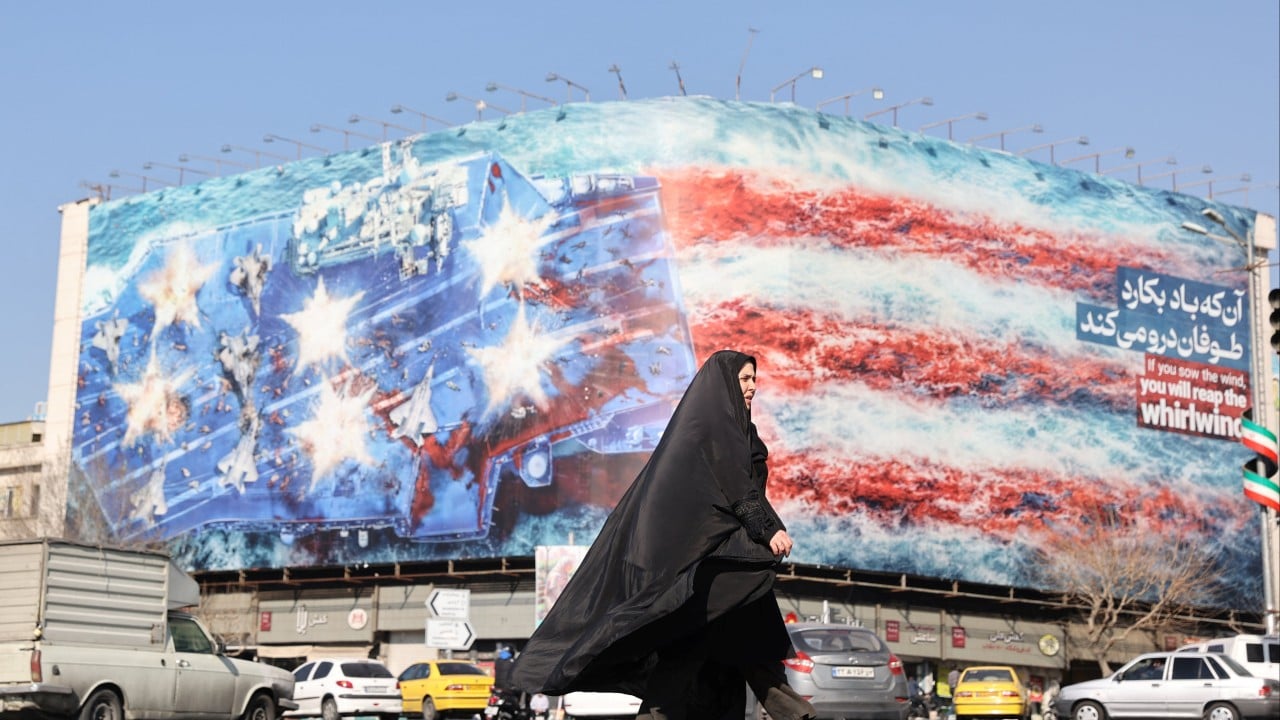
The diplomatic clock has officially run out. On Friday, President Donald Trump confirmed what the rapid movement of carrier strike groups had already telegraphed to the world. He is not happy with the state of negotiations with Tehran, a sentiment that usually serves as the final preamble to a kinetic shift in American foreign policy.
While Omani mediators spent the week briefing the press on "significant progress" in Geneva, the reality on the ground in Tel Aviv told a different story. The U.S. State Department has authorized the departure of non-emergency personnel and their families from the embassy in Israel. This isn't just a standard safety precaution; it is a tactical clearing of the decks. When the U.S. Ambassador to Israel, Mike Huckabee, tells staff they should leave "today" because tomorrow’s flights might not exist, the window for a peaceful resolution hasn't just closed—it has been boarded up.
The Enrichment Trap
The core of the friction is a fundamental disagreement over what "zero" means. The Trump administration, led in these talks by special envoys Steve Witkoff and Jared Kushner, has demanded the total dismantlement of Iran’s primary nuclear infrastructure at Fordow, Natanz, and Isfahan. Washington’s position is binary: Iran either ceases all enrichment forever or faces the consequences of a military campaign designed to do the job by force.
Tehran’s counter-offer, which Omani officials tried to dress up as a breakthrough, was a five-year pause on enrichment. To the veteran analyst, this was never a serious proposal. It was a play for time, a strategic "kick the can" move intended to outlast the current U.S. administration. By offering to blend down existing stockpiles and allow IAEA inspectors "full access," Iran hoped to secure sanctions relief without surrendering the technical knowledge it has spent decades acquiring.
The White House saw through the gambit. Trump’s "not happy" remark is the verbal equivalent of a thumb turned down in the Colosseum. He isn't interested in a temporary freeze that leaves the centrifuge rotors ready to spin the moment a new president takes the Oval Office in 2029.
Logistics of an Imminent Strike
Evidence of the shift from the table to the cockpit is everywhere. The USS Gerald R. Ford carrier strike group has taken up its station in the eastern Mediterranean. A dozen F-22 Raptors and nearly ten aerial tankers have been moved into theater. These aren't tools of "posturing." They are the specific assets required to suppress enemy air defenses and sustain long-range sorties over the Iranian plateau.
The evacuation of embassy staff in Jerusalem and the earlier withdrawal from Beirut suggest the Pentagon is bracing for a multi-front retaliation. If the U.S. strikes Iran’s nuclear facilities, the response won't just stay within Iranian borders. Intelligence suggests that Hezbollah in Lebanon and various militias in Iraq are already on high alert, prepared to rain thousands of rockets on Israel and U.S. bases the moment the first Tomahawk hits a bunker in Natanz.
Ambassador Huckabee’s urgent directive for staff to exit immediately reflects a grim calculation. Once the airspace over the Levant becomes a contested combat zone, civilian corridors disappear. The government is effectively telling its people that it can no longer guarantee their safety because it knows exactly what is about to be unleashed.
The Intelligence Gap and the Casus Belli
There is a jarring disconnect between the administration's rhetoric and the consensus of the intelligence community. Secretary of State Marco Rubio and Special Envoy Witkoff have claimed that Iran is "a week away" from weapons-grade material. Yet, internal assessments leaked from within the defense establishment suggest a longer timeline for a deliverable warhead.
This discrepancy matters because it suggests the administration has already decided that regime change, or at least the total neutralization of Iran's regional influence, is the only acceptable outcome. Negotiating in "good faith and conscience," as Trump put it, would require a level of trust that simply doesn't exist. The White House is operating on the "Maximum Pressure 2.0" philosophy, which holds that any deal that allows Iran to keep even a single centrifuge is a defeat.
The Regional Fallout
Israel finds itself in a precarious position. While Prime Minister Benjamin Netanyahu has long advocated for a definitive end to the Iranian nuclear program, the cost of being the primary target for Iranian retaliation is weighing on the Israeli economy. The shekel has hit its lowest point in months, and the total closure of civilian airspace is no longer a "what if" scenario—it is a logistical plan sitting on a desk.
Vice President JD Vance has suggested that the U.S. can engage in "limited strikes" without falling into a "forever war." It is a confident assertion, but one that ignores the reality of Middle Eastern escalatory ladders. There is no such thing as a "limited" strike on a sovereign nation’s most prized strategic asset. Once the first bomb falls, the "how" and "why" of the negotiations will become irrelevant, replaced by the brutal math of missile counts and interceptor stocks.
The mission is no longer about finding a middle ground in Geneva. It is about managing the splash damage of a conflict that the White House now views as inevitable. When the Secretary of State lands in Israel next week, he won't be there to revive the talks. He will be there to coordinate the defense.
Would you like me to analyze the specific military assets currently deployed by the U.S. and Israel to see how they match up against Iran’s domestic air defense systems?