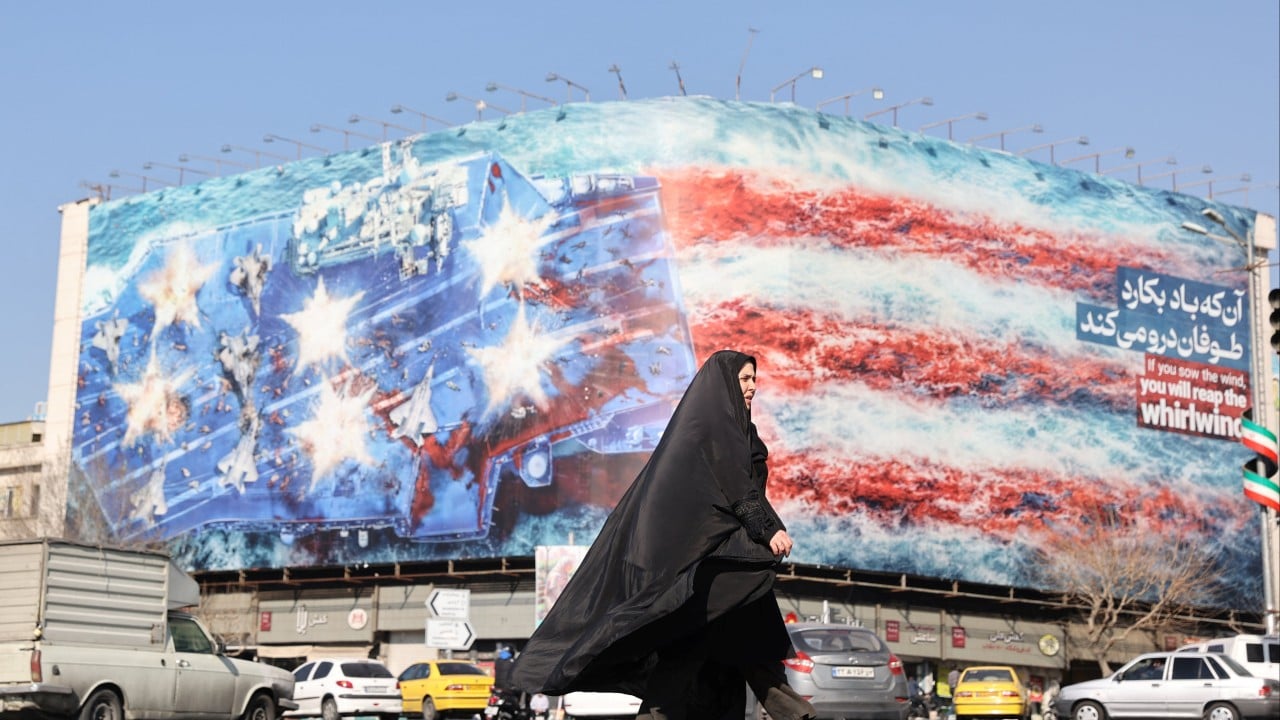
The failure of JCPOA revival negotiations in Vienna functions as a primary volatility trigger for Chinese state-owned enterprises (SOEs) and private citizens operating within the Iranian domestic market. When diplomatic frameworks for nuclear de-escalation collapse, the resulting security vacuum isn't merely a political abstraction; it manifests as a quantifiable increase in kinetic risk, regulatory unpredictability, and localized civil unrest. Beijing’s recent advisory to its citizens in Iran serves as a leading indicator that the cost-benefit analysis of Chinese "Belt and Road" involvement in the region is shifting from aggressive expansion to defensive preservation.
The Triad of Volatility: Structural Drivers of Iranian Instability
The current security environment in Iran is governed by three intersecting pressures that Chinese analysts must account for when calculating personnel safety and asset protection.
- Economic Contagion and Civil Friction: The absence of a nuclear deal ensures the continuation of the "Maximum Pressure" sanctions regime. This creates a direct correlation between failed diplomacy and currency devaluation. As the rial loses purchasing power, the risk of "cost-of-living" protests increases. For Chinese nationals, these protests create a dual-threat environment: physical proximity to kinetic crackdowns by state security forces and the potential for xenophobic sentiment if the local population perceives foreign entities as exploiting the economic crisis.
- State-Level Kinetic Escalation: Without a diplomatic ceiling on enrichment activities, the probability of "shadow war" activities increases. This includes cyber-attacks on critical infrastructure—where Chinese hardware is often integrated—and targeted kinetic strikes. Chinese citizens working in energy, telecommunications, and logistics find themselves inadvertently positioned within the "blast radius" of sabotage operations.
- The Governance Gap: Persistent sanctions and international isolation degrade the Iranian state’s ability to provide consistent internal security. When the state prioritizes regime survival over municipal policing, non-state actors and criminal elements find more room to operate. This increases the baseline risk of kidnapping for ransom and petty crime targeting perceived "wealthy" foreigners.
The Mechanism of the "Notice to Citizens" as a Strategic Tool
A formal security advisory from the Chinese Ministry of Foreign Affairs (MFA) is rarely a reactive gesture; it is a calculated deployment of "soft-power signaling."
The first function of such an advisory is legal liability insulation. By officially documenting the risk, the Chinese state shifts the burden of "duty of care" onto the individual and the employing corporation. If an SOE continues operations in a high-risk province after a formal warning, the political and financial cost of a rescue operation or diplomatic incident falls squarely on the corporate leadership.
The second function is diplomatic leverage. By signaling to Tehran that the security environment is becoming untenable for Chinese personnel, Beijing exerts quiet pressure on Iranian leadership. China is Iran’s largest trading partner and a vital lifeline for oil exports. Highlighting security risks serves as a reminder that the "Strategic Partnership" is contingent upon the Iranian state’s ability to guarantee a stable operating environment. If China begins a phased withdrawal of personnel, the Iranian economy faces a secondary shockwave of lost technical expertise and capital flow.
Quantifying the Security Perimeter: Operational Requirements for Firms
Firms remaining in the Iranian market must now transition from a "standard operating" model to a "high-threat mitigation" model. This involves a total audit of the supply chain and personnel movement based on three specific metrics:
Geographic Proximity to Hard Assets
Sites located near nuclear research facilities, military installations, or major energy hubs (such as Asaluyeh or the Port of Bandar Abbas) require a 40% increase in private security budgeting. These areas are primary targets for regional adversaries. Facilities must implement "Deep Defense" protocols, which include redundant communication loops that do not rely solely on the local Iranian internet backbone, which is subject to frequent government "blackouts" during periods of unrest.
The Digital Vulnerability Index
The collapse of nuclear talks often precedes a spike in regional cyber warfare. Chinese firms using integrated IoT (Internet of Things) systems for logistics must assume their networks are compromised. The "Digital Vulnerability Index" for a project increases significantly when local subcontractors are used, as these entities often lack the sophisticated encryption and firewall redundancies practiced by Tier-1 Chinese tech firms.
Personnel Mobility and "The 12-Hour Extraction Window"
The hallmark of a professional security strategy in a post-deal environment is the 12-hour extraction window. Any Chinese national located outside of Tehran must have a pre-verified, non-commercial route to an international exit point. This requires:
- Pre-positioned hard currency (USD or CNY) to bypass local banking failures.
- Satellite-based tracking for all field teams.
- A "no-go" zone map that is updated every six hours based on local social media sentiment analysis and signal intelligence.
Tactical Divergence: SOEs vs. Private Entrepreneurs
The risk profile is not uniform across all Chinese nationals in Iran. There is a distinct divergence in how security must be managed based on the entity's relationship with the Chinese state.
State-Owned Enterprises (SOEs) operate with the backing of the Chinese embassy and often have dedicated security details. Their primary risk is being targeted as proxies for the Chinese state in the event of a diplomatic fallout. Their security protocol is rigid, centralized, and focused on asset hardening.
Private Entrepreneurs and Small-to-Medium Enterprises (SMEs) are the most vulnerable demographic. These individuals often operate in the retail, light manufacturing, or trading sectors. They lack the institutional "shield" of the SOEs and are more likely to be integrated into local communities, making them "soft targets" during civil unrest. For this group, the MFA's warning is an urgent signal to reduce inventory levels and increase liquidity.
The Cost Function of Continued Presence
The decision to stay in Iran despite the failed nuclear talks is a calculation of the Risk-Adjusted Return on Capital (RAROC).
$$RAROC = \frac{Expected Return - (Systemic Risk \times Exposure)}{Economic Capital}$$
As the "Systemic Risk" variable increases due to the lack of a nuclear deal, the "Expected Return" must scale proportionally to justify the presence. For many Chinese firms, particularly those in non-essential services, the math no longer checks out. We are likely to see a "hollowing out" of the Chinese presence in Iran, where only the most critical energy and infrastructure projects remain, protected by increasingly militarized security protocols.
Strategic Positioning and Response
The immediate requirement for Chinese entities is a comprehensive audit of their "local dependency." Every project must identify its "Single Point of Failure" (SPOF) regarding Iranian state support. If a project requires continuous Iranian government protection to function, it is effectively a stranded asset in the event of a regime pivot or major domestic upheaval.
The second requirement is the diversification of logistics. Firms should begin routing critical equipment through secondary "safe harbors" in the region rather than committing to long-term storage within Iranian territory.
The final strategic play involves a transition to remote technical oversight. Where possible, Chinese engineers should be relocated to nearby hubs like Dubai or Muscat, managing Iranian operations via localized proxies and remote monitoring technology. This reduces the "human surface area" exposed to kinetic risk while maintaining the essential flows of the Belt and Road initiative. The era of low-cost, high-exposure expansion in the Iranian market has ended; the era of high-security, technical-remote engagement has begun.
Would you like me to develop a specific risk-mitigation framework for a Chinese firm operating in Iran's telecommunications sector?