The map in the Situation Room doesn't show the smell of diesel or the way the salt air erodes the steel of a hull. It shows blue water, red dots for assets, and a thin, crooked finger of sea known as the Strait of Hormuz. For decades, that tiny strip of ocean has been the world’s jugular vein. If it stops pulsing, the global economy catches a fever.
But lately, the calculus in Washington has shifted. Donald Trump has signaled to his inner circle a willingness to walk away from the brink of a hot war with Iran, even if that means leaving the world’s most critical oil transit point effectively shuttered.
It is a radical departure from a century of American naval doctrine.
Think of a mid-sized trucking company in Ohio. The owner, let’s call him Elias, doesn’t track geopolitical maneuvers in the Persian Gulf. He tracks the cost of a gallon of fuel. To Elias, the Strait of Hormuz is an abstraction until it becomes a line item that threatens his mortgage. For seventy years, the unspoken promise of the American presidency was that the U.S. Navy would ensure Elias never had to worry about that line item. We were the guarantors of the flow.
Now, that guarantee is flickering.
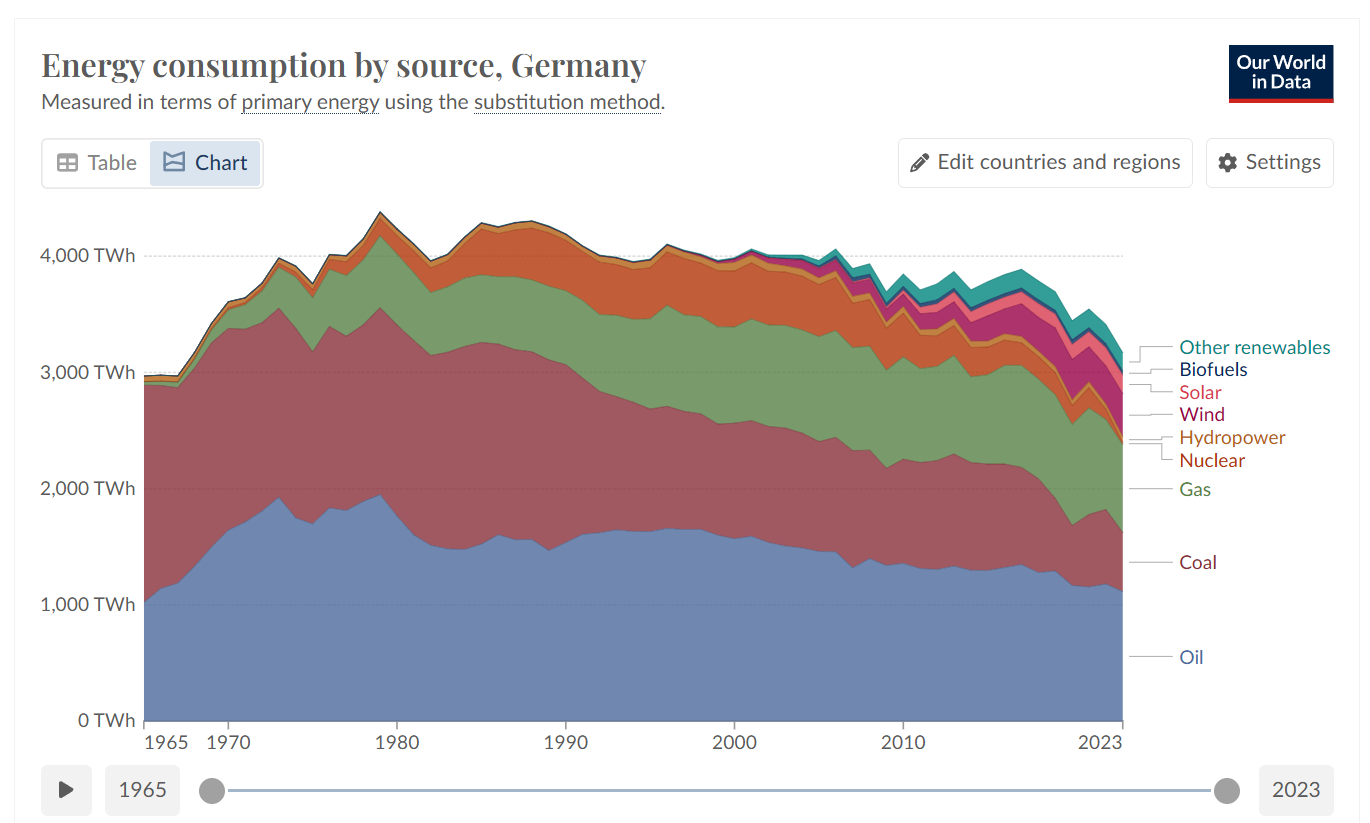
The logic behind this pivot isn't found in traditional diplomacy. It’s found in the hard, cold reality of domestic energy. There was a time when a closed Hormuz meant bread lines and shivering suburbs in Virginia. That era died under the weight of American shale. We aren't the desperate customers we used to be. We are the competitors.
When the President tells aides he can live with a closed strait, he isn't just talking about naval deployments. He is betting that the United States has grown enough of its own muscle to survive a coronary event in the Middle East. It is a flex of energy independence that doubles as an isolationist's manifesto.
But the world isn't just Ohio.
Imagine the lights flickering in a manufacturing hub in Osaka or the rising panic in a boardroom in Frankfurt. If the U.S. steps back from its role as the global maritime police, the vacuum doesn't stay empty. It fills with chaos, or worse, with the ambitions of those who don't share a vested interest in "free trade."
The invisible stakes are found in the insurance premiums of every cargo ship currently bobbing in the Indian Ocean. When the risk of a missile strike or a boarding party becomes a "tolerable" outcome for the world’s superpower, the price of everything—from the plastic in your toothbrush to the grain in your pantry—starts a slow, upward crawl.
We often mistake peace for the absence of noise. In the Gulf, peace has long been the steady, rhythmic hum of tankers passing through a twenty-one-mile-wide gap. To allow that hum to stop is to accept a new kind of silence.
The hawks in the room argue that showing such restraint invites aggression. They see a green light for Tehran to test the boundaries of what "closed" really means. If the Americans won't fight for the oil, what will they fight for? It is a question that haunts the hallways of the Pentagon.
Yet, there is a weary, human pull toward the exit. After twenty years of desert sand in the gears of the American machine, the appetite for a new fire is non-existent. The President is reading the room—not the room of generals, but the room of voters who are tired of hearing about distant harbors while their own bridges crumble.
He is gambling that the American consumer can absorb the shock of a spiked oil price more easily than the American soul can absorb another generation of flag-draped coffins.
This isn't a policy paper. It's a divorce.
The U.S. is effectively telling the rest of the world that the "global commons" are no longer our primary responsibility. If the Strait closes, the burden shifts to Beijing, to New Delhi, to Tokyo. They are the ones whose tankers are at risk. They are the ones who need that crude to keep their cities breathing.
Consider the irony. For years, the world grumbled about American hegemony and the "policeman of the world" routine. Now, they are facing the terrifying prospect of exactly what they asked for: an America that minds its own business.
The tension in the West Wing isn't just about Iran. It’s about the definition of power in the twenty-first century. Is power the ability to force the gates open, or is it the wealth and resilience to stay comfortable while they are locked?
If the gates swing shut and the tankers sit idle, the horizon changes for everyone. We will see a world where geography matters again. Where being on the wrong side of a chokepoint isn't just a logistical hurdle, but an existential threat.
The ships are still moving for now. The water is still blue. But the ghost of a closed strait is no longer a nightmare to be avoided at all costs. It has become a line on a ledger, a calculated risk, a "maybe."
Somewhere in the Atlantic, a captain looks at his charts and wonders if the navy that always had his back is looking the other way. He checks his radar. He watches the coast of Oman slip by. He waits for a signal that might never come.
The true cost of this shift won't be measured in barrels. It will be measured in the sudden, jarring realization that the safety net we all took for granted has been folded up and taken home.
The world is becoming a much larger, much lonelier place to navigate.