Germany is currently the "sick man" of Europe again, and the fever is mostly coming from the gas pump and the heating bill. You can’t walk through a supermarket in Leipzig or a gas station in Thuringia without hearing someone grumble about the "Greens" or the cost of living. This isn't just about a few extra euros for a tank of diesel. It’s a systemic shock that has cracked the foundation of German industrial pride. For the Alternative für Deutschland (AfD), these soaring fuel prices aren't a crisis. They're a marketing campaign.
The math for the average German household is brutal. While inflation has technically dipped from its terrifying 2022 peaks, the cumulative weight of high energy costs remains. People feel poorer. When people feel poorer, they look for someone to blame and a quick fix. The AfD is offering the ultimate quick fix: "Turn the taps back on. Go back to Russia." It’s a message that ignores the moral weight of the war in Ukraine because, for a voter choosing between geopolitical principles and keeping their apartment at 21 degrees Celsius, the apartment usually wins.
The end of the cheap energy era
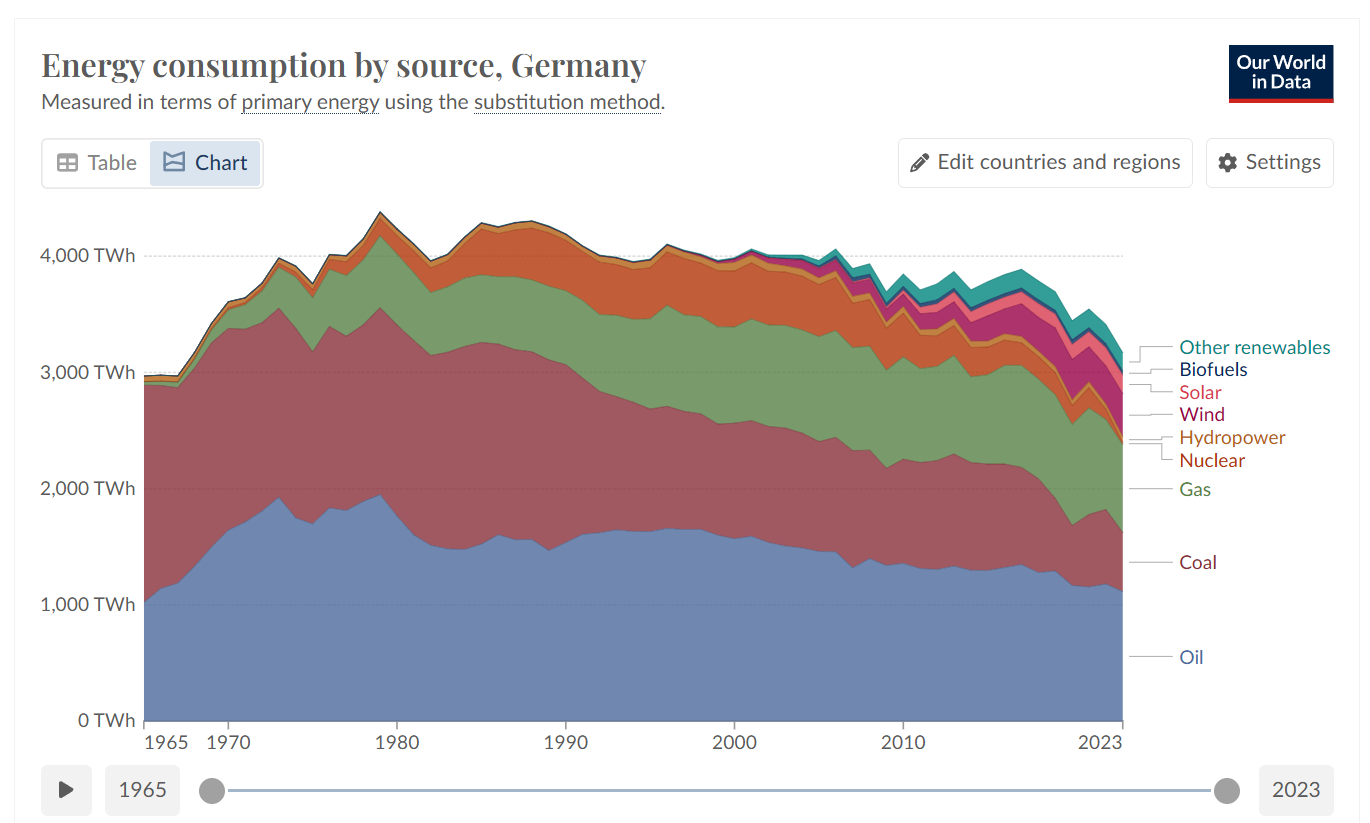
Germany’s economic miracle was built on a very simple, very dangerous bet. The bet was that Russia would always be a reliable, cheap gas station. For decades, that bet paid off. German factories hummed along on inexpensive Siberian gas, allowing them to export high-end cars and chemicals to the rest of the world. Then came February 2022. The sudden realization that the Kremlin was using energy as a literal weapon didn't just hurt; it gutted the business model of the entire country.
Now, Germany is scrambling. The government is building LNG terminals at record speed and trying to pivot to renewables, but that transition is messy. It’s expensive. It involves carbon taxes that make fuel even pricier for the person driving a fifteen-year-old Volkswagen. The AfD steps into this mess and says what the mainstream parties won't: that the energy transition is a luxury the working class can't afford. They frame the "Energiewende" (energy transition) as an elite project designed by wealthy city-dwellers that punishes the rural poor.
Why the Russian narrative works in the East
If you look at a map of where the far-right is winning, it’s heavily skewed toward the former East Germany. This isn't a coincidence. There’s a deep-seated historical connection to the East that hasn't fully evaporated. Many people in states like Saxony or Brandenburg grew up learning Russian and seeing the Soviet Union as a partner, however forced that partnership might have been.
To these voters, the sudden total break with Moscow feels like an American-imposed disaster. They see the Nord Stream pipeline sabotage—which remains a murky, sensitive subject—as an attack on German prosperity. When the AfD demands a return to "rational" energy policy, which is code for buying Russian gas again, it resonates. It sounds like common sense to someone who sees their local bakery closing because the ovens are too expensive to run.
The AfD isn't just talking about gas. They're talking about identity. They’re telling people that the government in Berlin cares more about Ukrainian borders than German heating bills. It’s a powerful, populist wedge.
The industrial fallout is real
We need to be honest about the stakes here. This isn't just about populist rhetoric; it’s about the deindustrialization of Germany. Major players like BASF are shifting investments away from Germany and toward the US or China. Why? Because the energy costs in Germany are often three to four times higher than in the States.
- Chemical production: Down significantly since 2021.
- Steel and aluminum: Smelters are shutting down because they can't compete.
- Small business: The "Mittelstand," the backbone of the economy, is suffocating under electricity prices.
The government’s response has been a series of subsidies and price brakes. But subsidies are temporary. They’re a bandage on a gunshot wound. The far-right exploits this by pointing out that the government is essentially taxing people to pay for the subsidies to lower the taxes. It’s a circular logic that infuriates the tax-paying public.
The Green Party as the perfect villain
In the current political climate, Vice Chancellor Robert Habeck and the Green Party have become the primary targets for far-right ire. The AfD has successfully painted the Greens as "eco-dictators." Every time a new regulation comes out regarding heat pumps or carbon emissions, the far-right polls go up.
There’s a perception that the government is out of touch. While a Berlin bureaucrat might talk about the long-term benefits of green hydrogen, a commuter in a rural village is wondering if they can afford the drive to work. The AfD simplifies this conflict into a battle between "ideology" and "reality." By positioning themselves as the party of reality—no matter how much they ignore the geopolitical reality of Putin’s aggression—they win over the frustrated and the fearful.
Sanctions and the perception of failure
The debate over sanctions is where this gets really heated. The AfD argues that the sanctions against Russia have hurt Germany more than they’ve hurt Russia. Economically, that’s a hard sell when you look at Russia’s long-term prospects, but in the short term, the optics are bad. When Germans see that Russia’s economy is still growing (fueled by war spending) while Germany’s economy is shrinking, they start to wonder if the "sacrifice" is worth it.
The far-right uses this data to claim that the German government is "self-sabotaging." They argue for a "Germany First" approach to energy. This means ignoring the EU’s unified front and making a separate peace with Moscow to get the gas flowing again. It's a move that would effectively end the European project as we know it, but for a voter worried about their kids' future, that seems like a secondary problem.
What actually happens next
The path forward isn't easy. Germany can't just flip a switch and go back to 2021. Even if the war ended tomorrow, the trust is gone. The infrastructure is damaged. The geopolitical bridge has been burned to the ground.
If the mainstream parties want to stop the far-right's rise, they have to solve the energy price problem without just throwing borrowed money at it. That means cutting the red tape that holds back renewable projects and finding a way to lower the "grid fees" that make German electricity some of the most expensive in the world.
Watch the regional elections in the East. Watch the industrial production numbers. If those numbers don't improve, the "turn back to Russia" crowd is only going to get louder. The government needs to prove that a democratic, Western-aligned Germany can still be an industrial powerhouse. Right now, a lot of people aren't convinced.
You should keep a close eye on the upcoming state elections in Brandenburg and Thuringia. If the AfD continues to dominate there, the pressure on Berlin to soften its stance on energy imports will become a full-blown crisis. Stop watching the national polls and start looking at the energy-intensive industrial hubs. That’s where the real political battle is being fought.