The room was dim, scented with the faint, metallic tang of stage lights and the lingering musk of a New York crowd that had already been drinking for an hour. Seth Herzog, a veteran of the comedy trenches, stood where he usually does—at the intersection of irony and observation. He is a man who makes his living by finding the friction in the mundane. But on this particular night, the friction didn't create a spark. It started a fire.
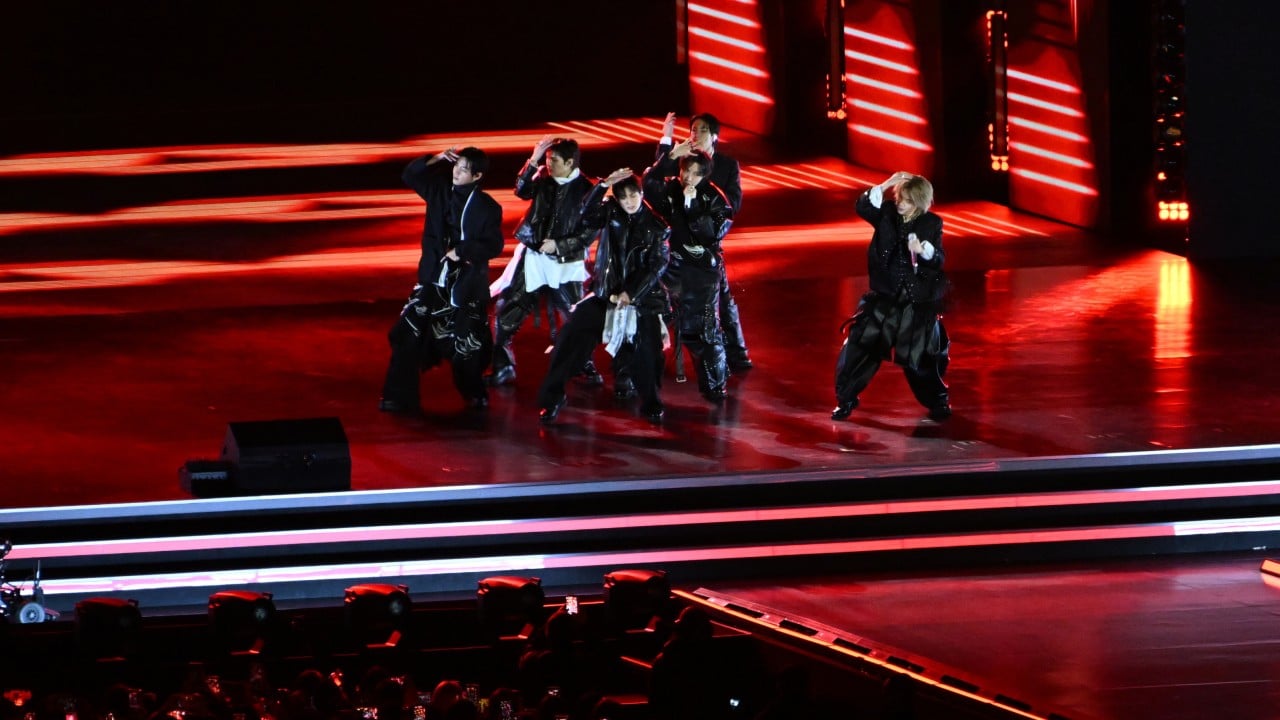
Herzog made a joke. It was directed at BTS, the South Korean septet that has evolved from a boy band into a global cultural shift. To some in the room, it might have felt like standard late-night fodder, the kind of ribbing that has targeted every "teen idol" from the Beatles to Backstreet Boys. But the air changed instantly. The laughter was thin, brittle, and quickly replaced by the digital roar of a million screens across the planet.
Within hours, the comedian was no longer just a performer in a club. He was a case study in the rapidly shrinking gap between a private stage and a global tribunal.
The Invisible Weight of the Word
We often treat comedy as a vacuum. We tell ourselves that what happens under a spotlight is quarantined from reality, a "safe space" for the irreverent. But for the fans of BTS—the ARMY—a joke about the group is rarely just about seven men in coordinated outfits. It is about the history of Asian representation in Western media, a history defined by being the butt of the joke, the sidekick, or the caricature.
When Herzog’s comments hit the internet, they didn't land on a blank slate. They landed on a community that spent decades fighting to be seen as more than a novelty. For a fan in Seoul, or a teenager in Ohio who finally saw themselves reflected in a superstar, that punchline wasn't "just comedy." It was a reminder of an old, tired hierarchy.
The backlash was swift. It wasn't just "cancel culture" in the way pundits often describe it—a mindless mob looking for blood. It was a collective, synchronous rejection of an outdated script. The fans didn't just want an apology; they wanted an acknowledgment that the world had moved on from the tropes Herzog was leaning on.
The Anatomy of the Pivot
Herzog eventually took to social media. His apology wasn't the usual defiant stance of a comic "refusing to be silenced." Instead, it carried the tone of someone who had suddenly realized they were speaking a dead language. He called his own joke "offensive" and "ignorant." He didn't hide behind the "it was just a joke" defense that has become the standard shield for comedians in hot water.
He blinked.
But why did he blink? It wasn't just fear of losing a job or being banned from a venue. It was the realization of the invisible stakes. In the modern entertainment ecosystem, the audience is no longer a passive recipient of content. They are the curators, the financiers, and the ultimate critics. When you alienate a group as organized and emotionally invested as the ARMY, you aren't just losing "haters." You are losing the cultural conversation.
Consider the shift in power. Twenty years ago, a comedian could say something disparaging about a foreign act on a local stage, and the ripple would die at the door. Today, the world is one giant, interconnected room. A whisper in Manhattan is a shout in Manila. Herzog’s apology was a white flag raised to the reality of the 21st-century stage: the "other" is now the one holding the microphone.
The Human Cost of the Hot Take
Behind every viral headline about a celebrity feud or a botched joke, there are real people navigating the fallout. For Herzog, it is the professional stain of being labeled. For the members of BTS, it is the exhausting, repetitive task of existing as a "statement" rather than just artists. Every time they are mocked, their humanity is shaved down to a demographic.
Imagine being at the peak of your craft, breaking records that have stood for sixty years, only to be reduced to a punchline about your ethnicity or your fan base. It is a subtle, grinding form of erosion. The "offensive" nature of the joke isn't just in the words themselves, but in the refusal to see the work behind the phenomenon.
Herzog’s mistake was a failure of imagination. He saw a boy band. He didn't see the millions of stories attached to them. He didn't see the young girl who learned Korean so she could understand their lyrics, or the older man who found solace in their message of self-love after a lifetime of repression. When you mock the idol, you mock the devotee.
The New Rules of the Game
We are living through a period of intense linguistic recalibration. Some call it "woke" culture with a sneer; others call it accountability. But at its core, it is simply the democratization of respect.
The old guard of comedy often complains that "you can't say anything anymore." That isn't true. You can say anything. You just have to be prepared for the world to say something back. The feedback loop is now instantaneous. Herzog’s apology was a recognition that the "punching down" era is hitting a wall.
It is a difficult transition. Comedy thrives on the edge, on the slightly uncomfortable, on the things we aren't "supposed" to say. But there is a difference between being a provocateur and being a relic. A provocateur challenges the powerful. A relic mocks the marginalized because it’s easier than writing a better joke.
The Echo in the Room
Long after the tweets have stopped trending and the apology has been archived, a question remains: Can comedy survive this level of scrutiny?
The answer is yes, but it will look different. It will require more skill, more empathy, and a deeper understanding of the world outside the bubble of the comedy cellar. Herzog’s "ignorant" joke was a symptom of a localized perspective in a globalized world. He was playing to the back of the room, forgetting that the back of the room now extends to the other side of the ocean.
There is a specific kind of silence that follows a joke that fails—not because it wasn't funny, but because it was cruel. It’s a heavy, expectant silence. It’s the sound of an audience waiting for the performer to catch up to the moment.
Seth Herzog caught up. He apologized. He took the hit. But the lesson isn't just for him. It’s for anyone who thinks they can stand on a stage—digital or physical—and ignore the humanity of the people they are talking about. The world is listening. It is recording. And it is no longer willing to be the punchline.
The lights in the club eventually go up. The chairs are stacked. The smell of stale beer remains. But the air is different now. It’s thinner. Sharper. The stage is still there, but the spotlight is a lot brighter than it used to be.
The microphone is live. Choose your words.