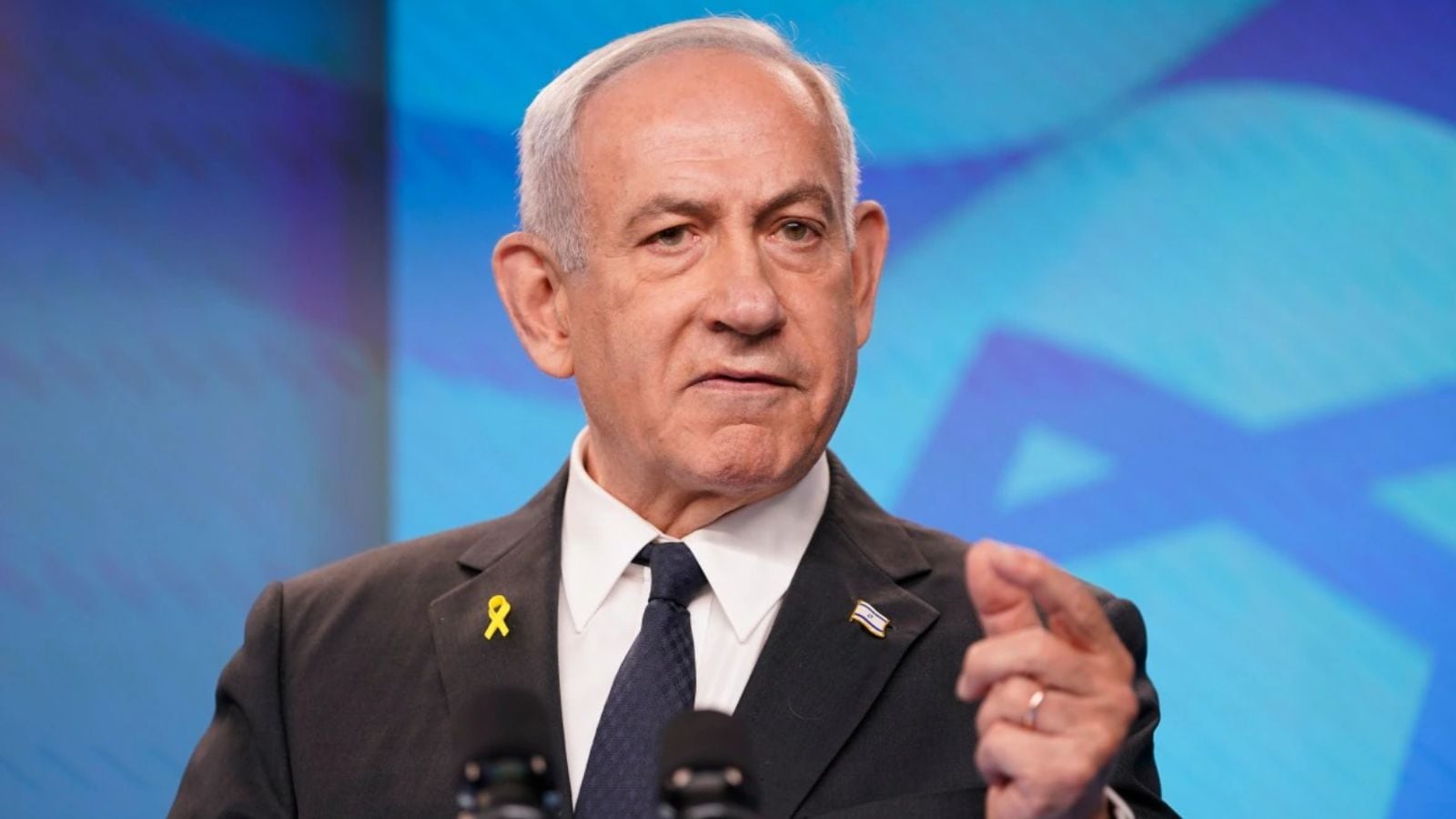
The rhetorical temperature in the Middle East has moved past the point of posturing. When the Islamic Revolutionary Guard Corps (IRGC) issues a direct threat to "pursue and kill" a sitting head of state, it represents more than just the usual fire and brimstone from Tehran. It is a calculated escalation in a shadow war that is rapidly spilling into the light. This specific targeting of Israeli Prime Minister Benjamin Netanyahu, labeled by Iranian officials as a "child-killing criminal," marks a shift from proxy skirmishes to an explicit doctrine of individual liquidation.
Tehran is no longer content with simply funding the "Axis of Resistance" from the sidelines. The IRGC is signaling that the era of plausible deniability is over. By making these threats public, they are boxed into a corner where they must either act or lose the last remnants of their regional credibility.
The Architecture of a Death Threat
This isn't just about a single man. It is about the fundamental breakdown of the "red lines" that have governed Middle Eastern conflict for decades. Typically, state actors—even those as hostile as Iran and Israel—adhere to an unspoken set of rules regarding the targeting of top-tier political leadership. Those rules are currently being shredded.
The IRGC’s vow to hunt Netanyahu is a response to the devastating intelligence and kinetic failures they have suffered over the last year. From the assassination of Ismail Haniyeh in the heart of Tehran to the decapitation of Hezbollah’s leadership in Beirut, the Iranian security apparatus looks porous. They are embarrassed. A regime that thrives on the image of internal strength cannot allow its guests and allies to be picked off without promising a similar level of "personal" retribution.
The "child-killer" narrative is the emotional engine of this campaign. By framing the conflict in these specific moral terms, the IRGC is attempting to build a legal and religious justification for what would otherwise be considered a blatant act of international terrorism or an act of war. They are playing to a global audience, hoping to capitalize on the humanitarian catastrophe in Gaza to sanitize their own violent objectives.
The Proxy Dilemma and the IRGC Strategy
For years, the IRGC relied on the "Ring of Fire" strategy. This involved surrounding Israel with well-armed proxies like Hamas, Hezbollah, and the Houthis. The goal was simple: bleed Israel dry through a thousand small cuts while keeping Tehran safe from direct retaliation.
That strategy has hit a wall.
Israel’s recent operations have shown that they are willing to bypass the proxies and strike the source. When the IRGC leadership sees their generals being targeted in diplomatic compounds in Damascus, they realize the "proxy shield" is failing. This makes the threat against Netanyahu a desperate attempt at re-establishing deterrence. They want the Israeli leadership to feel the same visceral, personal fear that Iranian commanders now feel every time they step outside.
Logistics of a Shadow Campaign
How does a state-sponsored entity actually "pursue and kill" a leader who is arguably the most protected individual on the planet? The IRGC doesn’t look for a traditional battlefield opening. Instead, they look for:
- Soft targets in the inner circle: Moving against the principal is nearly impossible, so they pivot toward families, advisors, or diplomatic staff abroad.
- Third-party recruitment: Using criminal networks or dual-nationals in Europe and the Americas to conduct surveillance and "dry runs."
- Cyber-physical integration: Tracking movements through compromised personal devices or state infrastructure to find a single moment of vulnerability.
This is a long-game approach. The IRGC has a history of waiting years to strike, as seen in their various plots against former U.S. officials. They are banking on the idea that Netanyahu cannot stay in a bunker forever.
The Washington Complication
The IRGC’s rhetoric isn’t just aimed at Jerusalem. It’s a direct challenge to the United States. By tying Netanyahu’s fate to the broader "war with the US," Tehran is trying to force a wedge between the two allies. They are betting that if the cost of protecting Netanyahu becomes too high—in terms of American lives or regional stability—the U.S. might eventually pressure Israel to scale back its operations.
It is a high-stakes gamble. History suggests that when a regime starts promising the heads of foreign leaders, it usually invites the very total war it claims to be prepared for. The U.S. has made it clear that any move against Israeli officials would be treated as an attack on American interests. This creates a hair-trigger environment where a single misinterpreted movement could ignite a regional conflagration.
The Internal Pressure Cooker
Inside Iran, the IRGC is facing its own crisis. The economy is in tatters, and the "Woman, Life, Freedom" protests proved that a significant portion of the population is disillusioned with the clerical establishment. Hardline rhetoric against Israel is the oldest trick in the regime’s book to divert attention from domestic failure.
By elevating Netanyahu to the status of a singular, existential villain, the IRGC is attempting to rally the "hardcore" base. They need to prove that they are still the vanguard of the revolution, not just a bloated paramilitary organization that keeps losing its top men to "invisible" Israeli strikes.
The Reality of Deterrence
Deterrence only works if the threat is believable. The problem for the IRGC is that they have promised "harsh revenge" many times before with varying degrees of success—or lack thereof. When the retaliation doesn't match the rhetoric, the regime looks weak. This cycle of over-promising and under-delivering forces them into more radical positions.
Netanyahu, for his part, has used these threats to solidify his own political standing. In a fractured Israeli political environment, nothing unites the public quite like a direct threat from an enemy that openly calls for the country's destruction. The IRGC’s words are, in many ways, a political gift to the very man they want to eliminate.
Beyond the Rhetoric
We are entering a phase where the "war of words" is becoming a roadmap for future operations. The IRGC’s vow to "pursue and kill" should not be dismissed as mere propaganda. It is a formal declaration of intent that changes the security requirements for every Israeli and American official globally.
The intelligence community is now forced to track "lone wolf" actors inspired by this rhetoric and organized cells moving across borders. This is the new normal. A world where state actors openly adopt the tactics of underground militant groups, and where the line between a political leader and a military target has been erased.
Check the movement of IRGC-linked assets in the South Caucasus and Central Asia. Those are the regions where the first moves of this "pursuit" are likely to manifest. Watch the shipping lanes and the minor diplomatic hubs. The IRGC doesn't strike where the light is brightest; they wait for the shadows.