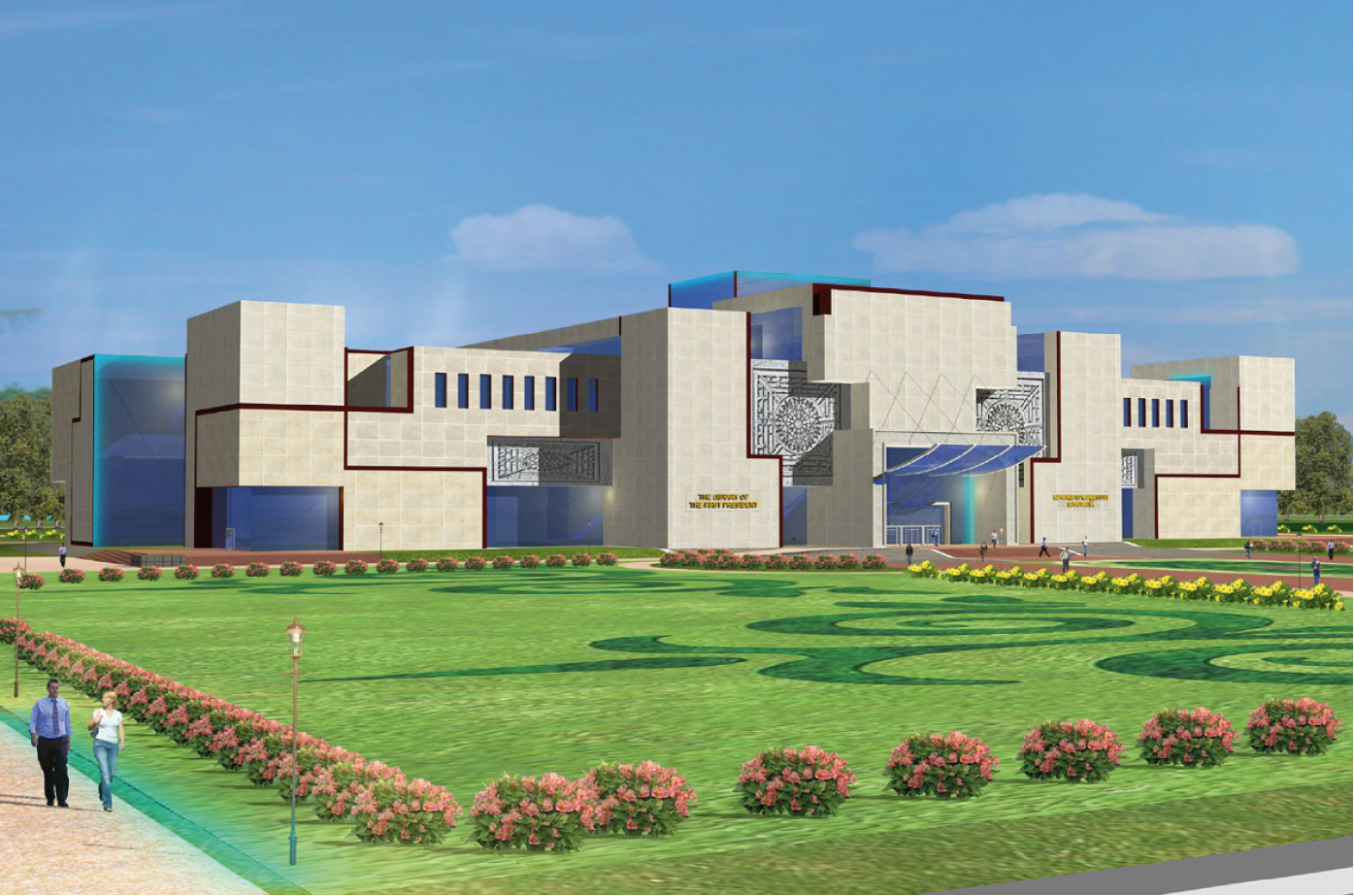
The presidential library serves as a dual-purpose entity: a federally managed archival repository and a privately funded monument to a legacy. Its efficacy as a political and cultural asset depends on its ability to transition from a partisan campaign instrument to a permanent piece of national infrastructure. The proposal to include a "golden idol"—a literal or figurative centerpiece of ostentatious wealth—within the Donald J. Trump Presidential Library creates a fundamental conflict between the asset’s long-term institutional value and its immediate brand signaling. This analysis deconstructs the economic, historical, and architectural mechanics that render such a feature a net-negative strategic move for the Trump Organization and the National Archives and Records Administration (NARA).
The Statutory Framework of Legacy Management
A presidential library is not a private museum; it is governed by the Presidential Libraries Act of 1955 and the Presidential Records Act (PRA). Under these statutes, the private foundation must raise the funds to build the facility and then deed it to the federal government. Once handed over, NARA operates the facility.
The structural tension arises from the requirement of a massive endowment. For every square foot of space dedicated to non-archival use—such as a monument or an "idol"—the private foundation must provide a proportional endowment to NARA to cover future maintenance. A "golden idol" represents a high-maintenance architectural liability. If the feature is perceived as purely partisan or idolatrous, it risks alienating the non-partisan federal archivists who must manage the site, potentially leading to a bifurcated facility where the "museum" side clashes with the "research" side, devaluing the site's academic credibility.
The Triad of Presidential Branding: Legitimacy, Continuity, and Scale
Every presidential library optimizes for three core variables. When a feature like a golden statue is introduced, it shifts the equilibrium of these variables in a way that creates a brand "bottleneck."
- Legitimacy (The Historical Pivot): Libraries exist to turn controversial politicians into "statesmen." This is a process of historical laundering. By emphasizing a singular, static image of wealth or ego, the facility fails to engage with the complexity required for historians to take the legacy seriously.
- Continuity (The Institutional Fit): The library must sit comfortably alongside the institutions of Roosevelt, Eisenhower, and Obama. Extreme aesthetic deviations signal a break from the American democratic lineage, effectively silo-ing the Trump legacy as a transient phenomenon rather than a permanent chapter of the executive branch.
- Scale (The Physical Narrative): In traditional libraries, the narrative is built through the accumulation of documents—millions of pages of evidence. A singular, massive physical object like a statue creates a "narrative shortcut." While effective for a theme park, it is inefficient for an institution intended to survive for centuries.
The Cost Function of Aesthetic Extremism
The financial burden of a non-standard monument is significant. Beyond the initial capital expenditure (CAPEX), the operational expenditure (OPEX) for high-security, high-maintenance artifacts is an outlier in the NARA system.
If the "idol" is constructed of precious or semi-precious materials, the security requirements alone could consume a disproportionate share of the library's annual operating budget. This creates a "crowding out" effect:
- Reduced Research Grants: Funds diverted to polishing and securing a statue are funds not used to digitize records.
- Limitation of Outreach: High-cost maintenance items often lead to higher entry fees, which reduces the "democratic reach" of the institution.
- Insurance Volatility: The risk profile of a building containing a high-value target for protest or theft increases the insurance premiums for the private foundation that remains responsible for the non-federal portions of the site.
The Architecture of Perception: Monument vs. Repository
Architectural psychology suggests that the layout of a presidential library dictates how the public perceives the administration's power. Most libraries use a "progression" model, leading visitors from humble beginnings through the "crucible" of the presidency to a final, reflective space.
Inserting a "golden idol" disrupts this linear logic. It creates a "centrality trap." Instead of the visitor experiencing the weight of the decisions made in the Oval Office, the focus is pulled toward a singular point of vanity. In architectural terms, this changes the building from a narrative space to a votive space.
The "votive space" is dangerous for a modern political figure because it invites immediate obsolescence. Historical greatness in the American context is traditionally signaled through stoicism and service. By adopting the visual language of a "golden idol," the project adopts the visual shorthand of fallen empires—a move that provides critics with a pre-built metaphor for decline.
The Risk of Judicial and Legislative Friction
The construction of a presidential library involves significant land use and environmental reviews. A project centered on a controversial or "gaudy" monument provides local opposition groups with "aesthetic grounds" for litigation. This can delay the project for years, increasing the "carry cost" of the land and the legal fees associated with the Trump Library Foundation.
Furthermore, the House Committee on Oversight and Accountability has the power to review NARA's involvement in these projects. A library designed as a cult of personality rather than a research center could trigger legislative shifts that further restrict how presidential records are handled or how much federal funding is allocated to the maintenance of such sites. This would leave the Trump foundation with a "stranded asset"—a massive, expensive building that the government refuses to fully adopt or maintain.
The Strategic Misalignment of Target Audiences
A presidential library must serve four distinct groups. A "golden idol" succeeds with only one while alienating the other three:
- The Base (Target Met): For the core supporter, the idol is a symbol of strength and defiance.
- The Academic (Target Lost): Researchers will view the idol as a sign that the archives are curated for hagiography rather than honesty, leading to a boycott of the facility's resources.
- The General Public (Target Alienated): The "median visitor" is likely to find the display off-putting or comical, reducing the library's ability to "soften" the President's image for future generations.
- The International Community (Target Lost): For a leader who focused on "America First," a library is the primary site for international diplomacy and the study of foreign policy. An idol projects a "Banana Republic" aesthetic that undermines the gravity of the administration’s geopolitical moves.
The Strategic Pivot: Documenting Power Over Displaying Wealth
If the objective is the permanent solidification of the Trump legacy, the strategy must shift from the iconographic to the procedural. The power of the Trump presidency lay in its disruption of established norms and its use of executive orders and judicial appointments.
A library that focuses on the mechanics of disruption—the literal desks, pens, and signed orders—carries more historical weight than a statue. The "idol" is a static asset; the archive is a dynamic one. By choosing the former, the foundation is betting on the permanence of a specific visual brand that is already subject to intense cultural volatility.
The move away from a "golden idol" isn't a retreat; it is an optimization. To maximize the institutional "Life-Cycle Value" of the library, the planners must prioritize the "Substance of Governance" over the "Spectacle of the Persona."
The final strategic play for the Trump Library Foundation is to abandon the monument-centric design in favor of a "Fortress of Information." This means building a facility that emphasizes the sheer volume of his influence on the federal judiciary and the restructuring of trade. By making the library an indispensable hub for the study of populism and 21st-century governance, the legacy becomes unavoidable. A statue can be torn down or mocked; a massive, high-tech repository of the records that changed the direction of the country is a permanent fixture of the American landscape that cannot be ignored by future generations of power brokers.