The British Monarchy operates as a constitutional stabilizer and a premier instrument of soft power, yet its capacity to influence the "Special Relationship" between the United Kingdom and the United States is constrained by the hard realities of realpolitik. While traditional commentary focuses on the pageantry of state visits, a structural analysis reveals that the Monarchy serves as a non-partisan bridge, facilitating diplomatic continuity across changing political administrations. The effectiveness of the King in "fixing" or enhancing this relationship depends on a three-dimensional framework: institutional memory, symbolic validation, and the mitigation of diplomatic friction.
The Tri-Component Framework of Royal Diplomacy
To evaluate the impact of the King on transatlantic relations, one must move beyond the optics of a state dinner and analyze the functional utility of the Crown. The relationship functions across three distinct layers:
- The Institutional Layer: This involves the intelligence sharing (Five Eyes), military integration, and trade frameworks that operate independently of the Head of State.
- The Political Layer: This is the volatile intersection of the Prime Minister’s office and the White House, subject to electoral cycles and ideological shifts.
- The Symbolic Layer: This is where the Monarchy resides. Its primary function is to provide a "pre-political" foundation that reinforces shared historical and cultural values, effectively de-risking the relationship when the Political Layer is under strain.
The King acts as a permanent representative in a system characterized by high turnover. While a U.S. President may serve four or eight years, the British Sovereign represents a multi-generational commitment. This creates a "trust surplus" that British diplomats use to secure access and influence within the U.S. power structure.
The Mechanics of Symbolic Validation
The "Special Relationship" is not a formal treaty but a set of norms and expectations. In this context, the King provides Symbolic Validation, a mechanism where the British state grants the U.S. executive branch a level of prestige that cannot be replicated by other allies.
The Prestige Multiplier
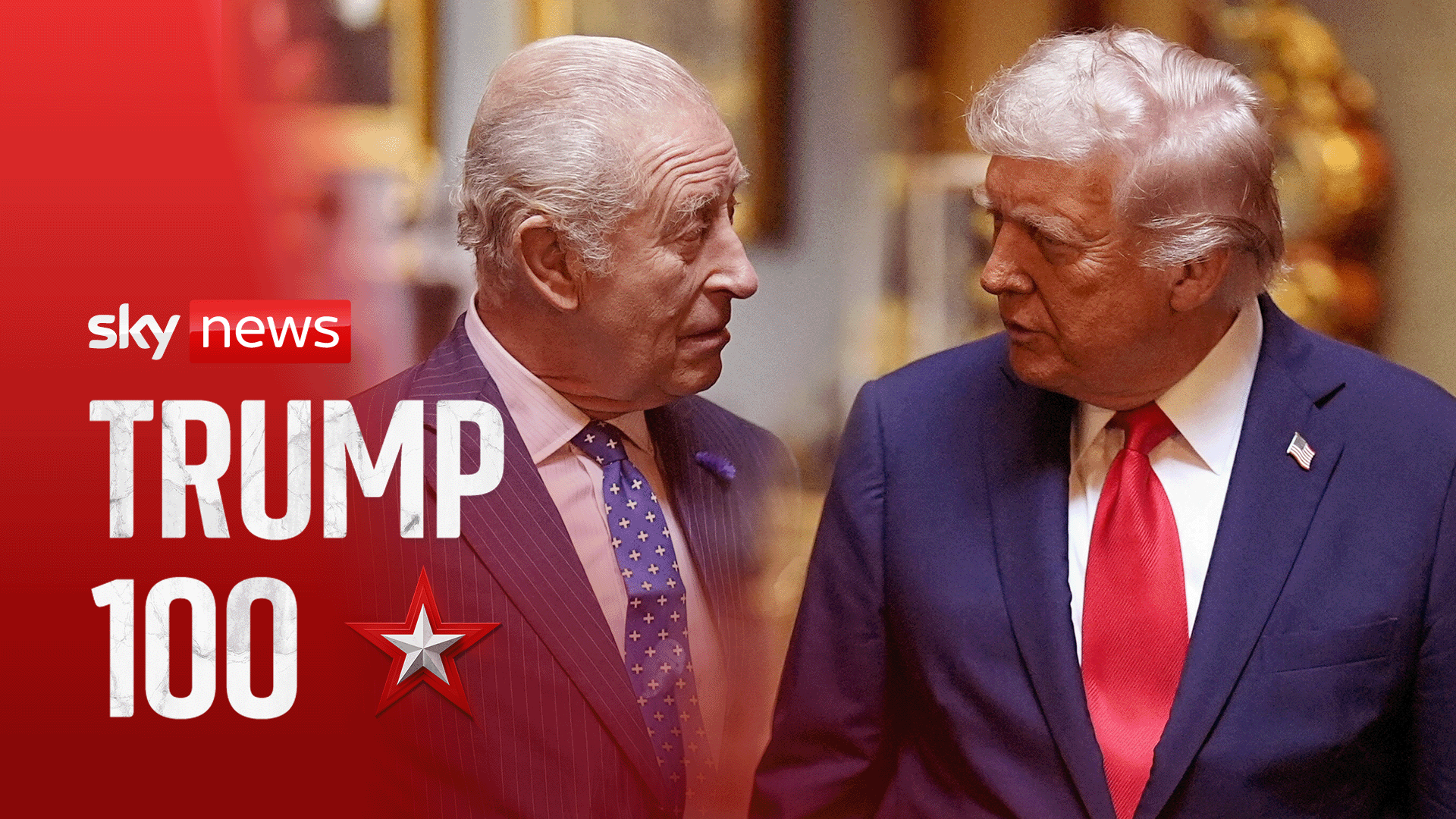
When the King hosts a U.S. President, the event serves as a high-value signal to both domestic and international audiences. For the U.S. President, it offers a moment of "statesman-like" elevation, which can be leveraged for domestic political capital. For the UK, this is an exercise in asymmetric influence. By utilizing the scarcity and historical weight of the Monarchy, the UK gains a disproportionate amount of "soft" diplomatic space.
However, the efficacy of this validation is subject to the Law of Diminishing Returns. If the Monarchy is perceived as overly involved in contentious political issues—such as specific trade disputes or climate policy—its ability to act as a neutral "bridge" is compromised. The King must maintain a stance of Calculated Ambiguity. He must champion broad, universally accepted themes (environmental stewardship, global health) while avoiding the granular policy details that trigger partisan resistance in the U.S. Congress.
Addressing the Friction Points
The Special Relationship currently faces structural stressors that the King cannot resolve through symbolism alone. These include the diverging economic priorities of a post-Brexit UK and a "Buy American" focused U.S. administration.
- The Regulatory Gap: As the UK diverges from EU standards, it finds itself in a middle ground between the European regulatory bloc and the U.S. market. The King’s role here is limited to that of a door-opener for trade missions, rather than a negotiator of terms.
- The Pivot to the Indo-Pacific: Both nations are recalibrating their focus toward China. The Monarchy’s role in the Commonwealth provides a unique vector for the UK to remain relevant to U.S. strategic interests in the Global South. By strengthening ties with Commonwealth nations, the King indirectly increases Britain’s value as a strategic partner to Washington.
The Cost Function of Royal Influence
Every diplomatic deployment of the King carries an opportunity cost and a risk profile. The "Cost Function" of a Royal intervention is determined by:
- The Polarisation Variable: In a hyper-partisan U.S. environment, any association with one side of the political aisle can alienate the other. The King must navigate the U.S. political landscape with more caution than his predecessors, as the "consensus" on the value of the UK-US alliance is no longer a given in all segments of the American electorate.
- The Relevance Decay: There is a generational shift in the U.S. regarding the perception of the British Monarchy. Younger demographics and diverse political coalitions may view the Crown through a colonial lens rather than a romanticized historical one. The King’s strategy must evolve from "traditionalist appeal" to "functional relevance," focusing on modern challenges like AI ethics and sustainability to maintain influence with the rising U.S. leadership class.
The Intelligence and Defense Anchor
The most robust part of the Special Relationship—the defense and intelligence apparatus—operates largely outside the Sovereign’s direct influence. However, the King holds a crucial role as the titular head of the Armed Forces. This creates a sense of professional kinship with the U.S. military establishment. In an era where political leaders may be isolationist, the "uniformed" connection between the two nations remains a stabilizing force.
The King’s role is not to "fix" the relationship—as that implies the relationship is broken—but to calibrate it. The relationship is currently in a state of managed transition. The King’s primary objective is to ensure that the "emotional infrastructure" of the alliance remains intact while the political and economic components are renegotiated for the 21st century.
Strategic Realignment and the Commonwealth Nexus
The UK’s greatest asset in the eyes of U.S. grand strategy is its ability to project influence across the Commonwealth. This is where the King’s functional utility is highest. If the King can successfully modernize the Commonwealth and position it as a viable economic and democratic alternative to other spheres of influence, the UK’s "Special" status in Washington is guaranteed.
The U.S. views the UK through the lens of Strategic Utility. If the UK provides a gateway to other markets and a reliable vote in multilateral institutions, the relationship thrives. The King is the custodian of the networks that make this utility possible.
Limits of Personal Diplomacy
We must distinguish between personal rapport and national interest. While the King may develop a strong personal relationship with a U.S. President, this does not automatically translate into a favorable Free Trade Agreement or a change in U.S. foreign policy. The Monarchy is a tool of Long-Term Asset Management, not a tool of Short-Term Transactional Diplomacy.
The King’s impact is measured in decades, not news cycles. His "fix" for the relationship is the maintenance of a stable, predictable British identity that makes the UK the "partner of choice" for a U.S. that is increasingly wary of unpredictable allies.
The Final Strategic Play
The UK government should deploy the King not as a relic of the past, but as a facilitator of future-facing coalitions. The King’s focus should be shifted toward the "Silicon-Atlantic" axis—building bridges between UK and US technology sectors and academic institutions. By aligning the Monarchy with the engines of future economic growth, the Crown ensures its continued relevance in the transatlantic dialogue.
The Special Relationship is sustained by the overlap of national interests, but it is lubricated by the Monarchy. The King’s strategic mandate is to reduce the "coefficient of friction" between London and Washington, ensuring that even when political interests diverge, the underlying framework of cooperation remains unassailable. This is achieved by reinforcing the UK’s position as a unique, high-value node in the global order—a node that the United States cannot afford to bypass.