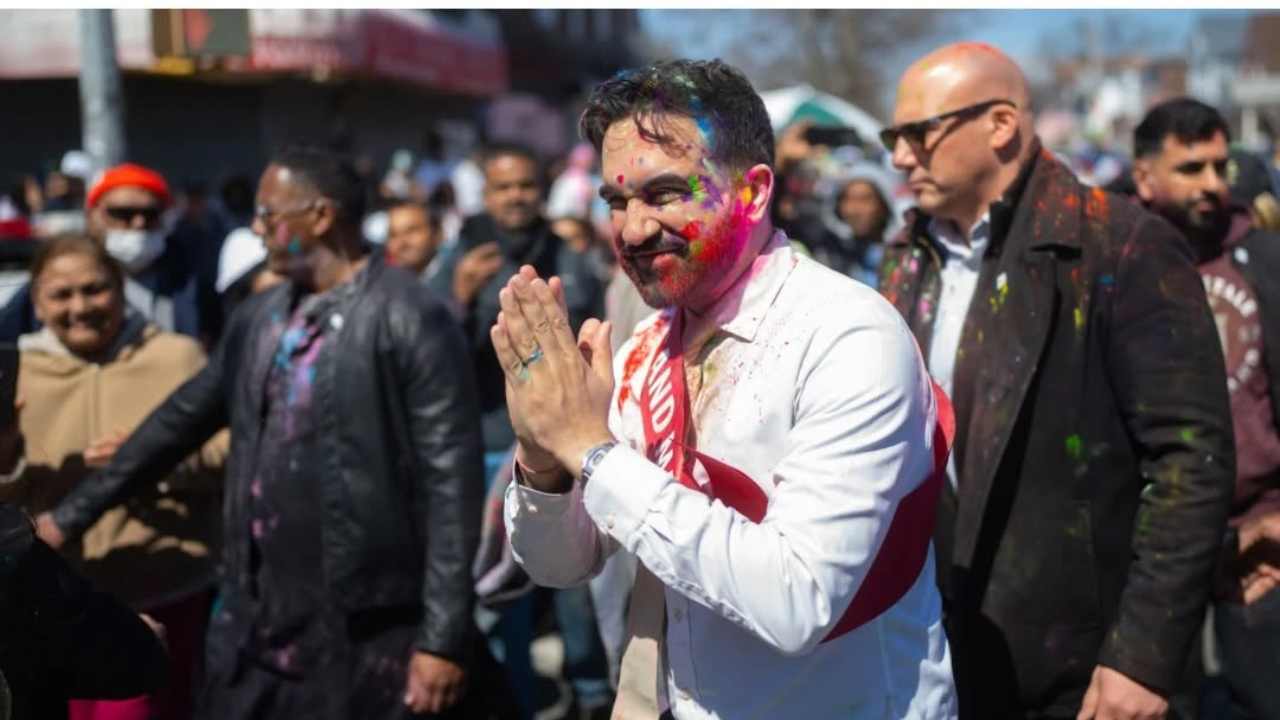
Zohran Mamdani didn’t just show up to Richmond Hill to throw colored powder. He showed up to execute a perfectly timed, low-cost customer acquisition strategy. If you think the Phagwah parade is a simple celebration of Hindu heritage or the arrival of spring, you’ve bought the brochure without reading the fine print. In the theater of New York City politics, cultural festivals are the new focus groups, and "participation" is just another word for branding.
The consensus among local media is lazy. They see a politician in a kurta, covered in gulal, and they call it "representation." They frame it as a bridge-building exercise. It isn't. It is the commodification of identity for the sake of a soundbite. While the crowd celebrates the triumph of Prahlada over Holika, the politicians are celebrating the triumph of optics over actual policy.
The Myth of the "Inclusive" Photo Op
Let’s dismantle the biggest lie first: that a politician’s presence at a parade translates to power for the community. It doesn't. In fact, the more visible a politician is at your cultural festival, the less likely they are to be doing the heavy lifting on the issues that actually matter—like the spiraling cost of living in Queens or the crumbling infrastructure of the A-train line that serves the very people dancing on Liberty Avenue.
I have spent a decade watching the machinery of NYC local government. I have seen council members spend three hours at a gala and zero hours at a zoning meeting that decides whether the neighborhood gets a library or a luxury condo. The "inclusion" we see at Phagwah is a mile wide and an inch deep.
When a leader like Mamdani joins the parade, he isn't just "joining the community." He is occupying a space. He is taking the energy of a grassroots religious and cultural event and redirecting it toward his own political narrative. It’s a classic bait-and-switch. The community gets the "validation" of a public figure's presence; the public figure gets a diverse portfolio of photos to post on Instagram for a Manhattan audience that couldn't find Richmond Hill on a map.
Richmond Hill is More Than a Backdrop
Richmond Hill is the soul of the Indo-Caribbean diaspora. It is a neighborhood built on the grit of Guyanese and Trinidadians who turned a forgotten corner of Queens into a vibrant economic engine. The Phagwah parade is the physical manifestation of that resilience.
But when the media covers these events, they treat the neighborhood like a stage set. They focus on the colors, the music, and the "joyous atmosphere." They ignore the friction. They ignore the fact that the Indo-Caribbean community has been historically marginalized by the very political structures these visiting dignitaries represent.
Imagine a scenario where the city government put as much effort into streamlining small business permits on Liberty Avenue as they do into coordinating the Mayor’s security detail for the parade. That would be real representation. Instead, we get the "Holi Handshake"—a brief moment of contact where the politician looks at the camera while pretending to look at the constituent.
Why the "Common Man" Persona is a Trap
Mamdani is often hailed as a man of the people, a socialist who breaks the mold. But even "anti-establishment" figures are bound by the gravity of the political cycle. By showing up at Phagwah, he is playing the oldest game in the book: the "I’m one of you" gambit.
True representation isn't about looking like the community; it's about delivering results for the community. If a politician can walk through a cloud of red powder but can’t fix the predatory lending practices targeting immigrant homeowners in South Queens, their presence is a distraction, not a victory. We need to stop rewarding politicians for simply existing in our spaces.
The Indo-Caribbean community doesn't need a guest of honor. They need a bulldog in City Hall who understands that Phagwah is about the burning of the demoness Holika—symbolizing the destruction of evil. In a modern context, that "evil" is the bureaucratic red tape and systemic neglect that keeps Richmond Hill from reaching its full potential.
The Cost of the "Vibe" Economy
Politics has shifted from a service industry to a "vibe" economy. In this economy, the most valuable currency is relatability.
- The Problem: Relatability is cheap.
- The Reality: Legislation is expensive.
- The Result: We trade our votes for a few selfies and a shout-out on Twitter.
When we prioritize these appearances, we lower the bar. We tell City Hall that as long as they show up for the party, we won’t ask too many questions about the budget. This is the "lazy consensus" that keeps the status quo in place. We are so starved for recognition that we mistake a visit from a mayor as a sign of progress.
Moving Beyond the Parade
If we want to disrupt this cycle, we have to change what we demand from our leaders when they step onto Liberty Avenue.
- Demand a Policy Receipt: The next time a politician asks for a microphone at Phagwah, they should be required to list three specific legislative actions they’ve taken for the Indo-Caribbean community in the last year. If they can’t, they shouldn’t get the stage.
- Focus on the Off-Season: Real advocacy happens in November, January, and June—not just during the parade season. If you only see your representative when there’s a drum involved, you aren’t being represented; you’re being marketed to.
- Reject the "Cultural Ambassador" Label: No single politician, regardless of their background, can claim to be the voice of a community as complex as Richmond Hill. We must stop allowing them to use these events to crown themselves as the gatekeepers of our culture.
The Phagwah parade belongs to the people of Richmond Hill. It is a sacred, joyous, and defiant celebration. It doesn't need the validation of a mayor or a state legislator to be significant. In fact, the presence of the political class often dilutes the message.
Stop looking for leaders in the middle of a parade. Look for them in the rooms where the money is allocated and the laws are written. If they aren't fighting for you there, it doesn't matter how much color they wear on their sleeves.
The powder washes off by Monday morning. The systemic neglect lasts all year. Choose the leader who shows up when the music isn't playing.