Stop crying about the "inflation bomb" and look at the ledger.
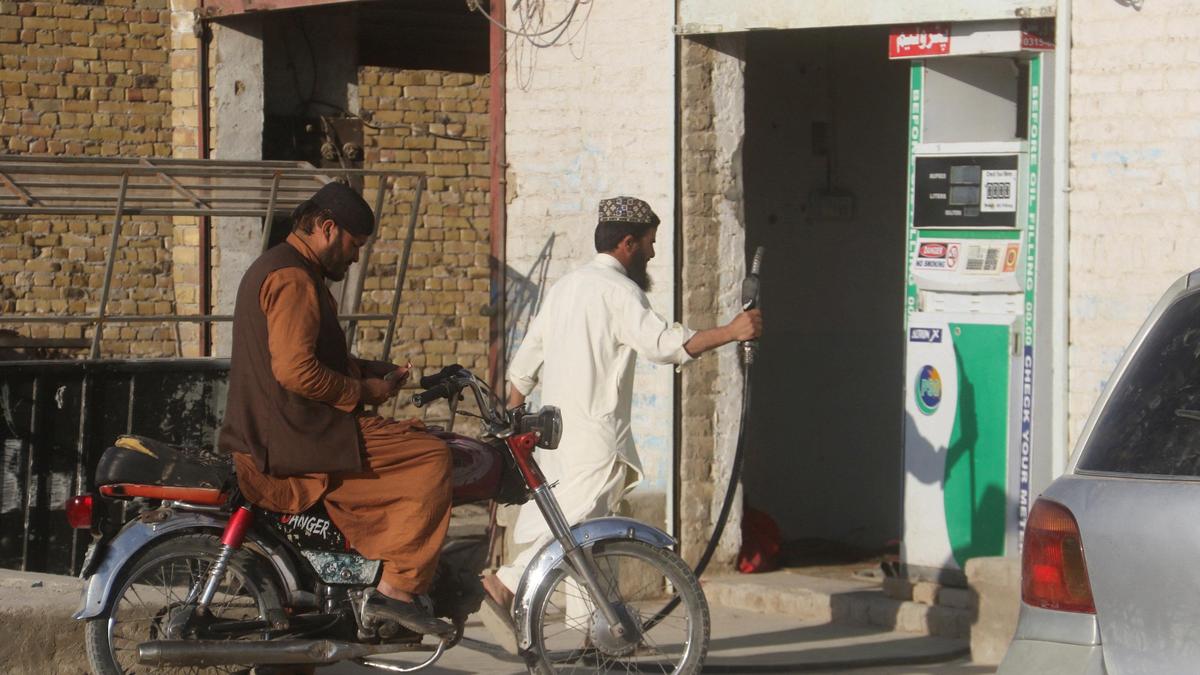
The media is currently engaged in a frantic race to find the most desperate commuter in Karachi to quote for a sob story. You’ve seen the headlines: "Petrol at PKR 321," "Highest-ever hike," "Public in agony." It is a predictable, lazy narrative that treats a necessary surgical strike on a bloated, inefficient economy like a tragedy.
Here is the truth that no one in a government presser or a talk show panel will tell you: the PKR 55 per litre hike is not a failure of policy. It is the first sign of economic sanity we have seen in decades.
For years, Pakistan has operated on a delusional "subsidy trap," where the government borrowed money at high interest rates just to make sure you could drive a gas-guzzling 2005 sedan to a cafe for cheaper than the global market rate. We were burning our future to fund a commute. This hike is the long-overdue funeral for that delusion.
The Myth of the "Unbearable" Burden
The loudest critics claim this price surge will "halt the wheels of industry." I’ve seen industries "halt" before. Usually, they don't stop because fuel is expensive; they stop because the country runs out of dollars to buy any fuel at all.
When the IMF "urges" a price hike, they aren't being cruel. They are pointing at a leaking bucket. Pakistan's circular debt in the energy sector crossed PKR 1.6 trillion by the end of 2025. That is not just a number on a spreadsheet; it is a weight that prevents every school from being built and every hospital from being equipped.
By passing on the PKR 55 increase—driven by the very real volatility of the West Asia conflict—the government is finally choosing to stop the bleeding.
Why High Prices are a Tech Catalyst
Cheap fuel is a sedative. It keeps us addicted to 19th-century logistics. When petrol is artificially cheap, there is zero incentive to innovate.
Consider the "forced" transition. In 2025, we saw Pakistan's fuel oil exports hit record highs. Why? Because domestic demand declined as power producers finally shifted toward coal, LNG, and solar. High prices are the only reason this happened.
- Electric Vehicle (EV) Acceleration: At PKR 321 per litre, the math for an electric bike or a small EV suddenly moves from "luxury toy" to "financial necessity."
- Solar Dominance: The industrial sector is already pivoting. Large-scale captive power producers are moving to the grid or going green because diesel generators are now a liability.
- Logistical Efficiency: We have some of the most inefficient trucking routes in South Asia. High fuel costs force logistics companies to optimize, use GPS-based routing, and consolidate loads.
If you want a modern, tech-driven economy, you cannot have fuel that costs less than a bottle of mineral water.
The Middle East Scapegoat
The current narrative blames the US-Israel military strikes on Iran and the subsequent closure of the Strait of Hormuz. While the geopolitical tension is real, blaming "global factors" is a convenient shield for domestic inefficiency.
Pakistan’s refineries are notoriously low-yield. We import crude and produce a surplus of furnace oil—which we then have to export at a loss because our own power plants (thankfully) don't want it.
Imagine a scenario where we had spent the last ten years upgrading our refineries to produce high-quality Euro-V petrol instead of subsidizing the end product. We wouldn't be as vulnerable to every drone strike in the Middle East. The PKR 55 hike is a brutal reminder that you cannot subsidize your way out of a structural engineering problem.
The "Ramadan" Emotional Play
The timing—during the holy month of Ramadan—is being used to score political points. "How can they do this now?" the opposition screams.
Would it be better to wait until after Eid and let the foreign exchange reserves drop another billion dollars? Economic reality does not follow a lunar calendar. A delayed hike is just a larger hike tomorrow. By moving now, the government is ensuring that the markets stay liquid.
The Brutal Reality of Survival
Is it going to hurt? Yes. Inflation will likely see a second wave. Transport costs for tomatoes and wheat will go up.
But the alternative is the "Sri Lanka Scenario." We saw what happens when a country refuses to adjust prices: the pumps don't just get expensive; they go dry. People don't wait in lines for three hours; they wait for three days.
We are finally paying the real price for the energy we consume. It’s painful, it’s unpopular, and it’s the only way to build an economy that isn't a house of cards.
The era of "cheap" Pakistan is over. The era of an efficient Pakistan has a chance to begin, but only if we stop treating a market correction like a national mourning.
Would you like me to analyze how this fuel hike specifically impacts the adoption rate of Tier-1 solar panels in the Punjab industrial belt?