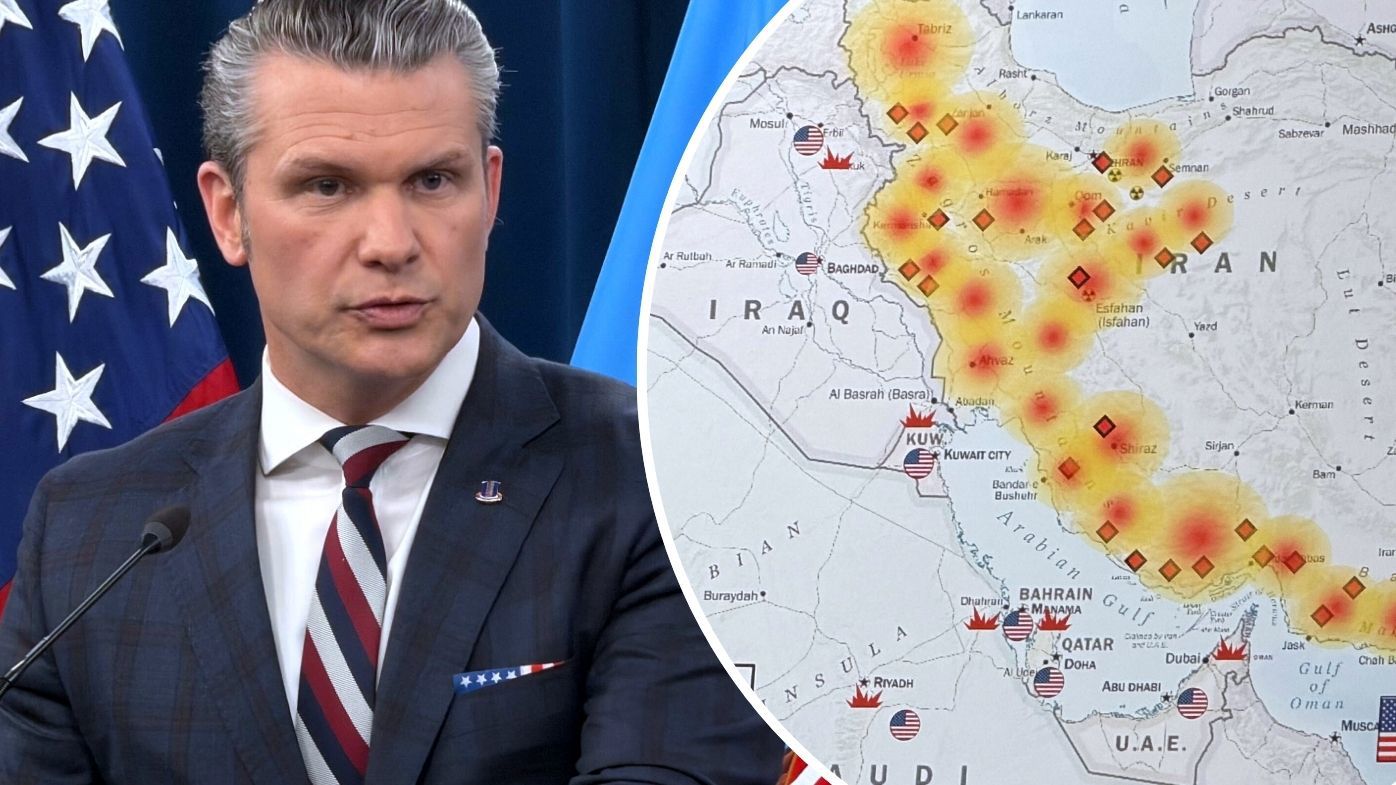
The United States Navy just crossed a red line that has remained untouched for nearly forty years. By deploying a heavy torpedo to sink an Iranian warship, the Pentagon isn't just responding to regional aggression; it is testing the lethal effectiveness of underwater warfare in a theater where surface missiles have long been the primary currency of violence. This engagement represents the first time since World War II that a U.S. submarine has successfully neutralized a foreign surface combatant with a torpedo, signaling a violent shift in how the Navy intends to police the Persian Gulf.
For decades, the standard operating procedure for deterring the Islamic Revolutionary Guard Corps (IRGC) involved "proportional response." If they fired a drone, we took out a radar site. If they mined a tanker, we hit an offshore platform. That era is over. The decision to use a Mark 48 ADCAP (Advanced Capability) torpedo—a weapon designed to snap the keel of a ship through sheer hydrostatic pressure—is a message written in high explosives. It tells Tehran that the rules of engagement have moved from harassment to total hull destruction.
The Brutal Mechanics of the Mark 48 Engagement
While cruise missiles like the Harpoon or Tomahawk get the cinematic glory, they are fundamentally "air-breathing" weapons. They strike the superstructure, often leaving the hull intact enough to be towed back to port for repairs and propaganda. A torpedo is a different beast entirely. It does not hit the ship; it explodes beneath it.
The Mark 48 creates a massive gas bubble under the vessel. As that bubble expands and then collapses, the vacuum literally lifts the ship out of the water and then drops it. The weight of the ship, no longer supported by the water’s buoyancy, causes the structural steel to fail. The ship breaks its back. This isn't a "strike" in the traditional sense. It is a total erasure of a naval asset.
In this specific engagement, the Iranian vessel—a modernized frigate—was reportedly targeted after persistent interference with international shipping lanes. The U.S. Central Command (CENTCOM) shifted away from air-launched ordnance because of the Iranian ship’s sophisticated point-defense systems. Missiles can be intercepted by Gatling guns and jamming. A torpedo coming from the deep is nearly impossible to stop once the wire-guided sequence begins.
Why the Pentagon Chose This Moment to Escalate
Washington’s pivot to lethal underwater force isn't happening in a vacuum. It is a direct response to the failure of the "low-intensity" maritime strategy used throughout the early 2020s. For years, the U.S. relied on drones and guided-missile destroyers to play a game of chicken with IRGC fast boats and aging frigates. Tehran viewed this as a lack of resolve.
By opting for a submarine-launched attack, the Navy is exploiting Iran's greatest tactical weakness: anti-submarine warfare (ASW). The Iranian Navy is largely a "green water" force. They are excellent at swarming tactics and mine-laying in shallow coastal areas, but they are blind to what happens a few hundred feet below the surface. A Virginia-class or Los Angeles-class submarine can loiter off the coast for weeks, undetected, waiting for the exact moment to strike.
The political calculus is equally cold. Using a submarine provides a level of "ambiguous attribution" during the initial minutes of an attack, though the Pentagon was quick to claim responsibility this time. It serves as a reminder to the global community that despite the rise of carrier-based drones and hypersonic missiles, the "silent service" remains the most terrifying tool in the American arsenal.
Breaking the Historical Ghost of Operation Praying Mantis
To understand the weight of this event, one has to look back to 1988. During Operation Praying Mantis, the U.S. Navy decimated half of the Iranian fleet in a single day. That was the last time we saw this level of ship-on-ship destruction. Since then, the Navy has been hesitant to sink Iranian hulls for fear of triggering a full-scale blockade of the Strait of Hormuz.
The current administration has clearly decided that the risk of a blockade is now outweighed by the cost of inaction. By sinking a ship "the old-fashioned way," the Navy is stripping away the illusion of Iranian naval parity. There is no defense against a 650-pound PBXN-9 plastic explosive warhead detonating under a keel.
The Iranian response has been predictable: fiery rhetoric and threats to close the strait. However, the technical reality on the ground—or rather, under the water—suggests they are paralyzed. If they move more ships into the area, they simply provide more targets for a submarine fleet they cannot track.
The Hidden Logistics of Underwater Warfare
Executing a torpedo strike in the crowded, shallow waters of the Gulf is a nightmare for sonar technicians. You have thermal layers that bounce sound, thousands of commercial tankers creating a wall of noise, and a seabed that is often cluttered with debris.
- Acoustic Signature Tracking: The submarine must distinguish the specific engine noise of the target from the background hum of global trade.
- Wire-Guidance: Modern Mark 48s are connected to the sub by a thin wire, allowing the crew to steer the torpedo manually until the onboard active sonar takes over for the terminal phase.
- The Depth Problem: In shallow water, the "bubble effect" of a torpedo is even more violent. The pressure wave has nowhere to go but up, through the target ship.
This was not a lucky shot. It was a masterclass in modern naval physics, executed under the most difficult environmental conditions possible.
The Strategic Shift in Global Deterrence
This engagement signals a broader change in U.S. naval doctrine that extends far beyond the Persian Gulf. For years, naval analysts have debated whether the "Age of the Surface Ship" is over, given the proliferation of cheap anti-ship missiles. By successfully sinking a combat-ready warship with a submarine, the U.S. is signaling to other rivals—most notably China in the South China Sea—that it is prepared to revert to high-end, lethal submarine warfare.
We are moving away from the era of "signaling" and back into the era of "denial." The goal is no longer to make the enemy feel bad about their choices; the goal is to physically remove their ability to make choices. If a navy cannot keep its hulls afloat, it doesn't matter how many missiles it has on deck.
The Iranian frigate now sitting on the floor of the Gulf is a monument to this new reality. It wasn't taken out by a flashy drone or a high-tech laser. It was taken out by a technology that has been refined since the 1940s, applied with 21st-century precision.
Future Implications for the Strait of Hormuz
The immediate fallout will be an increase in insurance premiums for commercial shipping and a surge in oil prices. But the long-term implication is a fundamental restructuring of power in the region. Iran must now decide if it is willing to lose its entire surface fleet to maintain its current posture.
The U.S. Navy has shown that it is willing to pull the trigger on its most devastating non-nuclear weapons. This is not a warning shot. It is a demonstration of absolute sea control.
If the IRGC continues to push, the next target likely won't be a single frigate. It will be the infrastructure that allows those frigates to dock and refuel. The Pentagon has rediscovered its appetite for decisive maritime action, and the silence of the submarine fleet is now the loudest thing in the Middle East.
Submarine commanders are trained for years for a moment that rarely comes. They operate in a world of math, silence, and sudden, overwhelming violence. By authorizing this strike, the U.S. has let the world know that the silent hunters are no longer just watching. They are hunting.
Tehran’s move is now to either retreat behind its coastal missile batteries or risk the total extinction of its naval presence in the open sea. There is no middle ground when the weapon of choice is designed to break a ship in half.
Keep a close eye on the deployment patterns of the Fifth Fleet in Bahrain. If we see a surge in ASW-capable destroyers moving into the area, it means we are expecting the Iranians to try and find our submarines. If the Navy stays quiet, it means they are confident that the "gray ghosts" beneath the waves still hold all the cards.