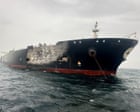
The national average for a gallon of gas just blew past the $4 mark and it isn't coming down tomorrow. If you've been to a station in the last 48 hours, you've seen the digital signs ticking upward in real-time. It’s frustrating. It’s expensive. Most importantly, it’s the direct result of the escalating conflict involving Iran that has sent global oil markets into a total tailspin.
Wall Street traders are panicking. Logistics companies are hiking surcharges. You're stuck footing the bill at the pump. This isn't just a minor supply chain hiccup or a seasonal swing. We’re looking at a structural shift in how energy is priced because the Strait of Hormuz—the world’s most important oil chokepoint—is effectively a war zone. When twenty percent of the world’s petroleum passes through a single narrow waterway, any sign of a missile or a blockade turns into a financial wildfire.
The Strait of Hormuz is the only metric that matters right now
Forget what you heard about refinery maintenance or summer blends. Those are the usual excuses. The real reason your bank account is bleeding is geographic. Iran’s proximity to the Strait of Hormuz gives them a metaphorical noose around the neck of the global economy.
Markets hate uncertainty. Right now, the uncertainty is whether a single tanker can make it out of the Persian Gulf without being seized or struck. Insurance premiums for these vessels have skyrocketed by over 400% in a matter of weeks. Guess who pays for that insurance? You do. It’s baked into the price of every barrel of Brent Crude and West Texas Intermediate.
I’ve watched these cycles before, but this one feels grittier. Usually, there’s a diplomatic off-ramp that cools the speculative fever. This time, the rhetoric is sharper, and the military posturing is more aggressive. We aren't just talking about "tensions" anymore. We're talking about active kinetic engagements that have knocked physical supply offline.
Why the Strategic Petroleum Reserve cannot save us this time
You’ll hear politicians talk about "tapping the reserves" to bring prices down. It’s a classic move. It’s also a band-aid on a gunshot wound. The U.S. Strategic Petroleum Reserve (SPR) was designed for short-term emergencies, like a hurricane hitting the Gulf Coast. It wasn't built to offset a protracted regional war in the Middle East.
The math just doesn't work. Even if the government dumps a million barrels a day into the market, it doesn't replace the millions of barrels that are currently trapped or destroyed because of the Iran conflict. Plus, the SPR is at a historically low level compared to previous decades. You can't keep emptying the tank without a plan to refill it, and refilling it at $100-plus a barrel is a losing game for the taxpayer.
Most people think gas prices are a simple reflection of supply and demand. They aren't. They’re a reflection of perceived risk. Even if there is plenty of oil sitting in tanks in Oklahoma, the fear that the next shipment won't arrive drives the price up today. It’s a psychological feedback loop that feeds on every headline coming out of Tehran.
OPEC is not coming to the rescue
Don't expect a sudden surge in production from Saudi Arabia or the UAE to bail out the American consumer. In the past, OPEC acted as a stabilizer. Now? They’re watching their own margins. The relationship between Washington and Riyadh isn't what it used to be. There is very little incentive for them to flood the market and drive prices down when they can sit back and collect record revenues.
Energy independence is a phrase thrown around a lot in election years. The reality is that oil is a global commodity. Even if the U.S. produces more than it consumes, the price is still set by the global market. If Brent Crude hits $120 a barrel because of a war, drillers in Texas are going to sell their oil at that global price. They aren't going to give you a "neighborly discount" at the local Exxon.
The ripple effect on your grocery bill
Gas prices are just the lead singer in a very loud, very annoying band. The backup singers are food prices and shipping costs. Almost everything you buy travels on a truck that runs on diesel. Diesel prices often climb even faster than gasoline during an oil shock.
- Shipping Surcharges: FedEx and UPS don't eat the cost of fuel. They pass it to the retailer, who passes it to you.
- Fertilizer Costs: A huge portion of agricultural fertilizer is produced using natural gas and petroleum byproducts.
- Plastic Packaging: Most of the stuff your food is wrapped in comes from oil.
When oil stays above $100 a barrel for more than a month, it bleeds into every sector. That $4.50 gallon of gas is annoying, but the $9 head of lettuce is what’s going to break the average household budget. We’re seeing a massive transfer of wealth from the consumer's pocket directly into the energy sector and the military-industrial complex.
How to navigate the $4 plus reality
Stop waiting for a miracle. The "war premium" on oil isn't going away until there is a formal de-escalation, and that looks months away at best. You need to change how you move and how you spend right now.
Check your tires. I know it sounds like something your dad would say, but under-inflated tires can drop your fuel economy by 3% or more. At $4.20 a gallon, that’s real money. Use apps like GasBuddy, but don't drive five miles out of your way to save three cents. The math rarely favors the extra trip.
If you're a business owner, start looking at your logistics. Can you consolidate shipments? Can you move to a "last mile" delivery model that uses electric vehicles? This isn't just about being green anymore. It's about survival. High oil prices are a tax on inefficiency. If your business relies on cheap fuel to be profitable, your business model is currently broken.
Pay attention to the news, but filter out the noise. Watch the "crack spread"—the difference between the price of crude oil and the petroleum products extracted from it. If that spread stays high, refinery issues are making the war shock even worse. If it narrows, we might see a slight dip at the pump even if the war continues. But for now, keep your tank half full and your budget tight. The shock is here, and it's staying for a while. Use rewards programs at the pump and map out your errands to minimize cold starts, which eat more fuel. This is a game of cents, and right now, the house is winning.