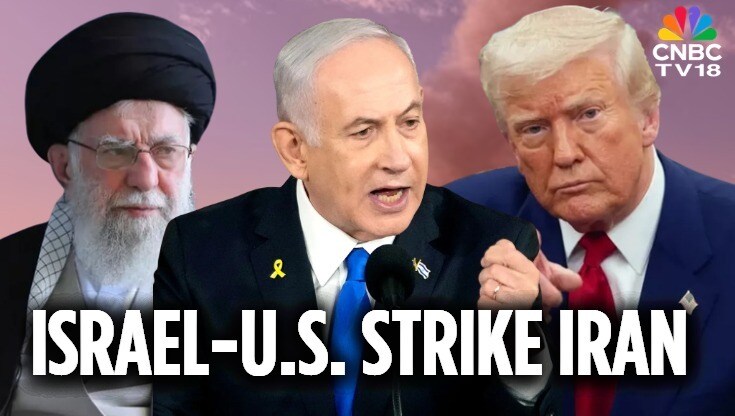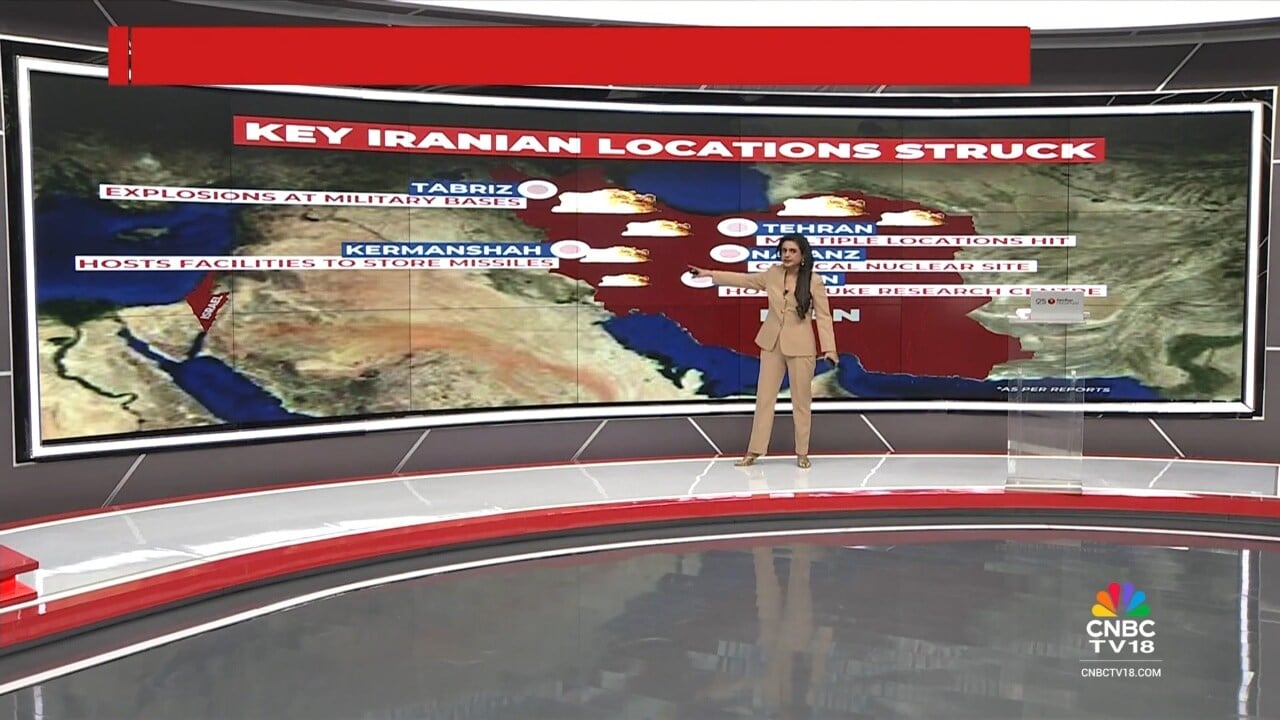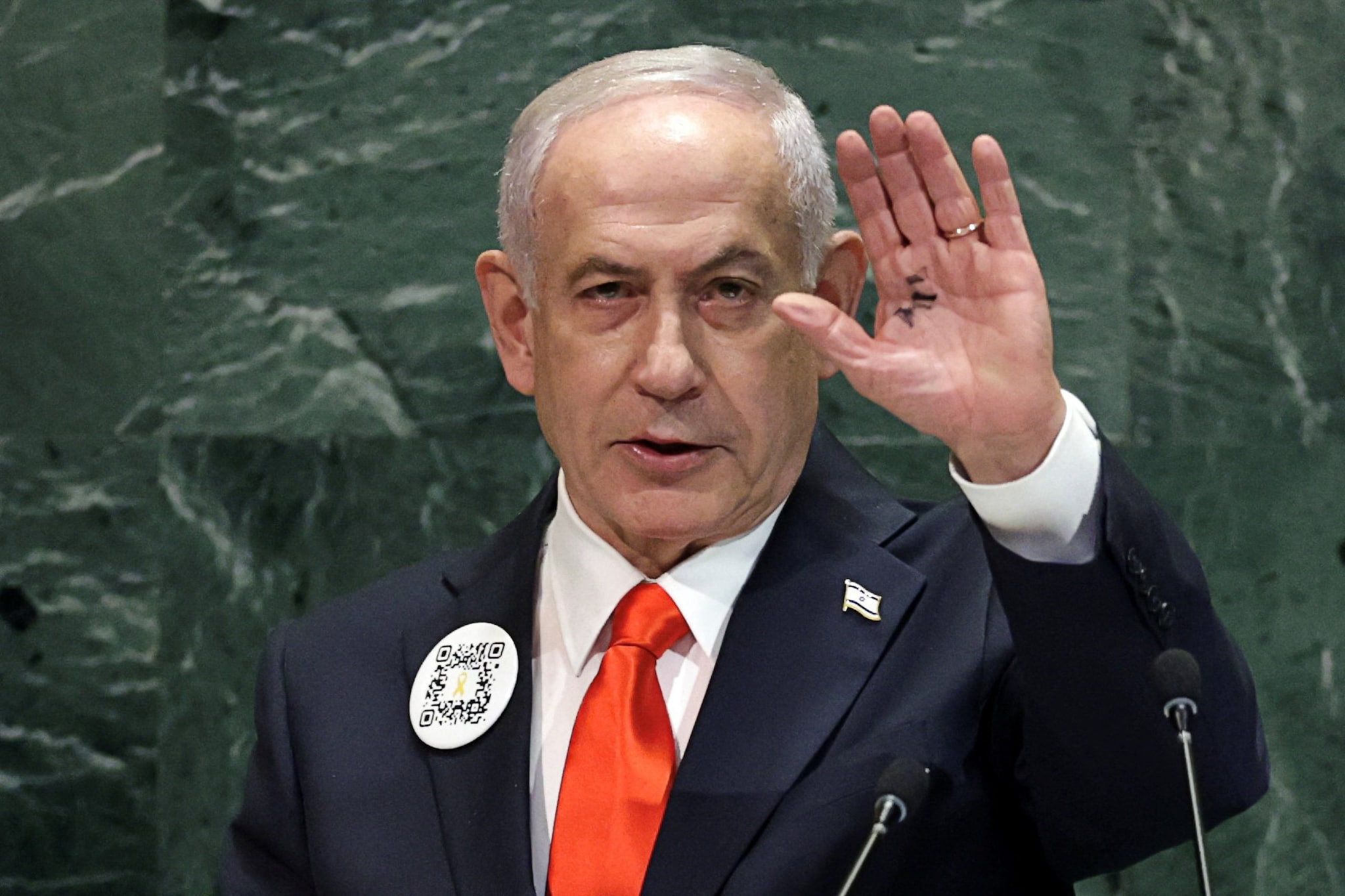
The headlines are screaming about a "new era." Benjamin Netanyahu stands at a podium, flanked by maps and satellite imagery, claiming that the joint Israel-US operation has finally neutralized the "existential threat" of a nuclear Iran. The markets are twitching, oil prices are swinging like a pendulum, and the beltway pundits are busy congratulating themselves on a "decisive blow."
They are all wrong.
The premise that a kinetic strike—no matter how high-tech or synchronized—can "remove" an existential threat in the 21st century is a relic of 1980s military doctrine. We are witnessing the triumph of optics over architecture. This isn't a solution; it’s a high-stakes reset button that fails to address the hardware of modern power.
The Myth of the "Surgical" Solution
The central "lazy consensus" of the current narrative is that Iran’s threat exists solely in centrifuges and enrichment facilities. If you blow up the concrete at Natanz or Fordow, the logic goes, the threat evaporates.
I have spent decades watching defense contractors and intelligence analysts pitch "surgical" strikes as the ultimate antibiotic for geopolitical infections. It’s a convenient lie sold to taxpayers.
Modern military power is no longer just about geography; it’s about distributed knowledge and asymmetric persistence. You cannot bomb a physics degree. You cannot use a bunker-buster on a supply chain that has already gone underground and digital.
When Israel and the US launch an operation of this scale, they aren't just hitting targets; they are validating the adversary’s entire strategic posture. By treating Iran’s nuclear program as the only lever of power, the West ignores the "Ring of Fire"—the network of proxies and ballistic missile stockpiles that don't require a single gram of enriched uranium to paralyze global trade.
The Misunderstood Math of Deterrence
Let’s talk about the actual variables. The standard argument is that a nuclear Iran creates an "unacceptable risk."
Actually, the risk is already baked into the system.
Consider the $G$ value of regional stability. In any game theory model of the Middle East, a weakened central authority in Tehran doesn't lead to a democratic vacuum; it leads to a fragmented, radicalized chaos that is far harder to contain than a rational, state-level actor.
If we look at the equation for regional hegemony:
$$H = P + (A \times N)$$
Where $H$ is hegemony, $P$ is proxy strength, $A$ is geographic reach, and $N$ is the nuclear threshold.
The current operation targets $N$. It completely ignores $P$ and $A$. In fact, by attacking $N$, you incentivize the adversary to maximize $P$ to its breaking point. We are traded a regulated threat for an unregulated one.
The Economic Ghost in the Machine
The "existential threat" isn't a mushroom cloud over Tel Aviv. That is the cinematic fear used to juice defense budgets. The real existential threat is the permanent destabilization of the Strait of Hormuz and the subsequent collapse of the "just-in-time" global energy market.
Every time a Tomahawk hits a hangar in Isfahan, the insurance premiums for every container ship in the world tick upward. We are currently seeing a massive mispricing of risk. The "success" of this operation is being measured in destroyed targets, but the true cost should be measured in the long-term viability of the petrodollar and the acceleration of a BRICS-led financial alternative.
I’ve seen boards of directors at major energy firms ignore these "black swan" events until the tankers start burning. This strike didn't buy security; it bought a temporary reprieve at the cost of permanent volatility.
Dismantling the "People Also Ask" Delusions
Does this strike stop Iran from getting a bomb?
No. It delays the timeline. But more importantly, it shifts the motivation from "negotiation chip" to "survival necessity." If you prove to a regime that they will be attacked regardless of their diplomatic stance, you have just written the strongest possible advertisement for a nuclear deterrent.
Is the US-Israel alliance stronger now?
Surface-level, yes. Structurally, no. The US is being dragged back into a regional quagmire it has been trying to exit for fifteen years. This operation is a victory for the military-industrial complex, but a strategic nightmare for a Washington trying to pivot toward the Pacific.
What is the unconventional move nobody is making?
Stop treating the nuclear program as the prize. The prize is the integration of the Iranian economy into a framework where they have more to lose from war than they do from transparency. We are currently doing the opposite: we are making sure they have nothing left to lose.
The Capability Trap
The danger of high-precision weaponry is that it gives leaders the illusion of control. Netanyahu and the Pentagon believe they can "manage" the escalation.
Imagine a scenario where the retaliation doesn't come in the form of a missile, but in the form of a coordinated cyber-physical attack on the desalination plants that provide 80% of Israel’s water. Or a synchronized shutdown of the GPS coordinates used by commercial aviation across the Eastern Mediterranean.
The "existential threat" has been redefined. It is no longer about who has the biggest bomb. It is about who has the most fragile infrastructure. By focusing on the 20th-century definition of a "threat," this operation has left the back door wide open to 21st-century reality.
The Hard Truth About "Removal"
You don't "remove" a threat from a nation-state with 85 million people and a thousand-year history. You manage it, you balance it, or you succumb to it. The rhetoric of "removal" is a political sales pitch designed to win elections and secure legacy points.
The "existential threat" isn't a facility in the desert. It is the belief that violence can substitute for a coherent, long-term regional architecture. We are currently celebrating the demolition of a building while the foundation of the entire region is liquefying.
Stop looking at the satellite photos of smoke rising over Tehran. Start looking at the data for global shipping routes, the increasing sophistication of non-state actor drone swarms, and the total lack of a Plan B for when the "surgical" strike fails to produce a surrender.
The operation didn't end the threat. It just changed its shape, made it more angry, and ensured that the next confrontation will happen in a dark alley where our billion-dollar jets have no visibility.
Betting on kinetic force to solve a civilizational friction is the ultimate amateur move. The real pros know that the most dangerous enemy isn't the one with the centrifuge—it's the one you just convinced they have no future.
Go ahead, check the ticker. Watch the "victory" speeches. Then look at the volatility index. The smart money isn't cheering; it's hedging.