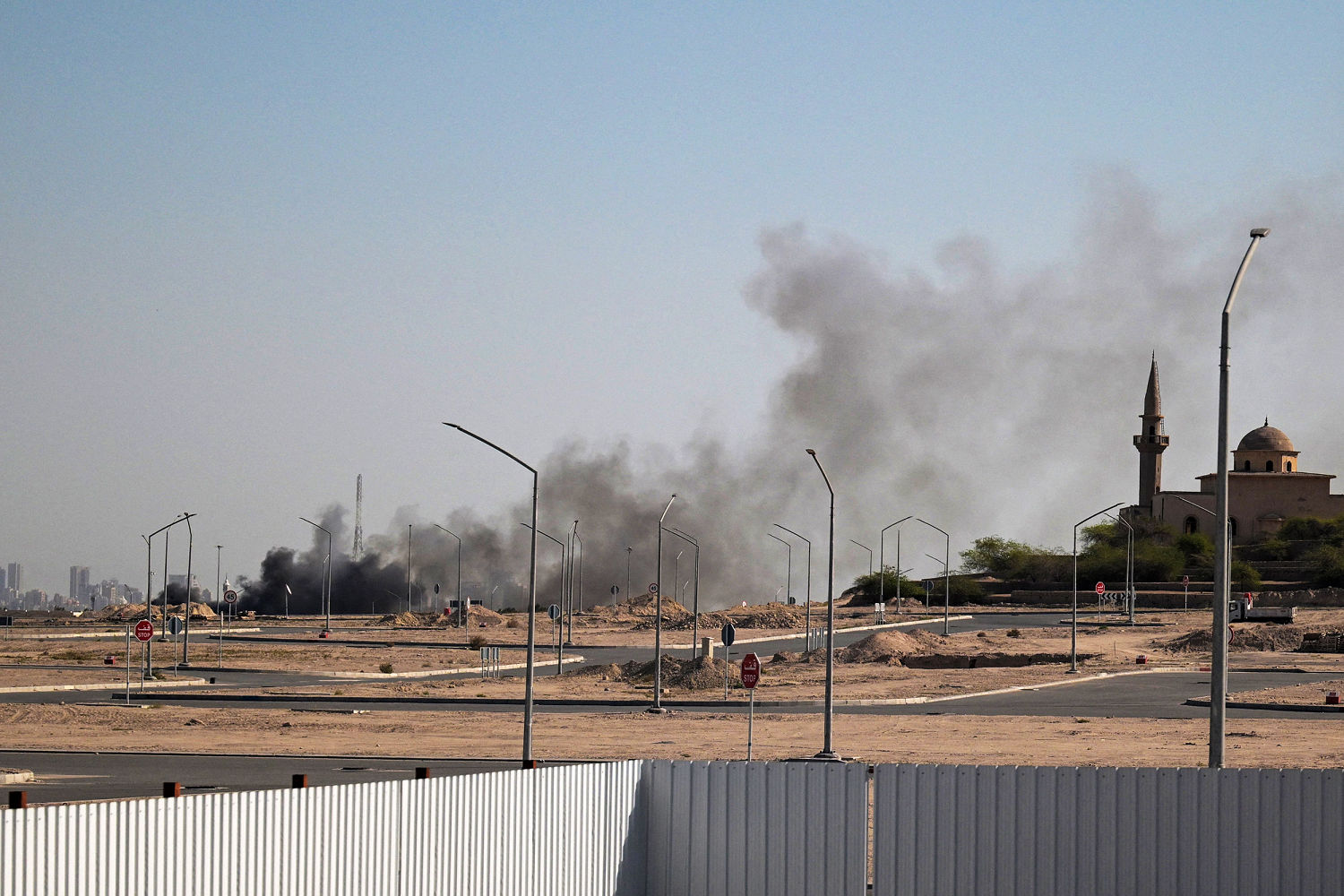
The U.S. State Department’s directive for American citizens to depart the Middle East amid escalating kinetic strikes represents more than a safety warning; it is a formal acknowledgment of a collapsing security margin. When a government shifts its posture from "Level 3: Reconsider Travel" to an active urging of departure via commercial means, it signals that the window for structured, predictable exit is closing. This transition is defined by the exhaustion of diplomatic de-escalation cycles and the onset of a high-friction environment where civilian infrastructure—specifically aviation and transit hubs—becomes a primary point of failure.
The current situation is governed by three specific escalatory vectors: the degradation of commercial air capacity, the saturation of regional transit bottlenecks, and the shift from institutional protection to individual contingency.
The Degradation of Commercial Air Capacity
The assumption that commercial flights will remain available during an escalating conflict is a common failure in risk assessment. Aviation operates on a razor-thin margin of safety and insurance feasibility. The State Department's recommendation to utilize "available commercial options" acknowledges that once a certain threshold of risk is met, private carriers will cease operations regardless of passenger demand.
- Insurance War Risk Rating: As strikes continue, maritime and aviation insurers spike premiums or revoke coverage for specific airspaces. This creates an immediate economic shutdown of flight paths, often before any physical damage occurs to the aircraft.
- Airspace Denial: The use of long-range precision munitions and anti-aircraft systems creates "no-go" zones. Even if an airport remains functional, the approach corridors may become tactically untenable for civilian pilots.
- Ground Handling Collapse: Airports require thousands of specialized staff to remain operational. If local staff flee or are called to military service, the technical throughput of the airport drops to zero, effectively stranding those with valid tickets.
Americans remaining in-region must calculate their exit strategy based on the Time-to-Grounding (TTG)—the interval between a major strike and the total cessation of civilian flight operations. History suggests this window is rarely longer than 24 to 48 hours once state-level actors enter direct engagement.
The Saturation of Regional Transit Bottlenecks
Evacuations do not happen in a vacuum; they occur in a crowded, competitive environment. As the U.S. government urges departure, other nations follow suit, leading to a simultaneous surge in demand across a limited number of exit points.
This creates a Congestion Multiplier. If 50,000 expatriates attempt to utilize three major regional hubs simultaneously, the processing capacity of those hubs is exceeded by an order of magnitude. The result is a breakdown in the "Security-to-Border" chain. Documentation checks, security screenings, and logistical processing slow down precisely when speed is most required.
- Land Border Viability: Land routes are frequently viewed as a secondary option, yet they are the most susceptible to sudden closure. Border crossings are stationary targets for civil unrest or military blockades.
- The Hub-and-Spoke Failure: In the Middle East, most international travel relies on a "hub" model (e.g., Doha, Dubai, Istanbul). If a strike disables or threatens a primary hub, the entire spoke system fails, leaving travelers stranded in secondary cities with no direct path to the West.
The Shift from Institutional to Individual Contingency
A critical misunderstanding among many expatriates is the belief that a State Department "order" to leave implies a government-funded or government-managed extraction. In reality, the U.S. government operates on a hierarchy of intervention:
- Commercial Guidance: The current phase. Citizens are responsible for their own logistics and costs.
- Contracted Charter: The government arranges private flights, but citizens must still pay the equivalent of a full-fare commercial ticket and reach the departure point on their own.
- Non-Combatant Evacuation Operation (NEO): A military-led extraction. This is a measure of last resort, executed only when commercial and diplomatic channels have completely failed.
The transition between Phase 1 and Phase 3 is rarely linear. It is often triggered by a "Black Swan" event—a strike on a major hotel, an embassy breach, or the closure of a national border—that renders Phase 2 impossible. By urging departure now, the State Department is attempting to avoid the logistical nightmare of a Phase 3 NEO, which is fraught with tactical risk and political sensitivity.
Identifying the Inflection Point of Total Friction
The probability of a successful departure is inversely proportional to the level of kinetic activity in the region. This can be viewed through the lens of The Friction Coefficient. In a stable environment, the friction of travel is low; a traveler buys a ticket, goes to the airport, and leaves. In an active strike zone, the friction increases due to:
- Communication Blackouts: The loss of cellular or internet connectivity makes booking flights or receiving real-time safety updates impossible.
- Fuel Scarcity: Ground transportation depends on a functioning supply chain. If fuel is diverted to military use or supply lines are cut, the simple act of reaching an airport becomes an insurmountable hurdle.
- Currency Instability: In a crisis, local vendors may stop accepting credit cards or local currency, demanding hard cash (USD/EUR) at predatory rates. Travelers without physical currency reserves find their mobility instantly restricted.
The current strikes have moved the region into a High-Friction state. Every day an American chooses to stay, they are betting that the friction will not become "Absolute"—the point where no amount of money or documentation can secure an exit.
Strategic Decision Matrix for Personnel in Region
The decision to stay or depart should not be based on emotional comfort or "wait-and-see" logic. It must be a cold assessment of the following variables:
1. The Redundancy of Exit Routes
If your only way out is a single international airport, your risk profile is unsustainable. A viable presence in-region during strikes requires at least two distinct modes of departure (e.g., air and sea, or air and a reliable land route to a neutral third country).
2. The Autonomy Window
How long can you survive and remain mobile if all external systems (power, water, internet, banking) fail? If the answer is less than 14 days, the directive to depart is a mechanical necessity.
3. The Proximity to Hard Assets
Are you located near a primary strike target (military headquarters, energy infrastructure, government buildings)? Modern precision munitions are accurate, but the secondary effects—infrastructure collapse, road closures, and civil panic—radiate far beyond the point of impact.
The Economic Reality of Delayed Departure
There is a measurable cost to waiting. As the State Department’s warnings grow more urgent, the price of the remaining commercial seats scales exponentially. This is not mere price gouging; it is the market reflecting the extreme risk premium of operating in a war zone. Those who wait for "the perfect time" often find themselves priced out or physically locked out of the market.
Furthermore, the bureaucratic overhead of an emergency departure is significant. The State Department cannot "fix" a lost passport or a lapsed visa overnight when the embassy itself is under a shelter-in-place order or is being evacuated. The ability of the U.S. government to provide consular services is currently being throttled to prioritize essential personnel.
The Strategic Recommendation
The window for a "low-friction" exit has already closed. We are now in a "managed-friction" environment. Individuals remaining in-region are no longer protected by the norms of international travel; they are operating within a tactical theater where civilian needs are secondary to military objectives.
The immediate play is a preemptive liquidation of presence. This involves:
- Immediate booking of the next available commercial flight out of the region, regardless of the destination, provided it is outside the immediate conflict zone.
- Prioritizing "Hub-to-Hub" travel over regional connections.
- Transitioning all liquid assets to hard currency or accessible international accounts.
Waiting for further "clarity" is a strategic error. In a kinetic conflict, clarity usually arrives in the form of a closed border or a grounded fleet. The objective is not to leave comfortably; it is to leave while the option still exists as a matter of commerce rather than a matter of combat.