The air in Tel Aviv usually carries the scent of salt and fried dough, a humid, Mediterranean comfort that settles into your lungs. But on this night, the air felt thin. It felt metallic. Somewhere in the vast, arid stretches of the Iranian plateau, thousands of miles away, buttons were pressed. Silos opened. The physics of modern warfare began its cold, calculated journey across the borders of Iraq, Jordan, and the jagged peaks of the West Bank.
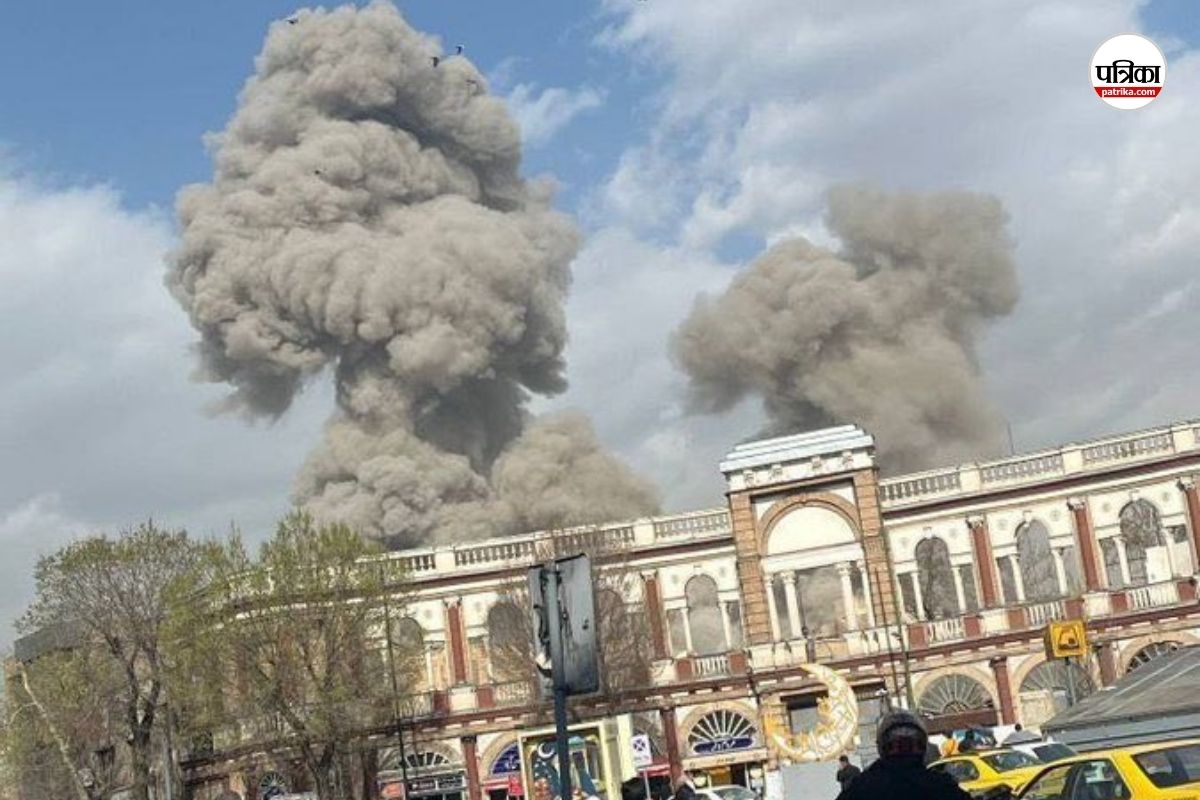
Silence is the first casualty of an aerial bombardment. Not the explosion—that comes much later. It is the silence of a city holding its breath, the sound of millions of people collectively wondering if their windows are about to become shrapnel.
The Calculus of Fire
When Iran launched its barrage of drones and missiles, it wasn't just a military maneuver. It was a message written in jet fuel and ballistic trajectories. For decades, the shadow war between Tehran and Jerusalem was fought in the dark—in the lines of computer code that crippled centrifuges, in the whispered conversations of intelligence officers in third-party capitals, and in the proxy skirmishes of the Levant.
The shadows have vanished.
A drone is a slow, methodical thing. It hums like a lawnmower from hell. It takes hours to cross the distance, giving the world plenty of time to watch it coming on a radar screen. It is psychological warfare in real-time. But a ballistic missile? That is a different beast entirely. It tears through the atmosphere at hypersonic speeds, a streak of white heat that leaves the human brain struggling to process the scale of the violence.
Consider a father in a safe room in Haifa. He isn't thinking about the geopolitical implications of the IRGC’s strategic shift. He is looking at his daughter’s glow-in-the-dark stars on the ceiling of the reinforced bunker and wondering if the Iron Dome can handle the sheer volume of the swarm.
The Invisible Shield
The sky above the Holy Land became a laboratory for the most expensive, high-stakes physics experiment in human history. To understand the defense, you have to understand the layers. It is not a single wall; it is a series of increasingly desperate filters.
- The Arrow System: This is the outer shell. It catches the big fish, intercepting ballistic missiles while they are still practically in space.
- David’s Sling: The middle child of the defense family, designed to swat away medium-range threats.
- The Iron Dome: The most famous of the trio, the last line of defense against the smaller, nimbler rockets that slip through the cracks.
The cost of this protection is staggering. While a "suicide drone" might cost a few thousand dollars—essentially a moped with wings and a bomb—the interceptor missiles used to bring them down cost millions. It is an economic war of attrition played out in the clouds. Every flash of light in the night sky represents a massive transfer of wealth from the national treasury into the furnace of "security."
A Coalition of Unlikely Ghosts
The most surreal aspect of this escalation wasn't the fire in the sky, but the coordination on the ground. For a brief window of time, the old maps of the Middle East were rewritten. American jets scrambled from carriers, British Typhoons roared out of Cyprus, and—most significantly—Jordanian pilots took to the air to protect their own airspace from the Iranian transit.
Geopolitics makes for strange bedfellows, but survival makes for even stranger ones. The spectacle of Arab nations assisting in the interception of Iranian projectiles aimed at Israel is a tectonic shift. It suggests that the fear of a regional hegemon outweighs the historical animosities that have defined the last seventy years.
But borders are scars on the earth that don't always heal. To the person on the street in Amman or Baghdad, the sight of their sky being used as a highway for foreign missiles is a violation that transcends diplomacy. It feels like being a bystander in a giant’s fistfight.
The Human Cost of the "Success"
The official reports will tell you that 99% of the threats were neutralized. They will talk about "minimal damage" to an airbase in the Negev. They will use words like "measured" and "intercepted."
The data misses the point.
The damage isn't just in the craters; it’s in the nervous systems of a generation. You cannot measure the trauma of a ten-year-old who learns to identify the difference between the "boom" of an outgoing interceptor and the "thud" of an incoming impact. You cannot quantify the weight of the "what if."
What if the guidance system on a single Shahed drone had glitched and veered into a crowded apartment complex? What if a piece of falling debris had struck a holy site? We live in a world where peace is maintained by the reliability of a few lines of code and the steady hands of radar technicians who haven't slept in forty-eight hours.
The Mirror and the Sword
Tehran claims this was a response to the strike on their consulate in Damascus. Israel claims this is proof of Iran’s status as a global pariah. Washington sits in the middle, trying to hold the leash of a conflict that seems determined to break free.
We often talk about these nations as if they are monolithic blocks of marble, moving across a chessboard. They aren't. They are collections of people—some who want nothing more than to open a small cafe in Isfahan, and others who want to see the world burn if it means they get to hold the matches.
The escalation didn't end when the sun rose and the sirens stopped. It merely changed form. The threat of the "total war" that has loomed over the region since 1948 has never felt less like a theory and more like a roadmap.
The problem with a "measured response" is that the person receiving it rarely thinks the measure is fair. In the cold logic of the Middle East, a punch must be followed by a harder punch, or you risk looking weak. And in this part of the world, weakness is an invitation to extinction.
The Morning After the Fire
As the sun began to bake the desert sand the following morning, the debris was collected. Scraps of twisted metal, some with Persian stenciling, were pulled from the dirt. The stock markets wobbled. The UN held an emergency session.
But back in the safe rooms, the doors were unbolted. People stepped out into the light, squinting at a sky that looked exactly the same as it did the day before. Blue. Vast. Empty.
They looked for the stars, but the stars were gone, replaced by the mundane reality of grocery shopping and morning commutes. Yet, everyone looked up a little more often than they used to. They were checking to see if the silence was still there, or if the lawnmower from hell was starting its engine once again.
The missiles may have been intercepted, but the peace of mind was lost somewhere in the upper atmosphere, vaporized in a flash of light that cost more than most people earn in a lifetime. We are no longer waiting for the war to start; we are simply waiting for the next chapter of a book that no one wants to finish reading.
The sirens are quiet now, but the frequency is still ringing in everyone's ears.
Would you like me to analyze the specific economic impact this escalation has had on global oil prices and shipping routes?