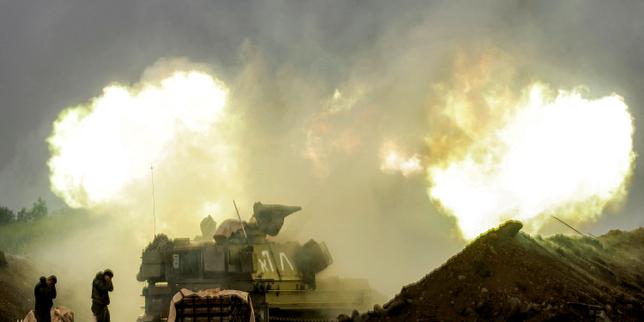
The windows in Tehran do not just rattle; they hum with a frequency that stays in your teeth long after the sound has faded. It is a low, primal vibration that starts in the concrete foundations of the apartment blocks and climbs upward, rattling the cheap teacups and the framed photos of grandfathers who saw too many wars already. When the first explosions bloomed over the capital this morning, they didn't sound like the movies. They sounded like the earth cracking open.
Israel’s strikes on Iran, appearing as jagged flashes of magnesium-white against a smog-choked sky, were not a surprise. Not really. For weeks, the city had been holding its breath, a collective intake of air that made the simple act of buying bread feel like a countdown. But when the fire actually falls, the intellectual preparation vanishes. You are left with the raw, shivering reality of being a dot on a map that someone, somewhere else, has decided to erase.
While the anti-aircraft batteries traced frantic, glowing lines across the Iranian clouds, a different kind of fire was rising hundreds of miles to the south. In Kuwait, the Al-Ahmadi refinery—a sprawling metallic forest of pipes and pressure valves—became a secondary front. An Iranian strike there turned the midnight air into a thick, oily soup. This is the new cartography of conflict. It is no longer about borders or trenches. It is about the nervous system of the modern world: the refineries, the power grids, and the quiet, terrified people who live in their shadow.
The Anatomy of a Shockwave
Consider a man named Sahand. He is a hypothetical composite of the millions waking up in Tehran today, but his fear is entirely real. Sahand doesn't care about the range of a ballistic missile or the stealth coating on a jet. He cares about the fact that his daughter is sleeping in the hallway because the interior walls are thicker. He cares that the internet is flickering, cutting him off from a world that is watching his city burn in high definition.
The strikes targeted military bases and missile production sites, surgical strikes by definition, but war is never a scalpel. It is a sledgehammer. Even when the hammer hits the intended nail, the floorboards splinter. The "military targets" in Karaj and Tehran are woven into the fabric of civilian life. When a factory explodes, the shockwave travels through the air, through the soil, and directly into the psyche of a population that is already exhausted by triple-digit inflation and the weight of a decade of sanctions.
The Israeli perspective is equally anchored in a grim, historical logic. From their view, the sky over Tel Aviv had already been violated by Iranian drones and missiles weeks prior. For them, these strikes are not an escalation but a restoration of a terrifying kind of balance. It is the language of the Middle East: a violent, rhythmic exchange where every word is a detonation.
The Black Blood of the Desert
While Tehran shook, Kuwait felt the redirected heat of the anger. The strike on the refinery wasn't just an attack on an industrial site; it was a puncture wound in the global economy.
Refineries are the cathedrals of the 21st century. They take the raw, stagnant sludge of the earth and turn it into the motion that allows a mother in London to drive her kids to school or a farmer in Nebraska to run a tractor. When Iran hits a Kuwaiti hub, they are sending a message to the world’s bank accounts. They are saying that if their own sky is no longer safe, then the gears of the world will be ground to a halt with sand and fire.
The smoke from Al-Ahmadi doesn't respect international law. It drifts. It hangs over the Persian Gulf, a black shroud that obscures the shipping lanes where the world’s lifeblood flows. We often talk about "oil prices" as if they are abstract numbers on a flickering green screen in Manhattan. They aren't. They are the cost of heat in a cold winter. They are the price of a loaf of bread. Every time a refinery burns, the world gets a little hungrier, a little colder, and a lot more desperate.
The Invisible Stakes
We are told this is a conflict of ideologies, of "The Axis of Resistance" versus "The Zionist Entity." Those are grand, sweeping terms that look good on a teleprompter. But walk through the streets of a neighborhood near the Imam Khomeini International Airport, and those terms dissolve.
What remains is the smell of ozone and burnt rubber.
The real stakes are the things we take for granted until they are gone. The security of a locked door. The assumption that the ceiling will stay where it is. The belief that the future is a place we will actually get to visit.
There is a specific kind of silence that follows a night of bombing. It’s not a peaceful silence. It is heavy, like wet wool. It’s the sound of people emerged from their hallways and basements, blinking at a sun that looks different than it did yesterday. They look at the sky, not for the beauty of the clouds, but to see if anything is falling.
This morning, the smoke from the Israeli strikes mingled with the permanent smog of Tehran. It created a haze that tasted of metal. People went to work. They sat in traffic. They bought cigarettes. They performed the mundane rituals of survival because the alternative—to simply stop—is a luxury they cannot afford.
But the eyes tell a different story. In the markets of Kuwait and the squares of Iran, there is a look of profound, weary recognition. They know that they are pawns in a game of regional chess where the players are safe in bunkers and the pieces are made of flesh and bone.
The geopolitics are complex, but the human physics are simple. Friction creates heat. Heat creates fire. And fire consumes whatever is closest to it.
The world will spend the next few days analyzing satellite imagery, counting the craters in the desert and the charred remains of hangar bays. Analysts will debate the effectiveness of the S-300 surface-to-air missiles and the precision of the F-35s. They will talk about "de-escalation ladders" and "red lines."
None of that matters to the woman in Tehran who is currently sweeping glass out of her kitchen. She isn't thinking about the regional balance of power. She is wondering if the glass will be back in the window before the wind picks up, and if her children will ever be able to look at a clear night sky without wondering which of the stars is moving toward them.
The sky eventually cleared over the Gulf, but the horizon remains jagged. The fires in Kuwait are being contained by crews in silver heat-suits, moving like astronauts across a ruined landscape. In Tehran, the sirens have stopped, leaving only the ringing in the ears of the city. The ghost of the explosion remains, a phantom limb of a peace that was severed long ago.
We live in a world that is held together by thin wires and fragile promises. Last night, those wires were stretched to the breaking point. We are all Sahand now, sitting in the hallway of a global house, listening to the hum in the walls and waiting to see if the ceiling holds.