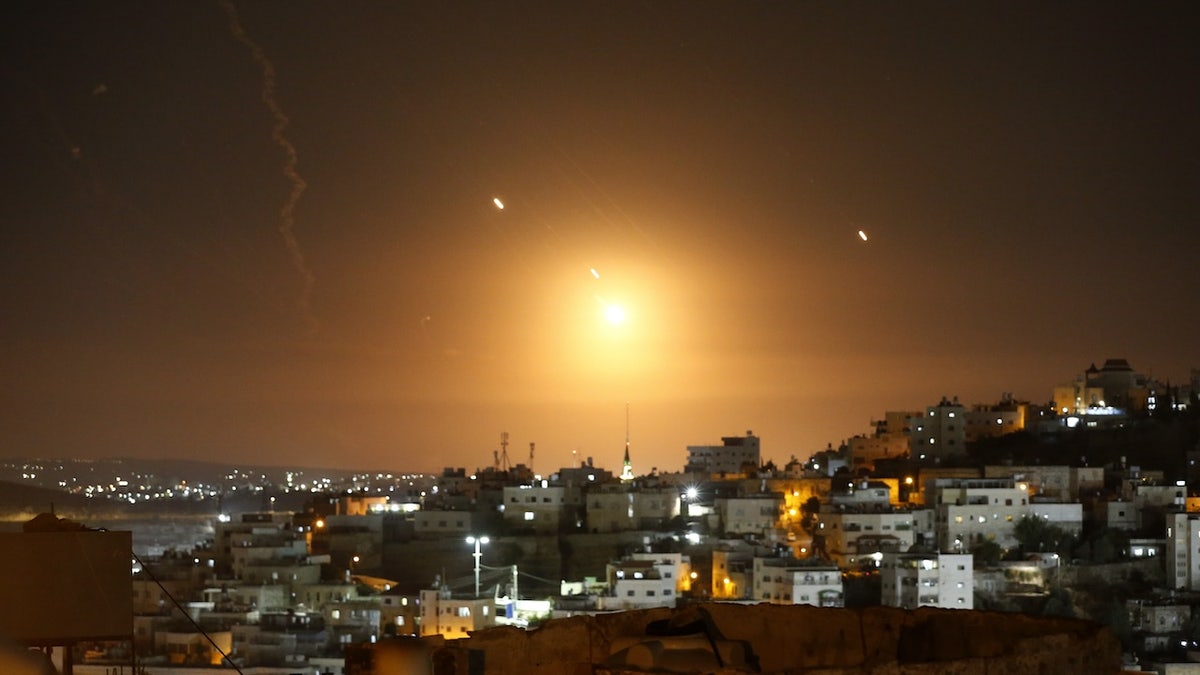
The air at 1,000 feet is different. It is thinner, quieter, and usually smells of nothing but the filtered output of high-end HVAC systems. For the residents of 23 Marina, one of the tallest residential needles in a city made of glass spikes, that silence is what they pay for. It is the sound of success. On a typical Sunday evening, the only flicker in the peripheral vision of a penthouse inhabitant is the steady blinking of a neighboring skyscraper or the distant, rhythmic pulse of the Gulf.
Then came the whine. Recently making news lately: The Kinetic Deficit Dynamics of Pakistan Afghanistan Cross Border Conflict.
It wasn't the roar of a jet engine or the familiar chop of a police helicopter. It was a high-pitched, lawnmower-adjacent buzz that felt fundamentally out of place among the marble floors and infinity pools. When the drone struck the upper floors of the tower, the sound didn't just shatter windows; it shattered the illusion that the clouds were a safe place to hide from the world’s oldest grudges.
Reports confirmed the strike originated from an Iranian-manufactured loitering munition. While the Sunday Guardian and other outlets processed the "what" and the "where"—noting the lack of casualties and the ongoing evacuation—the "why" and the "how" began to settle over the city like a heavy, invisible fog. This wasn't just a mechanical failure or a localized accident. It was a signature written in fire across the Emirati skyline. Further insights regarding the matter are explored by Associated Press.
The Anatomy of a High-Altitude Haunting
Imagine a resident we will call Omar. He is a hypothetical but representative soul in this vertical village. Omar moved to Dubai for the stability. He trades commodities. He likes that his biggest worry is usually the traffic on Sheikh Zayed Road or the humidity index during July. When the alarms began to wail inside 23 Marina, he wasn't thinking about regional geopolitics or the Strait of Hormuz. He was looking for his shoes.
The evacuation of a building that stands nearly 400 meters tall is not a quick affair. It is a grueling, downward pilgrimage. As thousands of residents descended the concrete stairwells, the reality of the strike began to circulate through WhatsApp groups and frantic phone calls. The drone—small, relatively inexpensive, and terrifyingly precise—had bypassed some of the most sophisticated defense "bubbles" in the world.
These machines are not the massive Global Hawks or Predators of the early 2000s. They are the new democratized terror. They are "suicide drones," or more formally, One-Way Attack (OWA) Unmanned Aerial Systems. They are the tactical equivalent of a sniper rifle with a thousand-mile range. When one of these hits a residential icon like 23 Marina, it sends a message: Nowhere is vertical enough to be out of reach.
The technology behind these strikes relies on a blend of GPS guidance and inertial navigation systems. Even if a city jams the satellite signals, the drone’s internal brain can "dead reckon," counting its own heartbeats and footsteps through the air until it finds the coordinates it was fed in a workshop hundreds of miles away. It is a patient, unblinking hunter.
The Invisible Lines in the Sand
To understand the strike, you have to look past the scorched facade of the tower and toward the shifting alliances of the Middle East. For years, the UAE and Iran have danced a delicate tango of trade and tension. Dubai serves as a vital economic lung for the region, a place where Persian businesses and Western capital often rub shoulders in the same air-conditioned malls.
But the geopolitical weather changed.
The escalation reflects a tightening of the "gray zone" conflict. In this type of warfare, nobody declares a state of combat. There are no marching armies. Instead, there are "deniable" strikes, cyber-attacks, and maritime harassment. By hitting a high-profile residential target without causing mass casualties, the message is calibrated: We can touch your crown jewels whenever we like.
The psychological stakes are higher than the physical ones. Dubai’s brand is built on the concept of the "Safe Haven." It is the Switzerland of the sands. When a drone impacts a tower in the heart of the Marina, it threatens the very foundation of that brand. Investors don't like variables they can't calculate. Families don't like the idea that their floor-to-ceiling views are actually targets.
The Engineering of Fear
There is a specific kind of vulnerability that comes with living in a masterpiece of engineering. 23 Marina is a feat of human ingenuity, designed to withstand gale-force winds and seismic tremors. Yet, it was never designed for a kinetic impact from a guided weapon.
Modern loitering munitions, like the ones used in this escalation, often utilize a shaped charge or a fragmentation warhead. They are designed to exploit the "soft" spots of an objective. In a skyscraper, those soft spots are the glass curtain walls. Once the glass is breached, the pressure differential and the fire risk become the primary enemies.
The lack of injuries in this specific strike suggests one of two things: either the operators were incredibly lucky, or they were incredibly precise. They hit a section of the building—perhaps a mechanical floor or an unoccupied suite—to ensure the fire stayed localized. It was a shot across the bow, fired into the sky.
Consider the logistics of the defense. To protect a city like Dubai from these low-flying, low-radar-cross-section threats, you need more than just traditional missile batteries like the Patriot or the THAAD. You need directed energy weapons, high-frequency jamming, and rapid-fire "point defense" guns. But how do you deploy those in a dense urban environment? You can’t exactly fire a machine gun into the air in a neighborhood filled with glass towers and tourists. The falling shells would be as dangerous as the drone itself.
The New Gravity
The evacuation eventually ended. The fire was extinguished. The structural engineers moved in with their lasers and clipboards to ensure the integrity of the spire. But for the people of Dubai, and the global community watching, the world feels a little heavier today.
We have entered an era where the distance between a distant conflict and a quiet living room has been compressed to zero. The borders are no longer lines on a map; they are the frequencies in the air and the software code in a drone’s flight controller.
Omar eventually made it back to his apartment, but he didn't look out the window the same way. He found himself scanning the horizon, not for the sunset, but for a shape that didn't belong. He realized that the glass wasn't a shield. It was just a lens.
The strike on 23 Marina wasn't just an attack on a building. It was an attack on the idea that wealth and height can provide an exit from history. The shadow of the drone has a way of stretching longer than the shadow of the tower itself, reminding everyone below that in the modern age, the sky is never truly empty.
The lights of the Marina are back on now, reflecting off the water in a shimmering, broken mosaic. But if you stand on the balcony and listen past the hum of the city, you realize the silence isn't quite as deep as it used to be. The wind still whistles through the gaps, but now it carries the memory of a hum that shouldn't have been there.
The sky is no longer a ceiling. It is a door. And someone just knocked.
Would you like me to look into the specific defensive technologies, such as C-UAS (Counter-Unmanned Aircraft Systems), that cities are now deploying to protect high-rise infrastructure from these types of strikes?