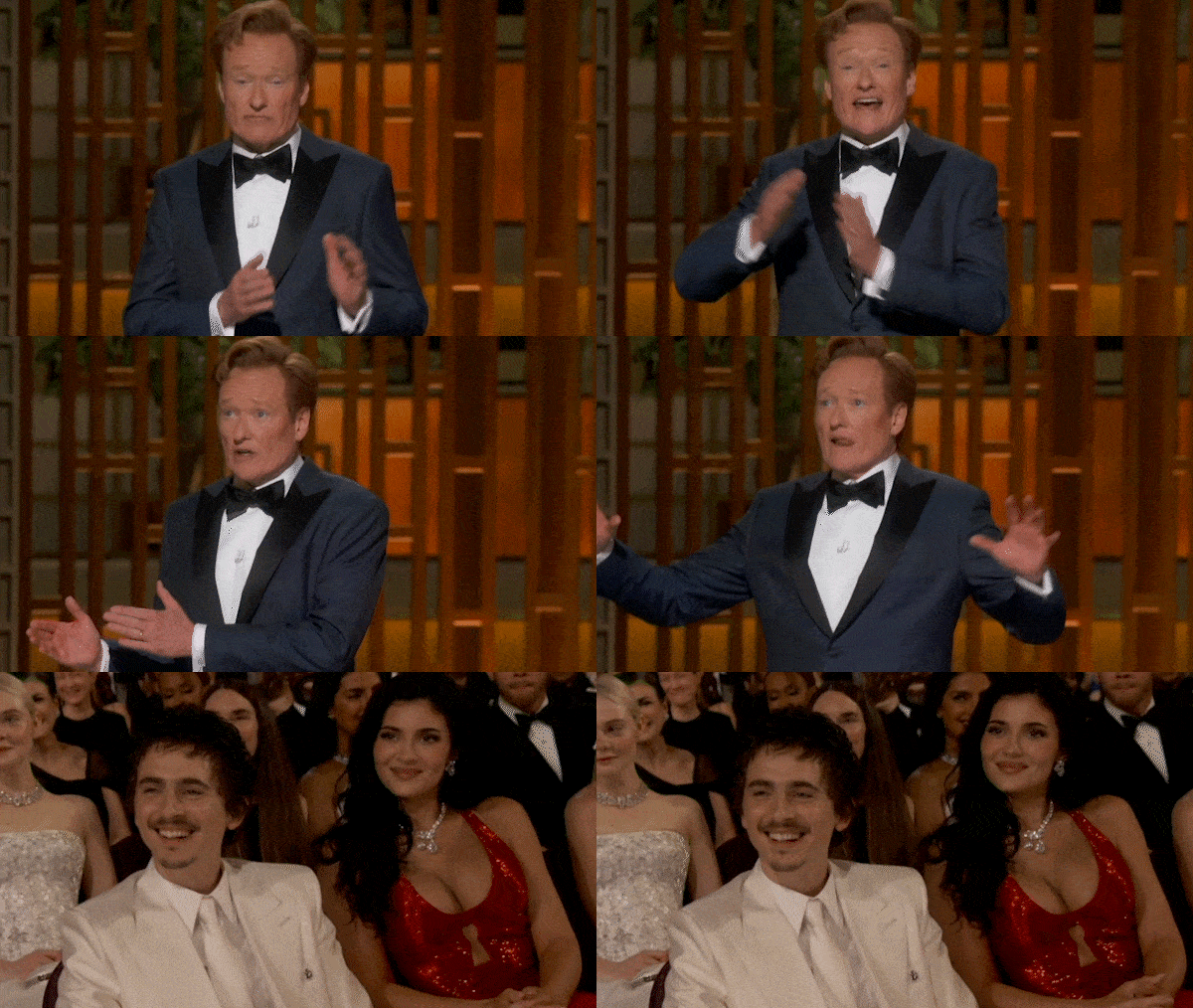
The Dolby Theatre usually smells of expensive lilies and the kind of floor wax that costs more than a mid-sized sedan. But tonight, the air felt different. It felt electric, jagged, and slightly dangerous. For decades, the Academy Awards have functioned as a high-walled fortress of tradition, a place where the "prestige drama" reigned supreme and anything involving ghosts, gadgets, or global animation was relegated to the technical categories.
Then came the 98th Oscars.
We watched the velvet ropes snap. We saw the gold statues go to the outsiders. By the time the final envelope was torn open, the industry didn’t just change its clothes; it underwent a DNA transplant.
The Long Road to Amy’s Moment
Amy Madigan was not supposed to be the story of the night. In the ledger of Hollywood’s short memory, she was the veteran, the reliable hand, the woman who had been delivering powerhouse performances since the eighties while the spotlight chased younger, louder stars. When she stepped onto that stage to accept Best Actress, the room didn't just clap. It exhaled.
There is a specific kind of justice in seeing a performer win for a role that mirrors the exhaustion of the human soul. Madigan’s performance in The Last Echo wasn't flashy. She didn’t wear prosthetic teeth or gain sixty pounds. She simply played a woman losing her grip on a world that had already forgotten her.
Consider the "prestige" trap. For years, the Academy rewarded transformation over truth. If you could disappear into a historical figure, you won. But Madigan won by appearing as herself—raw, weathered, and undeniably present. Her victory signaled a shift in what we value. We are no longer looking for actors to show us how well they can mimic the past. We are looking for them to show us how we feel right now, in the messy, uncertain present of 2026.
She stood at the microphone for a long ten seconds before speaking. She didn't look at her notes. She looked at the back of the house, where the seat-fillers and the lighting techs live. "I thought the window was closed," she whispered. The silence that followed was the loudest moment of the broadcast.
The Demon Hunters Break the Glass
If Madigan’s win was a triumph of the spirit, the sweep by KPop Demon Hunters was a riot in the streets.
Critics spent the lead-up to the ceremony debating whether a high-octane, neon-soaked supernatural epic from South Korea belonged in the Best Picture conversation. The old guard called it "spectacle." The new guard called it "the future." When the film took home Best Animated Feature, Best Original Song, and then—the earthquake—Best Picture, the debate ended.
This wasn't just a win for a movie. It was a surrender from the gatekeepers.
The film follows a group of pop idols who moonlight as exorcists, using the frequency of their music to trap entities that feed on human grief. On paper, it sounds like a fever dream. On screen, it is a masterclass in kinetic storytelling. It understands something fundamental that Western cinema has been struggling with: the audience is tired of being lectured. They want to be moved, and they want to be moved at 120 beats per minute.
The director, standing amidst a sea of colorful hair and sequined suits, didn't talk about box office numbers or streaming metrics. He talked about loneliness. He talked about how, in a world where we are more connected than ever, we feel more haunted than ever. The "demons" in the film aren't just monsters with teeth; they are the personification of the digital void. By awarding this film the top prize, the Academy admitted that the most relevant stories are no longer coming from the traditional studios of Burbank. They are coming from the streets of Seoul, the gaming engines of independent creators, and the hearts of those who aren't afraid to be loud.
The Invisible Stakes of the Technical Sweep
We often treat the "Below the Line" awards as a bathroom break. We shouldn't. The technical sweep for KPop Demon Hunters in Sound and Visual Effects tells a story about how our senses are evolving.
The film utilized a new proprietary spatial audio tech that makes the viewer feel like the sound is originating from inside their own skull. It’s invasive. It’s immersive. It’s terrifying. While the competitor headlines might just list "Best Sound," the reality is a fundamental shift in how we consume narrative. We aren't just watching a story anymore; we are inhabiting a sensory environment.
The artisans who built the world of the Hunters didn't use the standard CGI templates that have made every superhero movie look like a grey smudge for the last decade. They used hand-drawn textures layered over neural-link rendering. The result is a visual language that feels tactile and wet and real.
When the VFX lead took the stage, he held up his hands. They were stained with ink. In a 2026 dominated by automated generation, he made a point to show the world that the human thumbprint is still the most valuable asset in art. The audience, filled with people terrified of being replaced by lines of code, gave him a standing ovation that lasted three minutes.
The Quiet Death of the "Oscar Bait"
There was a notable absence tonight. The sweeping period pieces, the biopics of long-dead politicians, and the slow-burn dramas about wealthy people staring at rain—they were all there, but they were invisible. They felt like relics.
The 2026 Oscars marked the official expiration date of "Oscar Bait."
For years, there was a formula. Take a tragic historical event, add a British lead, sprinkle some violin music, and collect your trophy. But the world has become too tragic and too historical in real-time for that formula to work. We don't need a sanitized version of the past when the present is screaming for our attention.
The films that won tonight—The Last Echo, KPop Demon Hunters, and even the gritty indie darling Subway Psalm—all share a common thread: they are desperately honest. They don't try to wrap the human experience in a neat bow. They leave the edges frayed. They acknowledge that sometimes, the monster isn't defeated, and sometimes, the echo is all we have left.
The Empty Seats and the New Front Row
Walking through the lobby during the third commercial break, the shift was physical. The "titans" of the industry—the men in their seventies who have controlled the green-light process for forty years—looked bewildered. They huddled in small groups, whispering about "voter blocks" and "demographic shifts."
They are looking for a political explanation for why their world just tilted. They are missing the point.
The point is that the audience has grown up. We are no longer satisfied with the illusion of depth. We want the real thing, even if it comes in a package we don't recognize, like a K-Pop musical or a quiet film about a woman in a house that won't stop creaking.
The 2026 Oscars will be remembered as the year the Academy stopped trying to tell the world what is "important" and started listening to what is "essential."
As the lights dimmed and the gala began, I saw Amy Madigan sitting at a small table near the back. She wasn't surrounded by publicists or bodyguards. She was just sitting there, holding her Oscar in one hand and a glass of water in the other, looking at the statue like it was a strange, golden bird that had accidentally flown into her window. She looked surprised. She looked tired. She looked human.
The monsters were finally in the room, but they weren't under the bed anymore. They were on the stage, they were in the seats, and they were finally being seen for what they really are: us.
The gold plating on the statues didn't look any different this year. But under the lights, for the first time in a generation, the reflections they cast actually looked like the people watching at home.
It was about time.