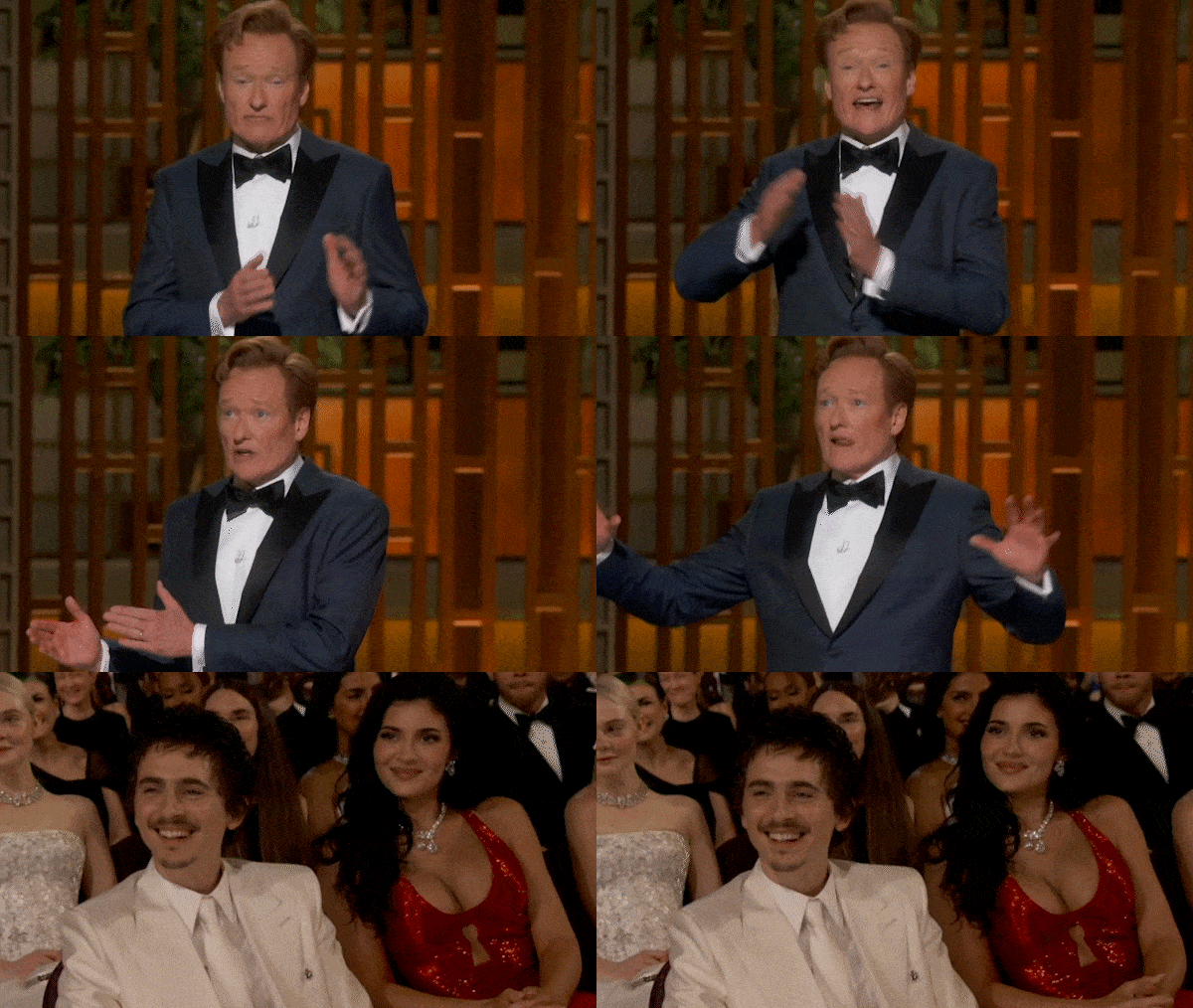
The air inside the Dolby Theatre doesn't breathe. It waits. It is a pressurized vacuum of expensive perfume, nervous sweat, and the electric hum of a thousand cameras all pointed at the same six inches of floor. People think the Oscars are about the movies. They aren't. Not really. They are about the terrifying, fragile moment when a human being steps out of a limousine and realizes that for the next three hours, they are no longer a person. They are a symbol.
Conan O’Brien understands this better than anyone. He stands in the wings, a tall, lanky exclamation point of a man with hair the color of a sunset in a polluted city. He isn't just a host. He is the sacrificial lamb in a Tom Ford suit. When he walks onto that stage to kick off the night, he isn’t just delivering monologues. He is lancing the boil of collective anxiety that has been building since the stylists finished the last stitch on the last gown in a hotel suite five miles away.
He began with a smirk. It was the smirk of a man who knows the house is on fire but decided to check if the hors d'oeuvres were finished anyway. The room loosened. That is his gift. He takes the self-seriousness of Hollywood—a place that treats a lens flare like a religious epiphany—and he turns it into a playground.
But while Conan was busy tethering the room to reality with his frantic, brilliant energy, something else was happening. The first gold was about to change hands.
The Weight of the First Statue
There is a specific kind of silence that happens right before the envelope opens for Best Supporting Actress. It is the first major category of the night. It sets the temperature. If the wrong person wins, the room curdles. If the right person wins, the air returns to the building.
Amy Madigan sat in her seat, likely feeling the phantom weight of every choice she had ever made. Acting is a strange way to make a living. It requires you to be hollow enough to let a stranger inhabit your skin, yet thick-skinned enough to survive the thousand "nos" that precede every "yes." When her name was called, the sound didn't just vibrate through the speakers. It traveled through the floorboards.
She didn't just walk to the stage. She ascended.
Winning the first award of the night is a peculiar burden. You are the proof of concept. You are the evidence that the dream isn't just a marketing campaign. As Madigan gripped the statuette, her fingers wrapping around that cold, gold-plated knight, the narrative shifted. The Oscars weren't a checklist of names anymore. They were a story about validation.
Consider the physics of the moment. The statue weighs about eight and a half pounds. It is solid bronze. It shouldn't feel heavy to a grown adult, but in that moment, it carries the mass of every 4:00 AM call time, every line memorized in a cramped trailer, and every doubt whispered in the dark. Madigan stood there, a beacon for every character actor who has ever wondered if the work was enough. It was.
The Invisible Stakes
Why do we care?
We care because we are all, in some capacity, sitting in our own versions of the Dolby Theatre. We are all waiting for someone to notice that we did the work. We watch Conan O’Brien dance through the minefield of celebrity egos because we want to know that even in the most polished environments, there is room for a little chaos. We watch Amy Madigan take that stage because we need to believe that merit still has a seat at the table.
The critic in the back of the room might say it’s just a trophy. The accountant might say it’s just a boost in backend points and future contract negotiations. They are both wrong. It is a tribal ritual. We gather in the glow of our television screens—millions of us, linked by the blue light of our phones and the flicker of the broadcast—to watch the coronation of our modern myths.
Conan knows this. He leans into the absurdity. He pokes at the billionaires in the front row, reminding them that they are just people who got lucky enough to play pretend for a living. He is the jester in the court of the Sun King, and his job is to make sure the king doesn't start believing his own press releases.
The Long Road to the Podium
Behind Madigan’s win lies a map of struggle that the telecast never shows. Imagine a hypothetical young actress arriving in Los Angeles today. She has three hundred dollars, a headshot that looks only slightly like her, and a car that overheats if the sun stays out too long. She works three jobs. She misses her sister’s wedding because she has a callback for a commercial for laundry detergent. She gets the part. Then the commercial is cut.
She does this for ten years.
Then, one day, she gets a script that feels different. It isn’t about detergent. It’s about a mother, or a lover, or a fighter. She pours everything into it. She loses sleep. She loses herself.
When Amy Madigan won, she wasn't just winning for herself. She was winning for that girl in the overheating car. She was the physical manifestation of the idea that if you stay in the room long enough, eventually, the room has to look at you.
The ceremony continued, a blur of silk and speeches, but the tone was already etched in stone. Conan kept the pace, a master of ceremonies who understood that the night was a marathon, not a sprint. He navigated the transitions with the grace of a tightrope walker, never letting the energy dip into the doldrums of mid-show exhaustion.
The Chemistry of the Night
There is a hidden science to a successful Oscars. It requires a perfect chemical balance between the irreverence of the host and the earnestness of the winners. If it’s too funny, it feels cheap. If it’s too serious, it feels bloated.
Conan O’Brien is the catalyst. He is the element that allows the reaction to occur without the whole thing blowing up. By mocking the spectacle, he makes the spectacle safe to enjoy. He creates a space where Amy Madigan can be breathless and tearful without it feeling like a cliché. He provides the shadow that makes the light look brighter.
We forget that these people are terrified. We see the diamonds, but we don't see the shaking hands. We see the smiles, but we don't see the internal monologue wondering if they remembered to thank their agent or if they left the stove on back at the mansion.
The first award is the most important because it breaks the seal. It tells the audience: The gates are open. The gods have spoken. You may now begin to feel.
The night stretched on, a long ribbon of moments that would be dissected by bloggers and beamed into living rooms from Tokyo to Toledo. But the core of the story was already told in those first thirty minutes. It was told in Conan’s frantic, joyful opening. It was told in the way the light hit the gold in Madigan’s hand.
It was a reminder that even in a world built on artifice, the tears are real. The sweat is real. The hunger for recognition is the most human thing we own.
As the cameras panned across the audience, capturing the faces of the world's most famous people, you could see the shift. The tension had evaporated. The show was underway. The ginger king had done his job, and the first queen of the night had taken her throne.
The rest was just history.
The statues sat on their pedestals, waiting for the next set of hands to claim them, indifferent to the drama they caused, yet heavy with the dreams of everyone in the room. In the darkness of the wings, Conan adjusted his cuffs, took a breath, and stepped back into the light.