Nigel Farage has built a career on the razor's edge of British respectability, but his recent endorsement of a candidate photographed appearing to give a Nazi salute marks a shift from tactical provocation to a dangerous organizational crisis. This isn't just about one photograph or one rogue candidate in a local election; it is about the fundamental inability of "insurgent" political movements to vet their own ranks when they prioritize speed and outrage over institutional integrity. While Farage attempts to dismiss the incident as a smear campaign or a momentary lapse in judgment, the reality reveals a much deeper rot within the infrastructure of populist vetting.
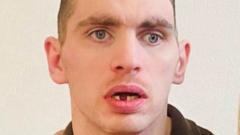
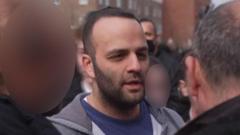
The candidate in question, caught in a frame that evokes the darkest chapter of the 20th century, represents a recurring nightmare for Reform UK. Every time the party gains momentum in the polls, a ghost from the social media past or a poorly timed photograph emerges to stall the engine. This is the cost of doing business in the fringes. When you build a platform on the rejection of the "establishment," you inevitably attract those who have been rejected by polite society for reasons that have nothing to do with politics and everything to do with basic human decency.
The Vetting Vacuum and the Speed of Populism
Modern political parties usually operate like high-security vaults. Getting a nomination for the Conservatives or Labour involves years of scrutiny, background checks, and a "sifting" process designed to weed out the liabilities before they ever reach a ballot paper. Reform UK does not have that luxury. They are a party in a hurry, trying to capitalize on a fleeting window of voter anger.
In their rush to field candidates in every possible constituency, the internal mechanics of oversight have buckled. This wasn't an isolated incident of a "bad apple" slipping through; it is the natural result of a system that values loyalty to the leader and "anti-woke" credentials over a clean digital footprint. Farage’s defense of the candidate—suggesting the photo was taken out of context or was a youthful indiscretion—ignores the political reality that in the eyes of the undecided voter, the image is the message.
The "why" behind this failure is simple. Professional vetting firms charge thousands of pounds per candidate to scour social media, interview associates, and verify historical claims. For a party that operates more like a private limited company than a traditional democratic institution, those costs are a barrier to entry. They rely on "vibes" and personal recommendations, a strategy that works until it spectacularly fails.
The Farage Shield and Its Diminishing Returns
For years, Nigel Farage has been the Teflon man of British politics. He has survived plane crashes, countless gaffes, and accusations of dog-whistle politics by pivoting back to a core message of national sovereignty and common sense. However, the "Nazi salute" controversy is different because it touches on an aesthetic of extremism that even the most frustrated Brexit voter finds repulsive.
Farage’s strategy has always been to stand just outside the door of the "deplorables," nodding in their direction without ever stepping inside. By backing this candidate, he has crossed the threshold. This isn't a debate about immigration numbers or fishing quotas. It is a question of basic vetting and whether the leader of a major political movement can tell the difference between a frustrated patriot and a radical actor.
The defense offered—that the candidate was "just joking" or that the movement is being targeted by a "left-wing media hit job"—is a tired script. It may satisfy the core base that already views every news report as a conspiracy, but it does nothing to win over the middle-ground voters needed to actually secure seats in Westminster.
The Infrastructure of Outrage
We must look at how these candidates are recruited. Reform UK often pulls from a pool of people who feel disenfranchised, not just by the government, but by modern culture itself. This pool is heavily overlapped with online subcultures where "edgy" humor and extreme symbolism are used as currency.
When a party leader validates a candidate with this kind of baggage, they send a signal to the entire organization that the standards are flexible. This creates a feedback loop. More extremists feel emboldened to join, believing that as long as they are "brave" enough to say the unsayable, the leadership will protect them. This is how a political party turns into a protest group, and eventually, a pariah.
The "how" of this endorsement is perhaps more damning than the "why." Farage often acts on instinct, bypasses his advisors, and makes unilateral decisions to back "his people." This top-down management style means there is no one in the room with the authority to say, "Nigel, this is a disaster."
Beyond the Photo the Long Term Impact on the Right
The British electorate has a long history of flirting with populism but ultimately rejecting anything that looks like genuine fascism. The British National Party (BNP) hit a hard ceiling for this exact reason. By allowing candidates with neo-Nazi associations to remain under the Reform banner, Farage risks branding his movement with a label that no amount of Union Jack bunting can cover up.
There is a structural weakness in the way "insurgent" parties are built in the age of the internet. They are built for the short term. They are designed to create a "moment" of political pressure, not to govern. This lack of long-term thinking is exactly why they fail to build the boring, bureaucratic systems—like vetting committees—that keep a party sane.
The fallout from this endorsement will likely follow a predictable pattern. There will be a slight dip in the polls, a series of combative TV interviews where Farage blames the "mainstream media," and eventually, the candidate will either be quietly sidelined or will become a martyr for the "canceled" wing of the party. But the damage to the brand is permanent.
The Illusion of the Common Man
The central irony of the Farage brand is the "common man" persona. He portrays his candidates as ordinary people who have been pushed too far. Yet, ordinary people don't find themselves in situations where they are photographed performing Nazi salutes. There is a disconnect between the reality of the British working class and the fringe actors that Farage is increasingly forced to defend.
By doubling down on this candidate, Farage is betting that his personal popularity is enough to outweigh the toxic optics of the association. It is a massive gamble. He is testing whether his followers hate the "establishment" more than they hate the imagery of the 1930s.
This isn't just a PR blunder; it's a window into the vacuum of leadership at the heart of the new right. If you cannot manage the digital trail of a few hundred candidates, you cannot manage a country. The voters who are looking for a serious alternative to the status quo are watching, and they are seeing a movement that is less of a government-in-waiting and more of a chaotic collection of internet trolls and historical reenactors.
The real crisis isn't the photo itself. It's the fact that the man who claims to be the kingmaker of British politics thinks the photo doesn't matter.
Political movements die not when they are attacked by their enemies, but when they lose the ability to distinguish between a supporter and a liability. Nigel Farage has spent decades claiming to speak for the "silent majority." By standing behind a candidate who mimics the gestures of the world's most vocal and violent minority, he may have finally silenced himself for the voters who actually matter. The era of the "unfiltered" populist is meeting the cold reality of public accountability, and for once, the charisma isn't enough to bridge the gap.
Check the digital history of every local candidate before casting a protest vote.