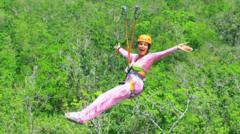
The systemic integrity of social welfare programs relies on a binary classification of eligibility that often fails to account for the physical realities of chronic illness, yet the case of a "housebound" benefit claimant photographed ziplining in Mexico exposes a fundamental failure in risk-modeling and oversight. Disability fraud is not merely a moral transgression; it is a breakdown of the Asymmetric Information Theory, where the claimant possesses private knowledge of their physical capacity that the state cannot easily verify without prohibitive surveillance costs. When a claimant receives the highest rate of Personal Independence Payment (PIP) or "housebound" subsidies while engaging in high-impact kinetic activities, the discrepancy represents a 100% failure rate in the initial assessment's predictive validity.
The Triad of Disability Benefit Auditing
To understand why a claimant feels empowered to engage in international travel while claiming total physical incapacity, we must deconstruct the three variables that govern the welfare contract:
- The Eligibility Threshold: The specific functional limitations required to trigger a payout.
- The Persistence of Condition: The assumption that a debilitating condition remains static over a specific timeframe.
- The Verification Frequency: The intervals at which the state re-evaluates the claimant's status.
In the Mexico ziplining incident, the failure occurred at the intersection of Persistence and Verification. The claimant was classified under a "Special Rules" or "Enhanced Rate" category, which typically assumes a profound lack of mobility. The act of ziplining—which requires significant core strength, the ability to climb to a platform, and the bracing of limbs against high-velocity wind resistance—functions as a definitive biological "falsification" of the claimed disability.
The Cost-Benefit Calculus of Benefit Deception
The decision to commit fraud is rarely a spontaneous act; it is a calculated response to the perceived Probability of Detection (P) versus the Magnitude of the Reward (R). In the United Kingdom and similar Western economies, the "Housebound" or "High-Rate Mobility" component can yield several hundred pounds per month, often accompanied by secondary benefits like vehicle grants or tax exemptions.
The claimant in this instance, a 50-year-old woman from Teesside, extracted over £30,000 through misrepresentation. From a game theory perspective, the claimant viewed the Department for Work and Pensions (DWP) as a low-stakes adversary. The logic follows a predictable path:
- The Masking Phase: Maintaining a facade of limited mobility during scheduled assessments (the "home visit" or "clinic" environment).
- The Geographical Arbitrage: Assuming that illegal activity (physical exertion) performed 5,000 miles away in a different jurisdiction is invisible to domestic investigators.
- The Social Media Paradox: The psychological compulsion to document "peak experiences" (vacations, stunts) overrides the strategic need for anonymity.
The DWP’s eventually successful prosecution relied on the "Social Media Paradox." Fraudsters frequently underestimate the reach of digital footprints. Investigators no longer need to sit in parked cars with long-lens cameras; they simply need to monitor public-facing social data. The ziplining footage provided a Hard Evidence Constant that negated any medical nuance or "good day/bad day" defense.
The Physicality of Ziplining vs. Clinical Immobility
A "housebound" designation implies that an individual’s functional mobility is so restricted that they cannot navigate the world without constant assistance or are physically unable to leave their residence. Ziplining as an activity introduces specific physiological stressors that are diametrically opposed to this diagnosis:
- Gravity and G-Force: Ziplining involves rapid acceleration. A body with severe musculoskeletal or neurological deficits (common in housebound claims) would be unable to stabilize the spine or neck against these forces.
- Access Requirements: Most adventure tourism sites in Mexico require a minimum level of hiking or stair climbing to reach the launch point. This "pre-activity exertion" is often the most damning evidence in a fraud investigation.
- Cognitive Intent: Planning an international trip, navigating airports, and engaging in high-adrenaline sports requires a level of executive function and physical stamina that contradicts a claim of total dependency.
The Structural Flaws in Self-Reporting Models
The primary bottleneck in preventing these cases is the Self-Reporting Bias. Most disability assessments are "point-in-time" evaluations. A claimant can optimize their presentation for the duration of a 60-minute interview. This creates a data vacuum between assessments.
The DWP’s reliance on third-party reporting (whistleblowers) or accidental discovery (social media) suggests that the formal audit process is reactive rather than proactive. To move toward a more rigorous model, the state would need to shift from Subjective Narrative Verification to Biometric and Behavioral Data Integration. However, this introduces significant ethical and privacy-related friction.
The current system operates on a "high-trust, high-penalty" model. The trust is extended at the point of application, while the penalty—prison sentences and full repayment orders—is applied only when the behavioral inconsistency becomes undeniable. In this case, a 30-month prison sentence serves as a deterrent signal to the wider population, attempting to recalibrate the cost-benefit analysis for other potential fraudsters.
Behavioral Forensics and the Prosecution Strategy
When the DWP prosecutes a case of this magnitude, the legal strategy focuses on Cumulative Inconsistency. The prosecution does not just highlight the ziplining; they build a timeline of "Able-Bodied Milestones."
- Travel Logistics: Documentation of long-haul flights (which require sitting and moving in cramped spaces for 10+ hours).
- Financial Discrepancy: Comparing the cost of a luxury Mexican vacation against the declared income and "necessity" of the benefits.
- Visual Evidence: Using the ziplining video to establish a "Maximum Capability Baseline."
Once a "Maximum Capability Baseline" is established—in this case, "capable of participating in extreme sports"—every penny of benefit paid out under the "Housebound" or "Severely Disabled" category becomes a fraudulent overpayment. The defense of "fluctuating conditions" collapses when the peak of the fluctuation reaches the level of an average healthy adult.
The Operational Reality of Benefit Recovery
Recovering £30,000 from an individual who may have already spent the funds on international travel is an exercise in diminishing returns. The state often employs "Attachment of Earnings" or "Pension Offsets," but the true value of the prosecution lies in the Net Present Value (NPV) of the benefits saved by terminating the claim immediately and the "Chilling Effect" it has on other fraudulent claimants.
Fraud of this type effectively "crowds out" legitimate claimants. For every £1 million lost to behavioral deception, the budget for genuine support services is strained, leading to stricter assessment criteria that often penalize the truly infirm. The "Mexico Zipliner" is not just a tabloid curiosity; she represents a specific failure point in the administrative state's ability to distinguish between Capacity and Claim.
Strategic Implementation of Fraud Mitigation
To prevent the recurrence of high-value fraud, the oversight architecture must transition toward a Risk-Based Audit Framework similar to those used in the insurance and banking sectors.
- Anomaly Detection: Flagging claimants who demonstrate high-frequency international travel or luxury spending that is statistically inconsistent with a "housebound" status.
- Digital Integration: Establishing data-sharing protocols between the DWP and the Home Office (Passport Office) to identify when individuals claiming severe mobility issues are crossing borders for leisure.
- Dynamic Re-Assessment: Triggering immediate physical re-evaluations when a claimant’s digital or financial footprint suggests a significant change in lifestyle or physical capacity.
The goal is not to eliminate the "Social Safety Net," but to harden its exterior against those who view it as a discretionary income stream. The focus must remain on the Verification of Capacity, moving away from the antiquated reliance on self-reported "bad days" and toward a rigorous, evidence-based assessment of what a claimant actually does when they believe no one is watching.
The final strategic move for oversight bodies is the aggressive publicization of these "extreme" fraud cases. By highlighting the specific mechanics of the catch—in this instance, the ziplining footage—the state shifts the psychological burden of risk back onto the fraudster. The message is clear: the geographical distance of a vacation offers no protection against the digital trail of one's own physical capabilities.