India has abandoned its traditional seat on the sidelines of Middle Eastern volatility. By co-sponsoring a United Nations Security Council (UNSC) resolution condemning recent attacks on commercial shipping and infrastructure in the Gulf, New Delhi is signaling a fundamental transformation in its foreign policy architecture. This is not merely a vote for maritime safety. It is a calculated move to protect the energy corridors that keep the lights on in Mumbai and Bengaluru, while simultaneously warning Tehran that strategic patience has its limits.
The resolution, which passed with significant backing, targets the escalating drone and missile strikes that have plagued the Gulf of Suez and the Bab el-Mandeb Strait. For years, India maintained a policy of "equidistance" in the regional cold war between Iran and the Gulf monarchies. That era is over. The sheer economic cost of rerouting tankers and the rising insurance premiums for Indian-flagged vessels have forced the Ministry of External Affairs to trade its rhetoric of "strategic autonomy" for a more muscular "strategic interest."
The End of Diplomatic Hedging
The decision to co-sponsor this resolution marks a departure from the cautious abstentions that defined Indian diplomacy for decades. Historically, India viewed the Persian Gulf through the narrow lens of labor and oil. As long as the remittances flowed from Indian workers in Dubai and the crude arrived from Basra, New Delhi stayed quiet.
That silence became a liability. The recent surge in maritime aggression—much of it attributed to Iranian-backed non-state actors—hit India where it hurts most: the supply chain. When a drone strikes a tanker in the North Arabian Sea, it isn't just a regional skirmish. It is a direct assault on India’s energy security. By putting its name on the masthead of this resolution, India is telling its partners in Riyadh and Abu Dhabi that it is ready to be a security provider, not just a consumer.
This shift also reflects a cooling of the long-standing romance between New Delhi and Tehran. While the Chabahar Port remains a vital link for India to reach Central Asia, the project has been bogged down by delays and the constant threat of secondary U.S. sanctions. India is realizing that its future lies with the wealthy, modernizing states of the Gulf Cooperation Council (GCC) rather than a sanctioned and increasingly unpredictable Iran.
Energy Arteries and the Cost of Chaos
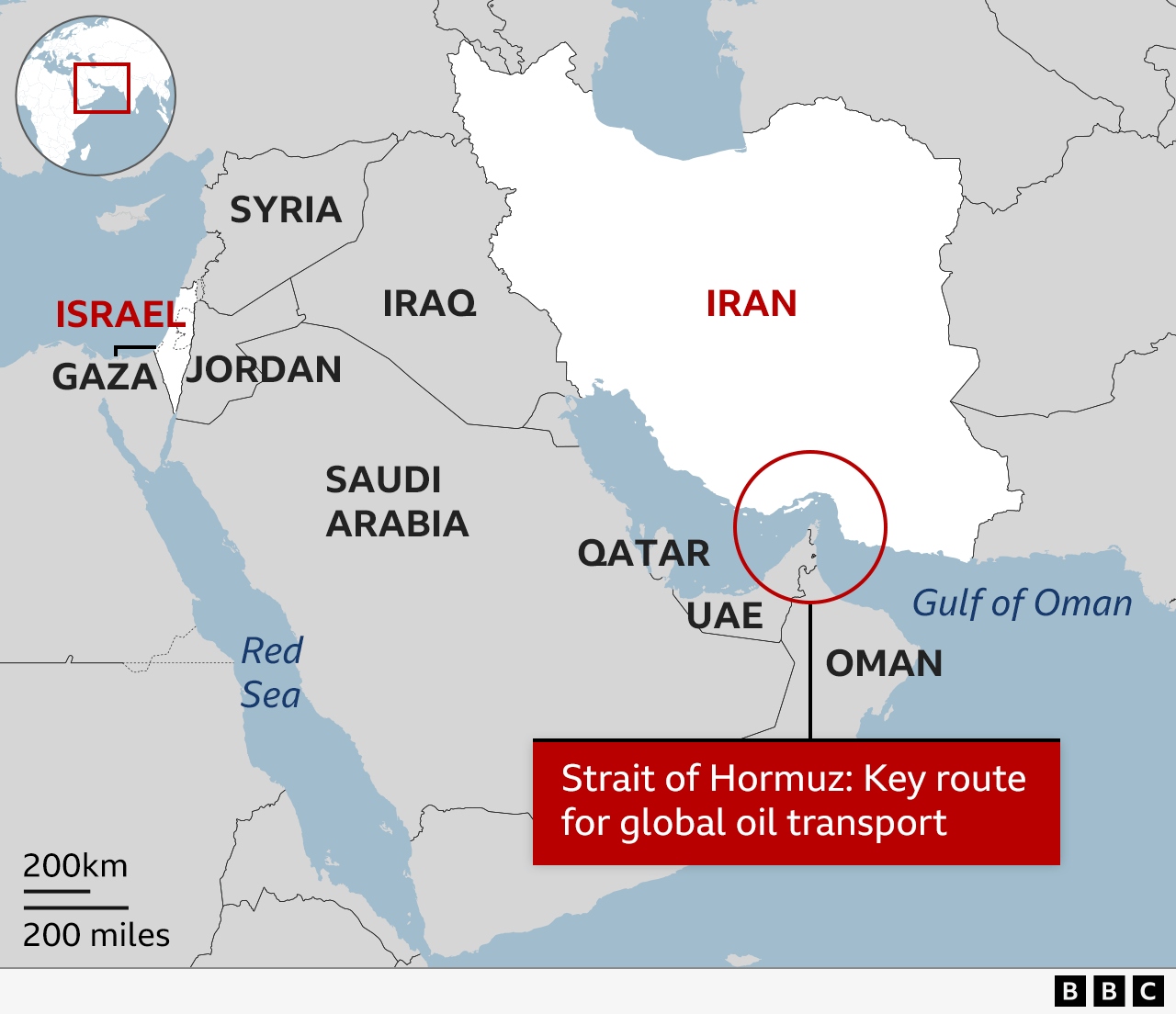
The Gulf is the jugular vein of the Indian economy. Roughly 60% of India’s crude oil imports pass through these narrow waterways. Any disruption in the Strait of Hormuz or the Red Sea sends immediate shockwaves through Indian fuel pumps and manufacturing hubs.
Consider the mechanics of a modern maritime attack. It doesn't take a full-scale naval engagement to cripple trade. A single $20,000 loitering munition can disable a multi-million dollar Very Large Crude Carrier (VLCC). When insurance companies see these risks, they implement "war risk" surcharges. These costs are never absorbed by the shipping companies; they are passed directly to the Indian consumer.
By co-sponsoring the UNSC resolution, India is attempting to institutionalize a global response to these "gray zone" tactics. It wants to ensure that the international community treats these strikes as acts of terrorism rather than mere political signaling.
The Security Calculus in the Arabian Sea
India’s naval presence in the region has quietly expanded. The Indian Navy now conducts regular patrols under "Operation Sankalp" to provide reassurance to Indian merchant vessels. However, hardware on the water is only half the battle. The other half is fought in the halls of the UN in New York.
New Delhi’s move at the UNSC provides the legal and political cover for its navy to take a more assertive stance if required. It bridges the gap between diplomatic intent and kinetic capability. If India is to be taken seriously as a "Net Security Provider" in the Indian Ocean Region, it must be willing to name and shame the actors destabilizing its backyard.
Balancing the Washington and Moscow Factor
This resolution also serves as a subtle alignment with the West, specifically the United States and the United Kingdom, who have been the primary drivers of the anti-attack narrative. Yet, India is doing this on its own terms. Unlike the European powers, India’s primary concern isn't the preservation of the "rules-based order" in an abstract sense. It is the preservation of the "trade-based order" in a literal sense.
There is a domestic political element at play here as well. The current administration in New Delhi has staked its reputation on making India a global powerhouse—a Vishwa Mitra (friend to the world). You cannot be a global friend if you cannot protect the shipping lanes that feed your own people.
Critics argue that this move might alienate Iran, a country India has spent years trying to cultivate as a strategic partner to bypass Pakistan. The reality is that the partnership with Iran was always a marriage of convenience, and lately, the inconveniences have outweighed the benefits. Tehran’s growing military cooperation with Russia and China has changed the math. India sees the writing on the wall: the Gulf monarchies are the new centers of gravity in the Middle East, and they expect their partners to take a stand.
Beyond the Paperwork
A UNSC resolution is often criticized as being "toothless," a piece of paper that does little to stop a drone from launching. But in the world of high-stakes geopolitics, these documents are the foundation for future action. They provide the legitimacy for sanctions, interdictions, and collective defense agreements.
India’s co-sponsorship is an invitation to the GCC states to deepen their defense ties with New Delhi. We are likely to see more joint naval exercises, more intelligence sharing, and potentially, the export of Indian-made defense hardware, like the BrahMos missile system, to Gulf nations looking to bolster their own coastal defenses.
The "investigative" truth behind this headline is that India is no longer afraid of picking sides. For a country that once prided itself on Non-Alignment, this is a seismic shift. It is a recognition that in a multipolar world, sitting on the fence only makes you a target for both sides.
The Human Element
We often talk about "vessels" and "cargo," but behind every ship is a crew. India provides a massive percentage of the global seafaring workforce. When a ship is attacked in the Gulf, there is a high probability that Indian citizens are on board. Protecting these sailors is a matter of national honor and domestic stability. No government can afford to look weak when its citizens are being targeted by proxy militias in international waters.
The transition from a passive observer to an active sponsor of UN resolutions is the final stage of India’s diplomatic "coming of age." It is a move away from the idealism of the 20th century and toward the cold, hard realism of the 21st. The Gulf is no longer just a place where India buys oil; it is a frontier where India must defend its interests with both words and steel.
Monitor the frequency of Indian Navy port calls in Salalah and Duqm over the next six months. If the paperwork at the UN is the smoke, those deployments will be the fire. New Delhi has stopped asking for permission to be a regional power and has started acting like one.
The next time a drone enters the airspace above a commercial lane in the Gulf, the perpetrators won't just be looking at a U.S. destroyer. They will be looking at an Indian establishment that has officially run out of patience.