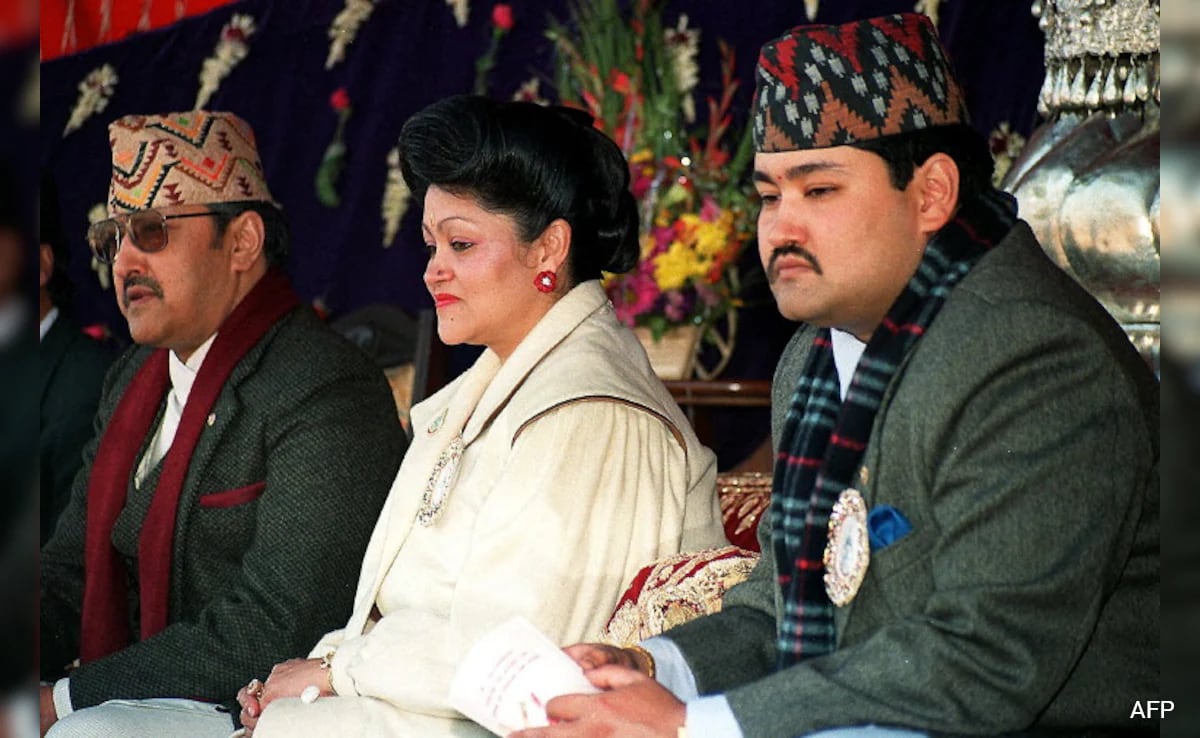
The global media loves a predictable narrative. When thousands of Nepalis take to the streets of Kathmandu waving the triangular crimson flag and chanting for the return of the Shah dynasty, the outside world sees a "regression toward autocracy." They see a country struggling to handle the "complexities of modern democracy."
They are wrong. For a different view, read: this related article.
The surge in royalist sentiment in Nepal isn't about a burning desire for a divine monarch or a return to the 17th century. It is a desperate, frantic vote of no confidence in a "Federal Democratic Republic" that has functioned more like a high-stakes cartel than a government. Nepal’s pro-monarchy movement is the ultimate "burn it down" signal from a population that has realized the current system is designed to fail them.
The Myth of the "Democratic Transition"
Mainstream analysts point to the 2006 Comprehensive Peace Agreement as the moment Nepal entered the modern era. They frame the abolition of the monarchy in 2008 as the removal of a "bottleneck" to progress. Similar insight on the subject has been provided by Reuters.
I have spent years watching political transitions in South Asia. In Nepal’s case, the bottleneck wasn't removed; it was simply replaced by a three-headed hydra of political elites who have turned "democracy" into a revolving door of corruption. Since the monarchy fell, the country has seen a dizzying array of prime ministers. Power doesn't shift based on policy or public will; it shifts through backroom deals in the middle of the night between the Nepali Congress, the CPN-UML, and the Maoists.
The current system—Federalism—was sold as a way to bring power to the people. In reality, it simply tripled the number of politicians the taxpayer has to feed. We created seven provincial governments that have no clear revenue streams and serve primarily as parking lots for mid-level party loyalists. When people shout for the King, they aren't asking for a crown; they are asking for a single point of accountability in a sea of faceless, finger-pointing bureaucrats.
The Stability Paradox
The "lazy consensus" says that monarchies are inherently unstable because they lack a popular mandate.
Tell that to a small business owner in Butwal or a tea farmer in Ilam. Under the current "mandate," policy changes every six months. Investment is impossible because the "rules of the game" are rewritten whenever a new coalition forms.
In a fragile state sandwiched between two giants like India and China, the monarchy served as a "symbolic anchor." It provided a sense of continuity that transcended party lines. Without it, Nepal has become a playground for geopolitical influence. The parties have proven they are more loyal to their foreign patrons than to the Nepali street.
The royalist surge is a demand for a Sovereign Referee.
Imagine a football match where there is no referee, and the two teams are allowed to write the rules as they play. That is Nepal’s parliament. The monarchy, for all its historical flaws, acted as a check on the absolute greed of the political class. People don't want the King to rule; they want the King to stop the politicians from stealing the house.
The Youth Disconnect and the Remittance Trap
If you listen to the "experts," they’ll tell you the monarchy movement is driven by nostalgic old-timers.
Look at the crowds. These are twenty-somethings. These are the people who were toddlers when the palace massacre happened or when the monarchy was abolished. Why would they want a King?
Because the Republic has failed to give them a reason to stay in the country.
Nepal’s economy is a "Remittance Economy." Our primary export is our people. Every day, roughly 2,000 young Nepalis pass through the gates of Tribhuvan International Airport to work in the heat of the Gulf or the factories of Malaysia. This isn't "opportunity"; it's an exodus.
- Total Remittance Inflow: Approximately 25% of Nepal’s GDP.
- The Result: A hollowing out of the middle class.
- The Political Cost: The parties don't care about local job creation because they can survive on the taxes levied on the money sent back by workers abroad.
The pro-monarchy movement is the sound of a generation realizing they have been sold a "Republic" that offers them nothing but a one-way ticket to Qatar. They are looking for a "Traditional Identity" to cling to because the "Modern Identity" they were promised turned out to be a scam.
Dismantling the "Regressive" Label
Critics call the restoration movement "regressive" and "anti-secular." They claim it will undo the progress made on social issues.
This is a distraction.
The "progress" they talk about is largely performative. Yes, the constitution looks great on paper. It’s one of the most "progressive" documents in Asia. But in the villages of the Karnali or the plains of the Madhesh, that paper doesn't provide electricity, it doesn't build roads, and it certainly doesn't stop a local party boss from seizing land.
The push for a "Hindu State" (often tied to the monarchy) is less about religious fundamentalism and more about a search for national cohesion. In a country with over 120 ethnic groups, the "secularism" imported by the parties felt like a vacuum. It felt like the erasure of the one thing that tied the hills to the plains. People aren't moving "backward"; they are moving "inward" to find a foundation that isn't built on the shifting sands of coalition politics.
The Cost of the "Golden Middle Ground"
The most dangerous lie being told right now is that Nepal can "fix" the Republic without a radical structural change.
"We just need better leaders," the pundits say.
Wrong. The system itself is the problem. The 2015 Constitution created a Frankenstein’s monster: a ceremonial President with no power, a Prime Minister with too much power, and a proportional representation system that ensures no single party can ever win a clean majority. This guarantees permanent instability.
If the restoration of the monarchy happens, it won't be a 19th-century absolute monarchy. It will likely be a "Constitutional Monarchy" modeled on the UK or Japan.
Is that a perfect solution? No.
But it provides something the current system cannot: A Non-Partisan Center.
What the World Ignores: The Security Risk
While we debate the "merits of democracy," the actual security of the state is degrading. The Nepal Army remains the most respected institution in the country. Historically, the Army and the Monarchy were two sides of the same coin. The current political class has tried to politicize the military, and the military is resisting.
The pro-monarchy protests are a warning shot. If the political parties continue to treat the national treasury like a private bank account, the "democratic experiment" will end—not with a vote, but with a collapse.
People are tired of being told they are "free" while they struggle to buy onions. They are tired of being told they live in a "New Nepal" when the roads are worse than they were twenty years ago.
The Uncomfortable Truth
The restoration movement is the ultimate "Customer Feedback" for the Republic. And the feedback is: "This product is broken."
Stop looking at the Crown and start looking at the Crowd. They aren't worshiping a man; they are mourning a nation. The demand for the King is a demand for a state that actually exists beyond the walls of Singh Durbar.
If you want to save the Republic, stop calling the protesters "regressive." Start asking why a dead institution looks more promising to the youth of Nepal than the living nightmare of the current administration.
The monarchy isn't the solution to Nepal’s problems, but its ghost is the only thing currently scaring the people who are destroying the country.
Throw out the textbook. The "Republic" failed. It’s time to stop pretending otherwise.