Gravity is the Only Thing Happening in Five Seconds
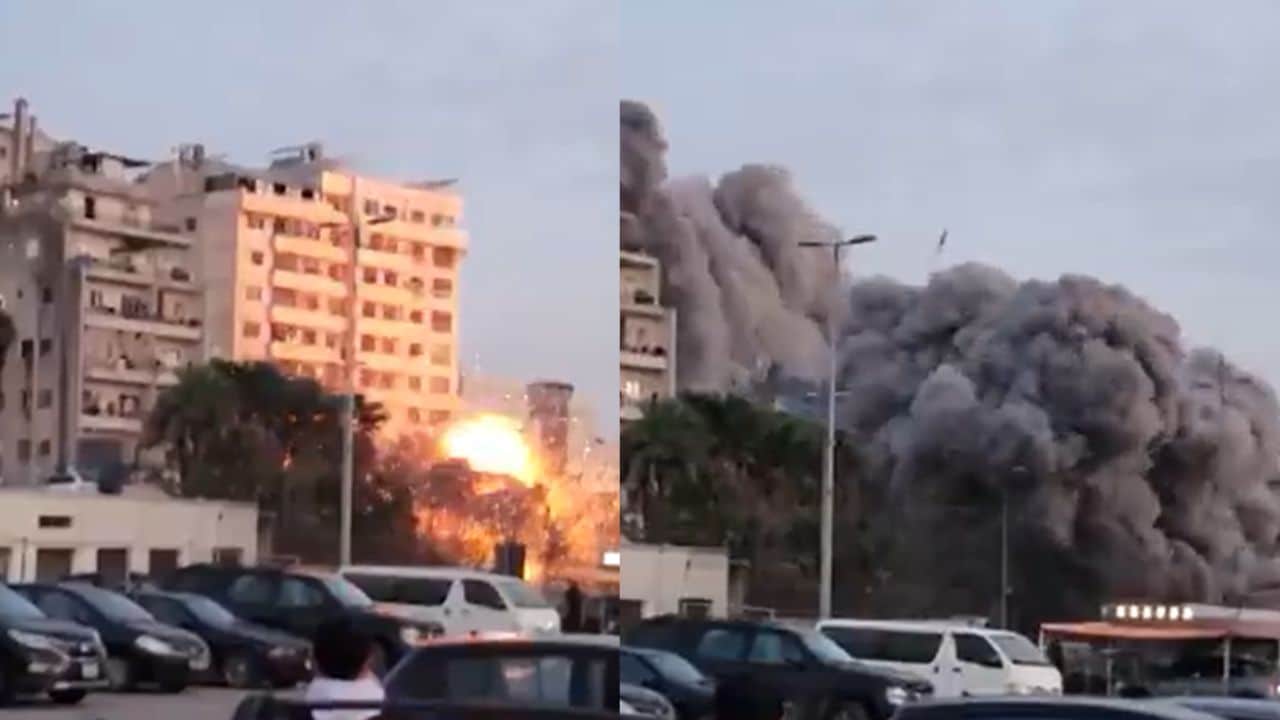
The media loves a countdown. They see a high-rise in Beirut vanish in a cloud of pulverized concrete and focus entirely on the stopwatch. "Under five seconds," the headlines scream, as if the speed of the collapse is the story. It isn't. The speed is just physics doing its job once the engineering has been forcibly retired.
When a building drops into its own footprint in five seconds, you aren't watching a miracle of modern weaponry. You are watching a catastrophic failure of structural integrity that was decided long before the first floor hit the pavement. To focus on the duration of the collapse is to ignore the actual mechanics of urban warfare and the brutal efficiency of kinetic energy.
The "lazy consensus" here is that these strikes are flashy, cinematic displays of power. In reality, they are clinical, boringly precise applications of structural engineering in reverse. If you’re mesmerized by the timer, you’re missing the point of how modern cities are actually dismantled.
The Architecture of Failure
Buildings are not solid blocks. They are mostly air, held in place by a precarious balance of tension and compression. Most people view a skyscraper as a permanent fixture of the landscape. An insider knows it’s a machine under constant stress.
When a precision-guided munition strikes the load-bearing columns of a lower floor, it doesn't need to "blow up" the whole building. It just needs to remove the support for the mass above it. Once that mass starts moving, gravity takes over.
Consider the potential energy formula:
$$E_p = mgh$$
Where:
- $m$ is the mass of the upper floors
- $g$ is the acceleration due to gravity (roughly 9.8 $m/s^2$)
- $h$ is the height of the fall
Once those columns are severed, you aren't fighting a bomb anymore; you are fighting the weight of the building itself. The "five seconds" everyone is obsessed with is simply the time it takes for several thousand tons of concrete to realize they no longer have a floor.
Stop Calling It a "Strike" and Start Calling It Demolition
The term "strike" implies a singular event—a hit. What we are seeing in Beirut is tactical deconstruction.
Media outlets treat these videos like sports highlights, focusing on the flash. But if you look at the dust patterns and the way the floors pancake, it’s clear this isn't about the explosive yield. It’s about the placement. You can dump a massive amount of high explosives on a roof and do less damage than a smaller, smarter charge at the base.
I’ve seen engineers spend months planning a controlled demolition in Chicago or London. The goal there is safety and containment. In a conflict zone, the goal is the same—collateral damage mitigation through extreme precision—but the "client" is the military, not a real estate developer. The "shock and awe" is a byproduct; the goal is the removal of a specific structural coordinate.
The Misconception of "Total Destruction"
One of the most frequent questions people ask when seeing these clips is: "How can anyone survive that?"
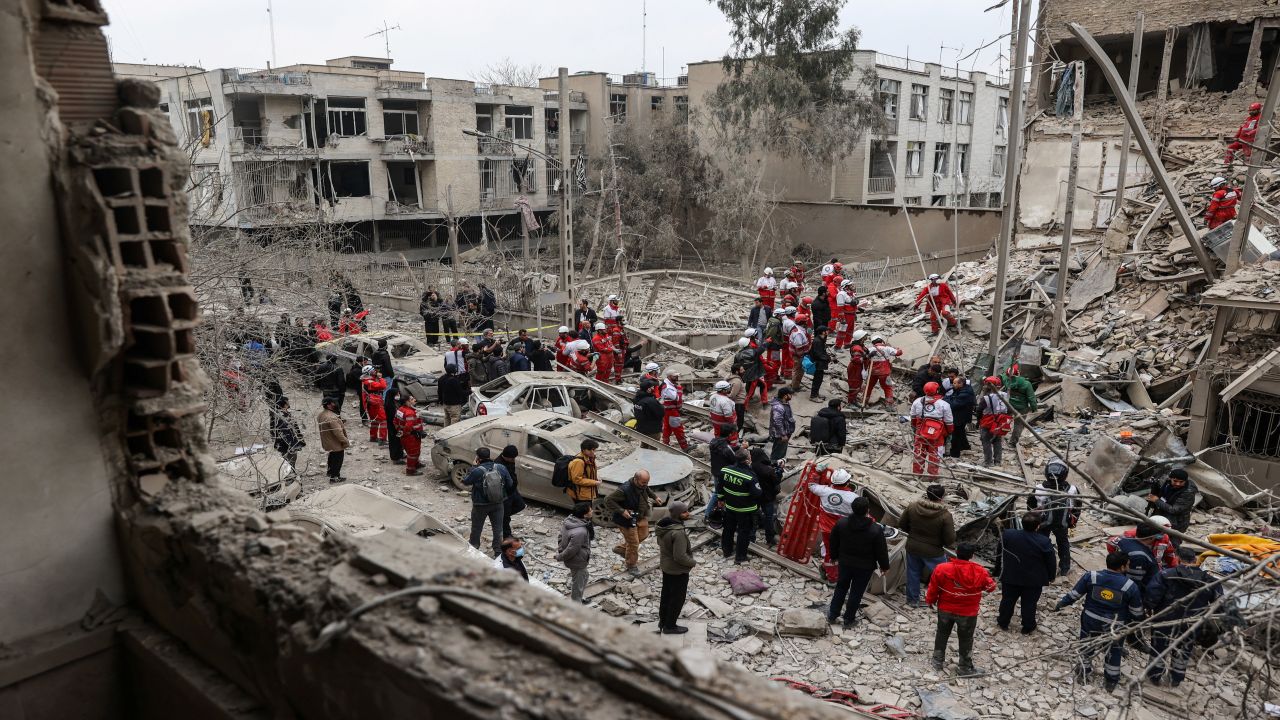
The brutal truth is they don't, but the "total destruction" isn't as total as it looks from a drone camera. The rubble pile of a 10-story building is still several stories high. The "disappearance" of the building is an optical illusion caused by the displacement of dust and the speed of the vertical collapse.
When the media reports that a building was "reduced to rubble," they imply it turned into sand. It didn't. It turned into a complex, unstable mountain of jagged reinforced concrete and twisted rebar. This creates a secondary problem: the site becomes a permanent scar on the urban fabric that is significantly harder to clear than it was to drop.
The Logistics of the Aftermath
Everyone watches the five seconds of the fall. Nobody watches the five years of the cleanup.
Breaking down a reinforced concrete structure that has collapsed under its own weight is a logistical nightmare. In a standard demolition, you have a plan. You know where the rebar is. You know the tension points. In a combat-collapsed building, the pile is "loaded." Moving one piece of debris can cause a secondary shift that kills recovery teams.
We focus on the "efficiency" of the strike because it fits a narrative of technological supremacy. We ignore the inefficiency of the result. A city of standing buildings is a functional entity. A city of five-second collapses is a graveyard of infrastructure that requires specialized heavy machinery, massive amounts of fuel, and decades of labor to rectify.
Why Your "Five Second" Obsession is Dangerous
By focusing on the speed and the spectacle, we sanitize the reality of urban structural failure. It makes the act look clean. It makes it look like a magic trick where the building simply vanishes.
It doesn't vanish. It transforms.
It goes from a vertical asset to a horizontal liability. If you want to actually understand what’s happening in Beirut or any other modern conflict zone, stop looking at your watch. Start looking at the density of the concrete, the reinforcement of the steel, and the impossible physics of trying to rebuild a city that has been turned into a jigsaw puzzle where the pieces no longer fit together.
The "five seconds" is the least important part of the story. The important part is the permanent silence that follows.
Stop looking for the explosion and start looking for the void.
Go look at the satellite imagery of these neighborhoods from six months ago and compare it to today. Don't count the seconds; count the blocks that no longer exist on a map. That is the only metric that matters.
If you want to understand the true cost, stop being a spectator of the collapse and start being a student of the debris.
Pick a single building from one of those videos. Trace its history. Find out who engineered it. Then, realize that all that human intellect was overridden by a basic law of physics in less time than it took you to read this paragraph.
That isn't "efficiency." It’s a total system reboot of the physical world.
Stop asking how fast it fell. Start asking why we're so obsessed with the speed of our own dismantling.
The building didn't "fall" in five seconds. It was deleted.
Now, go look at the dust and tell me what you see.