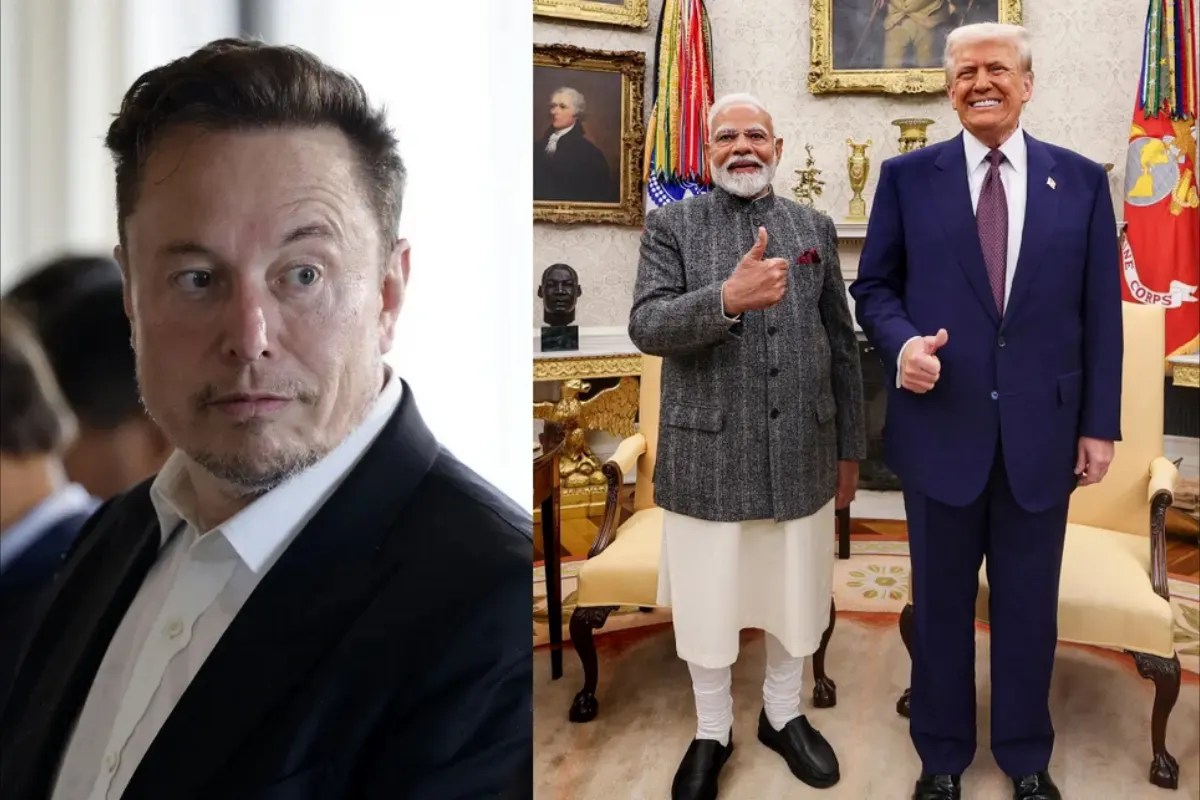
The Indian government wants you to believe in the sanctity of the "official channel." They’ve issued their denials. They’ve scrubbed the transcript. They’ve looked the cameras in the eye and insisted that the phone call between Prime Minister Narendra Modi and President-elect Donald Trump was a strictly bilateral, two-man affair. No Elon Musk. No Tesla shadow. No Starlink interference.
They are lying by omission, and you are falling for the theater of protocol.
The "lazy consensus" here is that if a person isn't physically breathing into the handset or listed on an official memo, they aren't "involved." This is 20th-century thinking applied to a decentralized, post-institutional world. In the high-stakes friction between New Delhi and the incoming Mar-a-Lago administration, Elon Musk doesn't need to be on the call to be the loudest voice in the room.
Official denials are the ultimate lagging indicator. When a government goes out of its way to say someone wasn't there, they are actually confirming who owns the intellectual real estate of the conversation.
The Proxy Presence: Why Transcripts are Forged Fiction
Geopolitics is no longer conducted by men in grey suits reading from prepared binders. It’s conducted by incentives. To suggest that Musk wasn't "involved" in the Modi-Trump dialogue because he wasn't holding a second receiver is like saying a chef isn't involved in a meal because he didn't hand-deliver the plate to your table.
I’ve sat in rooms where "official" records were scrubbed to protect the ego of the state. It happens every day. The state department bureaucracy thrives on the illusion that they—and only they—facilitate international relations. Admission of a third-party billionaire’s presence is a confession of state impotence.
When Trump picks up the phone, Musk is the operating system. He is the filter through which Trump views American industrial interests, space dominance, and the tariff wars with China. If Modi is talking to Trump about manufacturing, he is talking to the man who listens to Musk.
The Tariff Trap and the Tesla Lever
The Indian government’s denial is a desperate attempt to maintain leverage. If they admit Musk is part of the inner sanctum, they admit that India’s high import taxes on EVs are no longer a bilateral trade issue—they are a personal grievance for the man who just spent over $100 million to put Trump in the White House.
- The Misconception: India thinks it can negotiate with "The United States."
- The Reality: India is negotiating with a corporate-political hybrid.
For years, India has played a brilliant game of "hard to get" with Tesla, demanding local factories before lowering duties. That game died the moment the election results were called. The "official" call was likely a frantic exercise in vibe-checking. Modi knows that the standard diplomatic playbook—appealing to "shared democratic values" and "strategic regional stability"—is white noise to the new administration.
The only language that matters now is Direct Foreign Investment (DFI) per tweet.
Starlink is the New Nuclear Deterrent
People keep asking: "Was Musk on the call?"
The better question: "Can India afford for him not to be?"
The Bureau of Telecommunications in India has been dragging its feet on satellite spectrum allocation for years, protecting local giants like Reliance and Airtel. Suddenly, the tone is shifting. This isn't a coincidence. It’s the "Musk Shadow."
Imagine a scenario where the U.S. links its support for India's "Make in India" initiatives directly to the ease of Starlink’s rollout. That isn't a conspiracy; it’s basic math. Musk is the first private citizen in history with his own foreign policy. He has negotiated with the Kremlin over Starlink in Ukraine. He has dictated terms to the CCP regarding the Shanghai Gigafactory. To think he’d sit out a call with the leader of the world’s most populous nation—a nation he desperately needs for his next phase of growth—is peak naivety.
The Death of Professional Diplomacy
We are witnessing the total disruption of the Ministry of External Affairs (MEA). Traditional diplomats are trained to handle "State Actors." They have no protocol for dealing with a "Sovereign Individual" who controls the launch vehicles for the state's satellites and the social media platform where the state's leaders communicate.
The government's denial is a defensive reflex. They are trying to protect the "Dignity of the Office." But dignity doesn't win trade wars.
In my experience working with high-level trade delegations, the most important people are never the ones listed on the press release. They are the "advisors" who walk in through the kitchen. By focusing on the guest list of a single phone call, the media is missing the structural takeover of American diplomacy by Silicon Valley interests.
The Price of Admission
India’s insistence that Musk wasn't involved is actually a sign of weakness. It shows they are still trying to use a 1990s map to navigate a 2026 terrain.
If I were advising the PMO, I’d tell them to stop the denials. Embrace the chaos. Invite Musk to the next call. Make him a stakeholder in the Indian dream before he becomes its primary disruptor from the outside.
The "official" version of events is a bedtime story for people who still believe that borders matter more than bandwidth. Trump and Modi are both masters of the "strongman" brand, but even they know that in the current hierarchy, the man who owns the satellites usually gets the last word.
Stop looking at the transcript. Look at the stock price of every Indian competitor to Musk’s empire. They know he was on that call. They can feel the oxygen leaving the room.
The era of the "Bilateral Meeting" is over. We are now in the era of the Trilateral Transaction: The State, the President, and the Provider.
If you aren't at the table, you're on the menu. And Elon Musk hasn't missed a meal in a decade.
Throw away the press release. The real conversation happened in the silences between the sentences, where the threat of a 60% tariff met the promise of a billion-dollar factory. Whether Musk held the phone or not is irrelevant—his fingerprints are all over the future of Indo-US relations, and no amount of government scrubbing will wash them off.