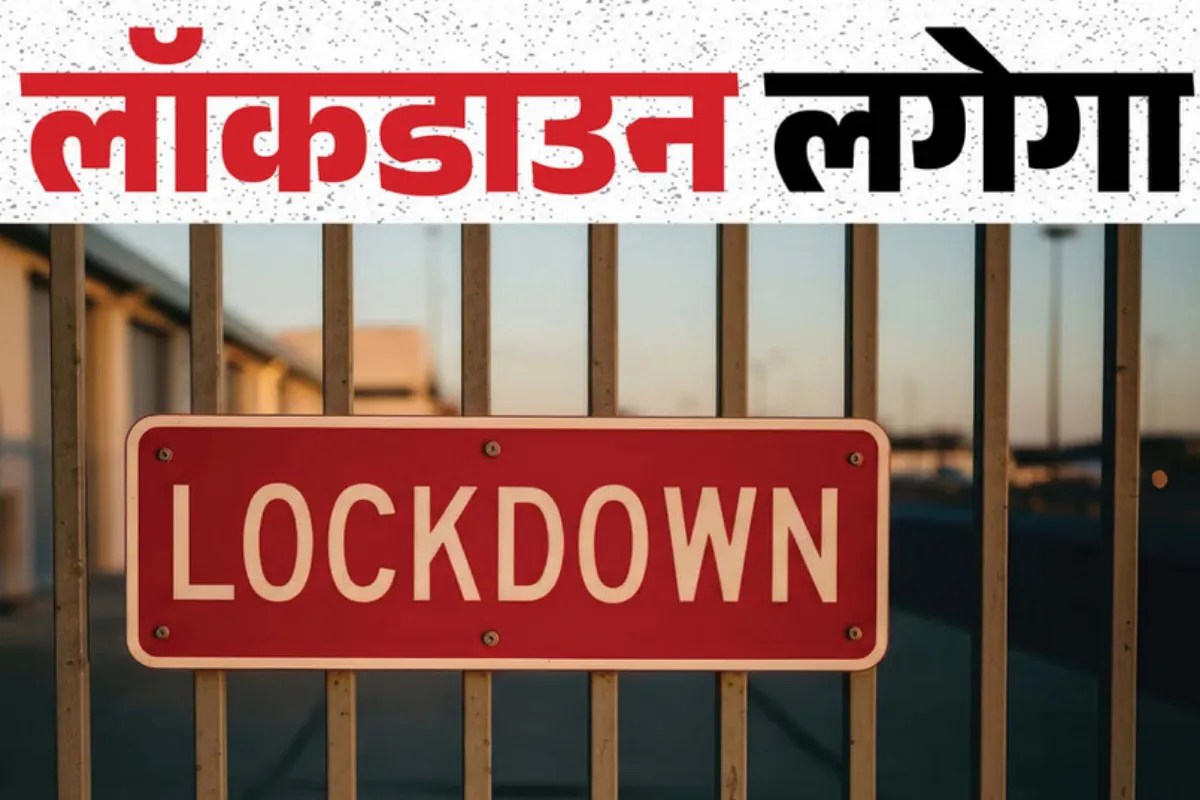
Pakistan’s current economic trajectory is no longer a matter of fluctuating market cycles but a structural failure of the state’s ability to secure the primary inputs of a modern economy: energy and foreign exchange. The rumored imposition of "lockdowns" to curb energy consumption is not a public health measure; it is a desperate attempt to manage a Balance of Payments (BoP) crisis by forcibly suppressing domestic demand. When a nation cannot afford the fuel required to power its industry and transport, it must choose between sovereign default or the systemic halting of its internal metabolic rate.
The Energy-Import Feedback Loop
The fundamental constraint on Pakistan's sovereignty is the Energy-Import Feedback Loop. The country relies heavily on imported Re-gasified Liquified Natural Gas (RLNG) and petroleum products to meet over 30% of its primary energy needs. Because these commodities are priced in USD, any depreciation of the PKR or depletion of foreign exchange reserves creates an immediate supply-side shock. Don't forget to check out our earlier article on this related article.
The logic of a state-mandated lockdown follows a specific sequence of economic deterioration:
- Reserve Depletion: Foreign exchange reserves fall below the "critical cover" threshold (typically less than three months of imports).
- Credit Contraction: International banks refuse to confirm Letters of Credit (LCs) for oil marketing companies due to perceived default risk.
- Physical Scarcity: Fuel stations run dry, and power plants cease generation because they cannot pay for the fuel sitting in tankers at the port.
- Forced De-growth: The government mandates business closures to artificially lower the "Burn Rate" of the remaining fuel stocks.
This is not a strategy; it is a Cost Function of Insolvency. By shutting down markets at 8:00 PM or enforcing work-from-home protocols, the state is effectively taxing the productivity of the private sector to bridge a fiscal gap it cannot fill through traditional borrowing. If you want more about the context here, The Washington Post provides an informative breakdown.
The Three Pillars of the Energy Crisis
To understand why a lockdown is considered the primary tool of the state, one must examine the three structural pillars that have paralyzed the Pakistani energy sector.
1. Circular Debt Accumulation
The energy sector operates on a broken cash-flow model known as Circular Debt. This occurs when the government fails to pay power producers, who in turn cannot pay fuel suppliers. The debt is currently measured in trillions of PKR.
- The Inefficiency Gap: High Transmission and Distribution (T&D) losses, coupled with low recovery of bills, mean that for every unit of energy produced, a significant percentage of the cost is never recovered.
- The Subsidy Trap: To prevent social unrest, the state often keeps tariffs below the actual cost of generation. This creates a deficit that must be covered by the national budget—a budget that is already in a deep deficit.
2. The Capacity Charge Burden
Pakistan’s power contracts are often "Take-or-Pay" agreements. The government must pay private power producers a "Capacity Charge" regardless of whether any electricity is actually consumed. As the economy slows and demand drops, the per-unit cost of electricity actually increases because the fixed capacity charges are spread over fewer units of sold power. This creates a paradox: the more the government tries to save energy through lockdowns, the higher the financial burden of the idle power plants becomes.
3. Fuel Mix Malalignment
The reliance on thermal power (Oil and Gas) over hydel or renewable sources makes the country a price-taker in the global commodities market. When global Brent prices spike, or LNG spot prices jump due to geopolitical tensions in Europe or the Middle East, the Pakistani economy experiences an immediate inflationary surge.
The Economic Elasticity of a Lockdown
The "Plan" being discussed by the government seeks to manipulate the Income Elasticity of Demand for fuel. If people cannot move, they cannot consume petrol. If shops are closed, they do not use air conditioning or lighting.
However, the second-order effects of this policy are devastating to the Tax-to-GDP ratio. Pakistan’s tax collection is heavily skewed toward indirect taxes on consumption and trade. By forcing a lockdown to save USD on fuel imports, the government simultaneously destroys its own PKR tax revenue. This necessitates further borrowing, which increases interest payments, further squeezing the budget available for energy imports.
Quantifying the Disruption
The impact of an energy-driven lockdown can be categorized into three distinct time horizons:
- Short-term (0-3 Months): A sharp decline in the Large-Scale Manufacturing (LSM) index. Textile exports—the backbone of Pakistan’s foreign earnings—face order cancellations as reliability becomes an issue.
- Medium-term (3-12 Months): Inflationary pressure shifts from "Cost-Push" to "Supply-Shock." Essential goods become scarce not because of price, but because the logistics chain (trucking and shipping) has physically stalled.
- Long-term (1 Year+): De-industrialization. Capital flees to more stable markets like Vietnam or Bangladesh, where energy security is guaranteed.
The Strategy of Controlled Failure
The government’s "Plan" is less about solving the energy crisis and more about Managing the Pace of Collapse. By implementing staggered lockdowns, they attempt to prevent a "Hard Landing"—a total blackout or a complete absence of fuel at the pumps.
This is a defensive posture. In a high-authority analysis of the situation, it is clear that the state is prioritizing the Sovereign Debt Service over Domestic Industrial Growth. As long as the International Monetary Fund (IMF) demands fiscal discipline and the buildup of foreign reserves, the government has no choice but to suppress imports. Since energy is the largest component of the import bill, the population is essentially being asked to trade their livelihoods for the country’s credit rating.
The Logistics of Fuel Rationing
If the lockdown proceeds, it will likely evolve into a formal Rationing Framework. This would involve:
- Sectoral Prioritization: Diverting gas and electricity to "Zero-Rated" export sectors (textiles, IT) while leaving the domestic residential and retail sectors in the dark.
- Geographic Load Shedding: Protecting the "Red Zones" and administrative capitals while enforcing 12-16 hour blackouts in rural and peri-urban areas.
- Price Rationing: Increasing fuel prices to a point where only the top 5% of the economic strata can afford to maintain mobility, thereby naturally depressing aggregate demand.
Structural Bottlenecks in the LNG Supply Chain
A critical nuance often missed is the Storage Constraint. Pakistan has limited LNG storage capacity. This means they cannot "buy the dip" when global prices are low. They operate on a "Just-in-Time" delivery basis. If a single shipment is delayed or a tender is not met due to credit issues, the national grid loses a significant percentage of its base-load capacity within 48 hours. This fragility is the primary driver behind the suddenness of lockdown rumors.
Strategic Recommendation for Economic Survival
The only viable path out of this cycle is a Radical Decentralization of Energy. The state’s monopoly on power distribution and its centralized import model have failed.
The strategic play is to move toward Distributed Generation. This requires the immediate removal of all duties on solar and battery storage technology, allowing the private sector and residential users to "Exit the Grid." While this reduces the government’s revenue from electricity sales, it also reduces the state’s liability for fuel imports and capacity charges.
Concurrently, the government must transition from "Take-or-Pay" to "Take-and-Pay" contracts, even if it requires a sovereign restructuring of power agreements. Without these moves, the "Lockdown" will become a permanent feature of the Pakistani landscape—a nation in a state of perpetual, state-mandated hibernation to satisfy a balance sheet that no longer adds up.